收集雨水竟會導致牢獄之災?新聞標題為何會出錯?
收集雨水竟會導致牢獄之災?新聞標題為何會出錯?
讓我們把話說清楚……收集雨水不會讓你被逮捕。非法攔截支流,築壩截留數百萬加侖依法屬於國家的水…才會讓你被逮捕。 (轉發此推文)這兩者之間有著巨大的差異。在之前的文章中,我談到了網路和社群媒體如何損害節水工作。嗯,這篇文章將繼續探討這個問題。
誤導性標題
7月份,俄勒岡州一名男子因在其房產上「收集雨水」而被捕。如果你只看下面的標題,你可能會對收集雨水這件事不屑一顧,或者打電話給你的國會議員,痛斥政府權力過大。
「雨水收集案導致被告被判入獄併罰款」—鏈接
「因收集雨水被判入獄30天」—鏈接
「男子因在自家土地上收集雨水被判入獄30天」—鏈接
「俄勒岡州男子因收集雨水被判入獄30天」—鏈接
「在俄勒岡州,收集雨水會被送進監獄」—鏈接
「俄勒岡州男子因收集雨水被判入獄30天」—鏈接
就這樣,沒完沒了…
我盡量只選主流媒體的頭條新聞。由於許多人認為這是一個個人自由問題,這個故事在「個人自由」部落格圈裡像燙手山芋一樣迅速傳播開來,衍生出更多「誘人」的標題,我本來也可以展示給大家,但你們應該明白我的意思了。
故事
俄勒岡州鷹岬鎮的加里·哈靈頓因在其170英畝的土地上建造水壩,形成三個大型水庫或池塘而被捕。據報道,其中兩座水壩高10英尺,另一座高20英尺。俄勒岡州政府已宣布這三個水庫為非法水庫,因為它們攔截了流入大巴特河的支流。
俄勒岡州依據1925年的一項法律對哈靈頓先生定罪,該法律將所有水資源劃為公共或「州屬」水。這是因為該州先前頒布的「優先權」法規定了用水權的優先順序。這意味著,在河流流量較低時,第一個獲得河流用水權的人最後才會被斷水。這項法律可以防止土地所有者在流經其土地的河流上築壩,尤其是在下游存在城市和其他供水商等擁有更早用水權的用戶的情況下。
2007年,哈靈頓先生承認非法築壩截流其土地上支流的水源。他被判處三年緩刑,並被勒令釋放被截流的水源。這次州政府提起的訴訟源自於他拒絕遵守緩刑條件。
哈靈頓先生因九項輕罪被罰款超過 1500 美元,被判處 30 天監禁,並被要求拆除水壩、排乾池塘。
在這種情況下,我認為了解俄勒岡州實際的水法至關重要。「先佔權」和「沿岸權」水法之間的區別非常有幫助。
所以問題出在哪裡?
在我們繼續之前,我想讓你們知道,在俄勒岡州收集雨水是合法的。將雨水從屋頂等不透水錶面收集到雨水桶或蓄水池中。好的…
這種聳人聽聞的標題會讓人們產生兩種想法……要么認為收集雨水確實是非法的,會被逮捕;要么認為政府在多管閒事。
如今搜尋引擎的運作方式以及我們短暫的注意力(餵,你還在看這篇博文嗎?),使得這些新聞事件頻頻出現在搜尋結果的頂部,從而可能對雨水收集產生誤解。人們會在同一個標題中看到“雨水收集”和“監禁”,卻不會閱讀全文,然後在與朋友討論類似話題時,想起這個標題,並隨意發表錯誤訊息。
哈靈頓先生的這種做法還有很多其他名稱可以用,例如雨水收集、「蓄水池」等等,但用「雨水收集」這個詞會模糊人們對這個概念的理解。傳統意義上的雨水收集指的是「從屋頂等不透水錶面收集雨水」。當然,這只是語義上的區別,但由於雨水收集的概念要被大眾接受和理解還有很長的路要走,我希望記者和作家們能幫我們做些貢獻。
一篇新聞報道稱,哈靈頓先生的「雨水收集系統」儲存了1,300萬加侖的水。實際上,那其實是三個池塘。為了讓大家明白其中的區別,我位於奧斯汀的1000平方英尺(約93平方米)的房子上的「雨水收集系統」每年只能收集大約19000加侖(約45000公升)的水……這與1300萬加侖(約5800萬公升)的雨水收集量相差甚遠。
我知道這對某些人來說只是語義上的問題,但對於在美國從事雨水收集系統行業的人來說,我們需要盡可能多的幫助來傳播雨水收集的良好理念。
@WaterWired的另一篇關於此主題語義學的精彩部落格文章在此。。
你的意見
您如何看待用「雨水收集」這個詞來形容哈靈頓先生的行為?您對本案的法律事實有何看法?我原本只是想指出「雨水收集」這個詞在這裡被濫用了,但我完全理解這起案件背後有著巨大的政治因素。
- 德州公園與野生動物管理局講解雨水收集
德克薩斯州公園與野生動物管理局的工作人員在一期節目中討論了雨水收集問題…
- 美國現行雨水收集法律調查
您是否考慮過在您的住宅或商業場所安裝雨水收集系統?
' x='0' y='0' height='100%25' width='100%25' xlink%3Ahref='data%3Aimage/png;base64,iVBORw0KGgoAAAANSUhEUgAAABEAAAADCAYAAAB1c+RqAAAAmUlEQVQI12O0rbcTe3JRrIhd6uGn5sCeJefPv+VhYGD4AcQg+huULQvEn6CYE4iZgZgFiH+62+u8Yvn2SLj6/zuFBAlu03vXrn+YsXDtcT6gJBvUAEYg/g3ED6EGfQbiN1BD/oDkpSUEf7L8fKy24cu7l5F3fvw9nRnp9Ds+2OofUBKEPwKxEBDzQl0DMlQMiB8xIAEddWkGACsJNq6ysJEsAAAAAElFTkSuQmCC'%3E%3C/image%3E%3C/svg%3E)


Rainwater Collection Leads to Jail Sentence? How News Headlines Get it Wrong
' x='0' y='0' height='100%25' width='100%25' xlink%3Ahref='data%3Aimage/jpeg;base64,/9j/4AAQSkZJRgABAQAAAQABAAD/2wBDABALDA4MChAODQ4SERATGCgaGBYWGDEjJR0oOjM9PDkzODdASFxOQERXRTc4UG1RV19iZ2hnPk1xeXBkeFxlZ2P/2wBDARESEhgVGC8aGi9jQjhCY2NjY2NjY2NjY2NjY2NjY2NjY2NjY2NjY2NjY2NjY2NjY2NjY2NjY2NjY2NjY2NjY2P/wAARCAAHAAcDASIAAhEBAxEB/8QAFQABAQAAAAAAAAAAAAAAAAAAAAb/xAAbEAACAgMBAAAAAAAAAAAAAAAAAQIEAxMhQf/EABUBAQEAAAAAAAAAAAAAAAAAAAEC/8QAFBEBAAAAAAAAAAAAAAAAAAAAAP/aAAwDAQACEQMRAD8Am7F561HHKfnW2ACy/9k='%3E%3C/image%3E%3C/svg%3E)

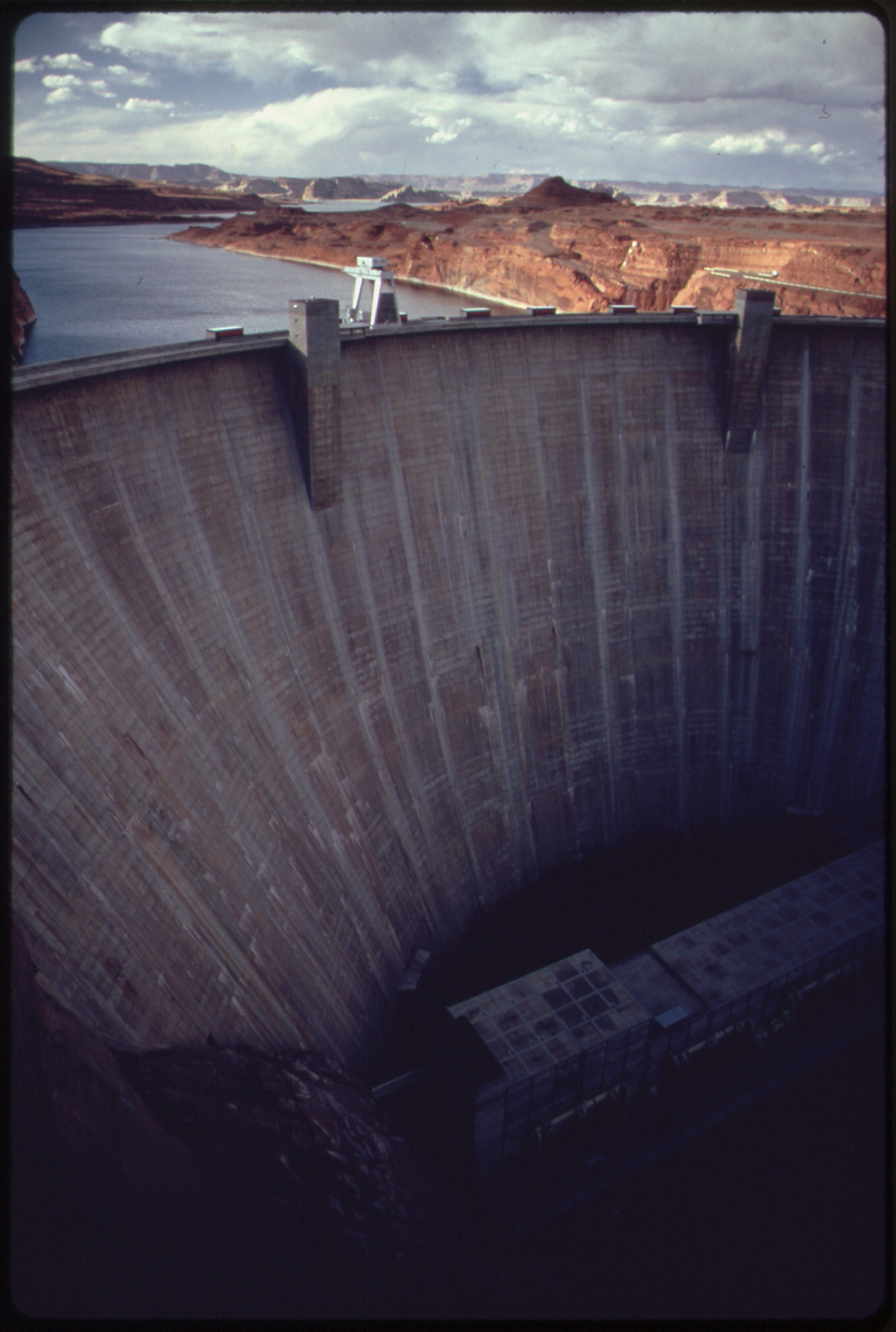
Theoretically then, this would be called a rainwater collection system?
Let’s get this straight… rainwater collection will not get you arrested. Illegally impounding a tributary and damming millions of gallons of water that by law belongs to the state… will get you arrested. (Tweet this) There is a huge difference here. In an earlier post, I talked about how the internet and social media can harm water conservation efforts. Well, this story continues that in that vane.
The Misleading Headlines
In July, a Oregon man had been arrested for “collecting rainwater” on his property. If you only read the headlines below, you would either be dismissing rainwater collection or phoning your Congress person to rant about big government.
“Rainwater collection case leads to jail sentence, fine” – link
“30 Days in Jail for Rainwater Collection” – link
“Man Sentenced to 30 Days for Catching Rain Water on Own Property Enters Jail” – link
“Oregon Man Gets 30 Days In Jail For Collecting Rainwater” – link
“In Oregon, they send you to jail for collecting rainwater” – link
“Oregon Man Gets 30 Days in Jail for Collecting Rainwater” – link
And on and on…
I tried to stick with the headlines from top-level news organizations. Since many people consider this a personal liberty issue, this story has passed around the “personal liberty” blogosphere like a hot potato where it produced many more “enticing” headlines I could have shown but you catch my drift.
The Story
Gary Harrington of Eagle Point, Oregon, was arrested for impounding water behind dams into three massive reservoirs or ponds on his 170-acre property. It is reported that two of the dams are 10 feet tall while the other is 20 feet tall. The State of Oregon has declared that the three reservoirs are illegal since they dam tributaries that flow into the Big Butte River.
The State of Oregon convicted Mr. Harrington under a 1925 law that declared all water as public or “state” water. This is due to the prior appropriations law that creates priority water rights. This means the first person to obtain a water right on a stream is the last to be shut off in times of low stream flows. This prevents landowners from damming up the streams and rivers that cross their properties if there are downstream users such as cities and other water providers that have older water rights.
In 2007, Mr. Harrington entered a guilty plea for illegally damming water from the tributaries crossing his property. He received three years probation and was ordered to release the impounded water. This recent lawsuit filed by the State stems from his refusal to meet the conditions of his probation.
Mr. Harrington has been fined more than $1,500 for nine misdemeanor convictions, ordered to serve a 30 day jail sentence, and required to breach his dams and drain his ponds.
In situations like this, I believe understanding the actual Oregon water laws and the difference between “prior appropriation” and “riparian” water laws is very helpful.
So What’s Wrong Here?
Before we go any further, I want you to know that it is legal to collect rainwater in Oregon from impervious surfaces like your roof into rain barrels or cisterns. Ok then…
This type of headline sensationalism leads people to one of two thoughts… that rainwater collection is indeed illegal and will get you arrested OR that the government is sticking their noses in places where they don’t belong.
With the way search engines work these days and with our short attention spans (hello, are you still reading this blog post?), these current stories will be at the top of the search results and therefore people could get the wrong impression about rainwater collection. People will see “rainwater collection” and “jail sentence” in the same headline, not read the story, and then recollect the headline when conversing with friends about similar topics, and spout off wrong information.
There are many other names that could be used for the act that Mr. Harrington was doing. Call it stormwater harvesting, “filling a pond”, etc, but applying the name “rainwater collection” to it will cloud people’s understanding of this subject. Rainwater collection in the tradition sense really means “the collection if rainwater from an impervious surface such as a roof”. I mean, it is all semantics but since rainwater collection still has a long way to go to be accepted and understood by the public, I would hope the journalists and writers could help us out a bit.
One news story stated that Mr. Harrington had 13 million gallons of water stored in his “rainwater collection system” which again was actually three ponds. Just so everyone knows the difference, my “rainwater collection system” on my 1,000 sf house in Austin will only collect about 19,000 gallons annually… that sure is a far cry from 13,000,000 gallons.
I know this is a matter of semantics for some people, but for people who work in the rainwater collection system industry in the US, we need all the help we can get in spreading the good gospel of rainwater harvesting.
Another great blog post by @WaterWired about the semantics of this subject is here.
Your Opinion
What do you think about the use of the term “rainwater collection” for what Mr. Harrington was doing? What do you think about the legal facts of the case? I wanted to just point out the misuse of the words “rainwater collection” to this situation but I completely understand that there is a big political underpinning to this case.


' x='0' y='0' height='100%25' width='100%25' xlink%3Ahref='data%3Aimage/jpeg;base64,/9j/4AAQSkZJRgABAQAAAQABAAD/2wBDABALDA4MChAODQ4SERATGCgaGBYWGDEjJR0oOjM9PDkzODdASFxOQERXRTc4UG1RV19iZ2hnPk1xeXBkeFxlZ2P/2wBDARESEhgVGC8aGi9jQjhCY2NjY2NjY2NjY2NjY2NjY2NjY2NjY2NjY2NjY2NjY2NjY2NjY2NjY2NjY2NjY2NjY2P/wAARCAAHAAcDASIAAhEBAxEB/8QAFQABAQAAAAAAAAAAAAAAAAAAAAb/xAAdEAACAgEFAAAAAAAAAAAAAAAAAQIDBAURIVGh/8QAFQEBAQAAAAAAAAAAAAAAAAAAAQP/xAAZEQACAwEAAAAAAAAAAAAAAAAAUQECEhP/2gAMAwEAAhEDEQA/AJm/UcOzHilW1Ncb9eAAp0swzCP/2Q=='%3E%3C/image%3E%3C/svg%3E)

' x='0' y='0' height='100%25' width='100%25' xlink%3Ahref='data%3Aimage/jpeg;base64,/9j/4AAQSkZJRgABAQAAAQABAAD/2wBDABALDA4MChAODQ4SERATGCgaGBYWGDEjJR0oOjM9PDkzODdASFxOQERXRTc4UG1RV19iZ2hnPk1xeXBkeFxlZ2P/2wBDARESEhgVGC8aGi9jQjhCY2NjY2NjY2NjY2NjY2NjY2NjY2NjY2NjY2NjY2NjY2NjY2NjY2NjY2NjY2NjY2NjY2P/wAARCAAHAAcDASIAAhEBAxEB/8QAFQABAQAAAAAAAAAAAAAAAAAAAAX/xAAeEAABBAEFAAAAAAAAAAAAAAACAAEEIgUDESEx8P/EABUBAQEAAAAAAAAAAAAAAAAAAAID/8QAGREAAwADAAAAAAAAAAAAAAAAAAIRARIh/9oADAMBAAIRAxEAPwChCDG48inalRAREauVnbl9vdoiKqrt3ILD/9k='%3E%3C/image%3E%3C/svg%3E)


留言
張貼留言