跳過廣告
跳至內容跳至站點索引搜尋和版塊導航
訂閱價格為 0.25 美元/週
Share full article
理查德‧哈洛蘭 (Richard Halloran) 紐約時報特刊
1974 年 1 月 21 日
田中的爆炸之旅
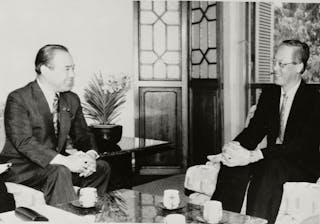
信用...紐約時報檔案館
請參閱1974 年 1 月 21 日文章的原始內容, 第 3頁購買重印本
《紐約時報》訂閱者*可以完全訪問 TimesMachine — 查看《紐約時報》150 多年的新聞報道,一如其最初的樣子。
訂閱
*不包括僅填字遊戲或僅烹飪的訂閱者。
關於檔案館
這是《紐約時報》印刷檔案中一篇文章的數位化版本,該文章於 1996 年開始在線出版。
有時,數位化過程會出現轉錄錯誤或其他問題;我們正在繼續努力改進這些存檔版本。
東京,1 月20 日——預播時:「讓我冒昧地說,日本的Mier Kakuei Tanaka 和他的隨行人員週四早上離開雅加達前往東京,他們不得不像牛仔一樣溜走,他們被治安官告知要離開日出前的小鎮。由於城市還處於黑暗中,田中先生的工作人員和隨行的日本新聞記者在夜間宵禁於早上6 點結束之前被從雅加達市中心趕到機場。送往機場。新聞分析
田中先生的不光彩離開以及他在菲律賓、泰國、新加坡、馬來西亞和印尼為期10天的訪問中發生的許多事情表明,日本與其南方鄰國的關係處於自1945年日本陸軍投降並回國以來的最低水平。
田中首相帶回了兩個令人不安的問題。首先,他、他的政府和日本人是否從印尼和泰國的火山爆發以及其他地方較少的不信任表現中學到了什麼?其次,日本可以採取哪些措施來改善與該地區的關係,日本每年約有三分之一的出口商品運往該地區,並從該地區獲得重要的石油、木材、食品和金屬供應。
¶問題暫停
在馬來西亞舉行的新聞發布會上,當一名記者詢問田中首相他認為反日情緒爆發的根本原因是什麼時,一些答案的線索就出現了。
廣告
跳過廣告
總理通常在提問者結束發言之前就開始快速回答,他沉默了幾秒鐘。然後他慢慢地說:「這確實是一個非常困難的問題。當您患有疾病時,必須先進行正確的診斷,然後才能開藥。你要我診斷一下原因。
又停頓了一下,他接著說:「我冒昧地說,一個可能的原因是我們的經濟往來成長得非常快。除了經濟問題外,還有語言障礙和社會習俗差異。而且,我們日本商人也並非萬無一失,也不全是神物。
在助手遞給他紙條後,田中先生表示,日本人身為島民,在國際交流方面的經驗還不夠。他表示,東南亞人在追求國家建設目標的同時,「可能發現在解決問題時很難保持我所說的足夠的內心平靜」。用不太外交的語言來說,這似乎意味著東南亞人正在向日本人發洩他們的不滿。
“誓言盡最大努力”
田中先生除了說「我們將盡最大努力讓日本人得到海外朋友的信任」之外,並沒有開出任何治療方法。
廣告
跳過廣告
另一邊,泰國、馬來西亞和印尼的學生大聲抱怨日本人是「經濟帝國主義者」和「剝削者」。但很少人能列舉具體的濫用行為。一名泰國人知道一家日本公司污染了一條河流,一名印尼人則表示,日本公司導致當地大部分紡織業破產。
除此之外,大多數人都無法說出因日本貿易或投資而失去工作的人、倒閉的公司、失去土地或受騙的人的名字。但他們和他們的長輩可以引用章節來說明他們認為自己受到日本人冷落、侮辱或不公平對待的地方。
很明顯,引起日本和東南亞人之間摩擦的問題不是經濟問題,而是政治、心理和民族主義問題。
田中先生本人就說明了這個問題。他前往東南亞的目的是進行友好訪問,說所有禮貌的話並讚揚進展。他強調,“我們無意主宰東南亞經濟”,“日本和東南亞國家必須進行經濟合作,因為它們相互依賴”。
廣告
跳過廣告
然而,他也無意中表現出居高臨下的態度。他建議菲律賓人採取一項計劃,就像他自己對日本的計劃一樣,改造菲利普松。他告訴抱怨日本經濟虐待的泰國學生,他們自己的政府應該要糾正他們。在新加坡,他在新聞發布會上表示,“當責任在日本時”,日本將消除摩擦。在馬來西亞,田中先生表示日本被誤解了。
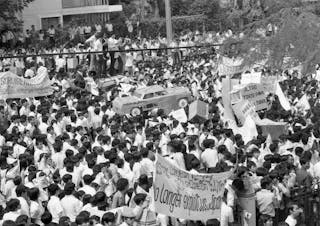
但在印尼發生約10人死亡、日本國旗被扯下、數百輛日本製造的汽車和其他產品被砸毀和焚燒的騷亂之後,田中先生表示,日本人應該「充分認識到所涉及的問題,並採取行動」。考慮如何改善與印尼人民的關係。”
一位印尼經濟學家總結了日本人在這裡常常不受歡迎的原因。當被問及他們是否犯下被指控的所有罪行時,他說:「故意的,沒有。是的,健忘、麻木不仁、不假思索、短視、過度競爭。他們不看看自己正在踐踏誰的花園。
並非所有抗議活動都只是針對日本人。其中一些抱怨是針對與日本做生意的每個國家的統治機構,從而幫助富人將窮人越來越拋在後面。
廣告
跳過廣告
在印尼尤其如此,那裡的大部分抗議都是針對印尼政府的腐敗和富人的。
在日本首相訪問引發騷亂期間,一名印尼記者問一名向日本霓虹燈投擲石塊的年輕人為什麼反對田中先生的到來。年輕人回答:“田中是誰?”
SKIP ADVERTISEMENT
Skip to contentSkip to site indexSearch & Section Navigation
SUBSCRIBE FOR $0.25/WEEK
Tanaka's Explosive Trip
Share full article
By Richard Halloran Special to The New York Times
Jan. 21, 1974
Tanaka's Explosive Trip
Credit...The New York Times Archives
See the article in its original context from
January 21, 1974, Page 3Buy Reprints
New York Times subscribers* enjoy full access to TimesMachine—view over 150 years of New York Times journalism, as it originally appeared.
Subscribe
*Does not include Crossword-only or Cooking-only subscribers.
About the Archive
This is a digitized version of an article from The Times’s print archive, before the start of online publication in 1996. To preserve these articles as they originally appeared, The Times does not alter, edit or update them.
Occasionally the digitization process introduces transcription errors or other problems; we are continuing to work to improve these archived versions.
TOKYO, Jan. 20—When Pre‐on: “Let me venture to say mier Kakuei Tanaka of Japan and his entourage left Jakarta for Tokyo Thursday morning, they had to slip away like cowboys who have been told by the sheriff to get out of town before sun‐up. With the city still dark, Mr. Tanaka's staff and accompanying Japanese newsmen were hustled from downtown Jakarta to the airport before the overnight curfew ended at 6 A.M. A little later, the Premier and his daughter, Makiko, were taken by helicopter to the airport from the Indonesian President's guesthouse, where they had teen kept while anti‐Japanese riots exploded across the Indonesian capital. News Analysis
Mr. Tanaka's ignominious departure and much else during his 10‐day tour through the Philippines, Thailand, Singapore, Malaysia and Indonesia showed that Japan's relations with her neighbors to the south are at their lowest level since the Japanese Army surrendered and went home in 1945.
Premier Tanaka took home with him two troubling questions. First, did he, his administration and the Japanese learn anything from the eruptions in Indonesia and Thailand and from lesser expressions of distrust elsewhere? Second, what can the Japanese do to improve their relations with the region to which they ship about third of their annual exports and from which they receive vital supplies of oil, timber, food and metals.
¶uestion Gives Pause
Some clues to the answers came out during a news conference in Malaysia when a reporter asked Premier Tanaka what he thought were the fundamental causes of the antiJepanese outbursts.
Advertisement
SKIP ADVERTISEMENT
The Premier, who usually starts his rapid‐fire responses before a questioner finishes speaking, was silent for several seconds. Then slowly he said: “That's really a very difficult question. When you have a disease, you have to have a proper diagnosis before you can prescribe the medicine. You are asking me to diagnose the causes.”
After another pause, he went on “Let me venture to say that one possible cause is that the growth of our economic exchanges has been very speedy. Apart from the economic problems, there is a language barrier and differences in social customs. Also, our Japanese businessmen are not infallible and are not all divine creatures.”
After an aide handed him note, Mr. Tanaka said that the Japanese, an island people, had not had enough experience in international exchanges. He suggested that Southeast Asians, while pursuing the goal of nation‐building, “have perhaps found it difficult to keep what I might call sufficient peace of mind in their approach to their problems.” In less diplomatic language, that seemed to mean that Southeast Asians were taking out their frustrations on the Japanese.
‘Best Efforts Vowed’
Mr. Tanaka had no prescription for a cure beyond saying that “we will make best efforts to see that Japanese are trusted by our friends abroad.”
Advertisement
SKIP ADVERTISEMENT
On the other side, Thai, Malaysian and Indonesian students complained loudly that the Japanese were “economic imperialists” and “exploiters.” But few could cite specific abuses. A Thai knew of a Japanese company polluting a river, and an Indonesian said that Japanese companies had put much of the local textile industry out of business.
Beyond that, most could not name a person who had lost job, or a company that had gone out of business, or anyone who had lost land or had been cheated because of Japanese trade or investment. But they, and their elders, could cite chapter and verse on where they thought they had been snubbed, or insulted, or treated unfairly by a Japanese.
It became evident that the issues causing friction between Japanese and Southeast Asians were not economic, but political, psychological and nationalist.
Mr. Tanaka himself illustrated the problem. He went to Southeast Asia with every intention of making goodwill visits, of saying all the polite things and of praising progress. He emphasized that “we have no intention of dominating the economies of Southeast Asia” and that “Japan and Southeast Asian countries must cooperate economically because they are dependent on each other.”
Advertisement
SKIP ADVERTISEMENT
He was, however, also uninI tentionally patronizing. He suggested to the Filipinos that they adopt a plan, like his own plan for Japan, to remodel the Philip pines. He told Thai students complaining of Japanese economic abuses that their own Government should correct them. In Singapore, he said in a news conference that the Japanese would smooth out frictions, “when the responsibility rests there.” In Malaysia, Mr. Tanaka suggested that Japan was misunderstood.
But after the riots in Indonesia, during which about 10 persons were killed, Japanese flags were ripped down and hundreds of Japanese‐made cars and other products were smashed and burned, Mr. Tanaka said that the Japanese should “realize fully the problems involved and think about ways we can improve relations with the Indonesian people.”
An Indonesian economist summed up the reasons that the Japanese often are disliked here. Asked whether they are guilty of all they have been charged with, he said: “Of intent, no. Of being oblivious, insensitive, unthinking, shortsighted, excessively competitive, yes. They do not look at whose garden they are trampling on.”
Not all of the protests were aimed solely at the Japanese. Some of the complaints were against the ruling establishment in each country with which the Japanese do business—and thus help the rich leave the poor farther and farther behind.
Advertisement
SKIP ADVERTISEMENT
That was especially true in Indonesia,, where much of the outburst was directed against Indonesian Government corruption and against the rich.
During tne riots triggered by the Japanese Premier's visit, an Indonesian reporter asked a young man throwing stones at a Japanese neon sign why he objected to Mr. Tanaka's presence. The young man's reply: “Who's Tanaka?”
Share full article
Related Content
More In Archives
Editors’ Picks
His Parents Are Susan Sarandon and Tim Robbins. That’s the Joke.
A series of videos on social media from the filmmaker Jack Robbins, center, has him looking to exploit the fact that his parents are the actors Tim Robbins and Susan Sarandon.
15 Unforgettable Looks at the Venice Film Festival
Nicole Kidman’s corseted Schiaparelli gown had a sculptural neckline better viewed from the side.
On N.B.A. Player Podcasts, There’s the Star and Then the Other Guy
Matt Hillman, left, hosts “The Roommates Show” with the New York Knicks stars Jalen Brunson, second from left, and Josh Hart, center. They interviewed Lil Wayne and Tom Brady in front of an audience.
Trending in The Times
Donald Trump Made a Raving, Rambling Fool of Himself in That Debate
Opinion
President Trump in the spin room after the debate.
The Internet Spent Years Searching for Her. She Had No Idea.
A photo of Leticia Sarda was incorporated into a piece of fabric. Redditors spent years trying to identify the model.
Inmate’s Wife Subjected to Cavity Search Will Get $5.6 Million in Settlement
Christina Cardenas and her husband, Carlos Cardenas, on their wedding day in 2016.
Advertisement
SKIP ADVERTISEMENT
Site Index
Site Information Navigation
© 2024 The New York Times Company
NYTCoContact UsAccessibilityWork with usAdvertiseT Brand StudioYour Ad ChoicesPrivacy PolicyTerms of ServiceTerms of SaleSite MapCanadaInternationalHelpSubscriptions
分享全文
相關內容
更多檔案
編輯精選
他的父母是蘇珊·薩蘭登和提姆·羅賓斯。這就是笑話。
電影製片人傑克羅賓斯(中)在社交媒體上發布了一系列視頻,讓他希望利用自己的父母是演員蒂姆羅賓斯和蘇珊薩蘭登這一事實。
威尼斯影展上 15 個令人難忘的鏡頭
妮可基嫚 (Nicole Kidman) 的 Schiaparelli 緊身胸衣禮服具有雕塑般的領口,從側面看效果更佳。
在 NBA 球員播客中,先是明星,然後是其他人
馬特·希爾曼(左)與紐約尼克隊球星賈倫·布倫森(左二)和喬什·哈特(中)一起主持“室友秀”。他們在觀眾面前採訪了李爾·韋恩和湯姆·布雷迪。
時代潮流
唐納德·特朗普在那場辯論中胡言亂語地愚弄了自己
觀點
辯論結束後,川普總統在旋轉室。
網路花了數年時間尋找她。她不知道。
萊蒂西亞·薩爾達 (Leticia Sarda) 的照片被融入一塊布料中。 Reddit 用戶花了數年時間試圖識別該模型。
被搜身的犯人妻子將獲得 560 萬美元的和解金
克里斯蒂娜·卡德納斯和她的丈夫卡洛斯·卡德納斯在 2016 年的婚禮上。
廣告
跳過廣告
網站索引
網站資訊導航
© 2024 紐約時報公司
紐約時報公司聯絡我們無障礙與我們合作廣告T品牌工作室您的廣告選擇隱私權政策服務條款銷售條款網站地圖加拿大國際的幫助訂閱