© 2023卫报新闻传媒有限公司或其附属公司。版权所有。(现代的)
Skip to main contentSkip to navigation
Sign in
International edition
The Guardian - Back to homeThe Guardian
Support the Guardian
Fearless, independent, reader-funded
Support us
News
Opinion
Sport
Culture
Lifestyle
Show More
View all News
World news
UK news
Coronavirus
Climate crisis
Environment
Science
Global development
Football
Tech
Business
Obituaries
View all Opinion
The Guardian view
Columnists
Cartoons
Opinion videos
Letters
View all Sport
Football
Cricket
Rugby union
Tennis
Cycling
F1
Golf
US sports
View all Culture
Books
Music
TV & radio
Art & design
Film
Games
Classical
Stage
View all Lifestyle
Fashion
Food
Recipes
Love & sex
Health & fitness
Home & garden
Women
Men
Family
Travel
Money
Search input
Search
google-searchSearch
Support us
Print subscriptions
UK edition
US edition
Australia edition
Europe edition
Search jobs
Holidays
Digital Archive
Guardian Puzzles app
Guardian Licensing
The Guardian app
Video
Podcasts
Pictures
Newsletters
Today's paper
Inside the Guardian
The Observer
Guardian Weekly
Crosswords
Wordiply
Corrections
Facebook
Twitter
BooksMusicTV & radioArt & designFilmGamesClassicalStage
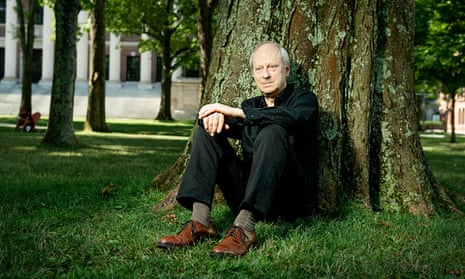
Michael Sandel photographed last month in the grounds of Harvard, Cambridge, Massachusetts.
Michael Sandel photographed last month in the grounds of Harvard, Cambridge, Massachusetts. Photograph: Webb Chappell
The Observer
Michael Sandel
Interview
Michael Sandel: 'The populist backlash has been a revolt against the tyranny of merit'
Julian Coman
The philosopher believes the liberal left’s pursuit of meritocracy has betrayed the working classes. His new book argues for a politics centred on dignity
Sun 6 Sep 2020 13.00 BST
387
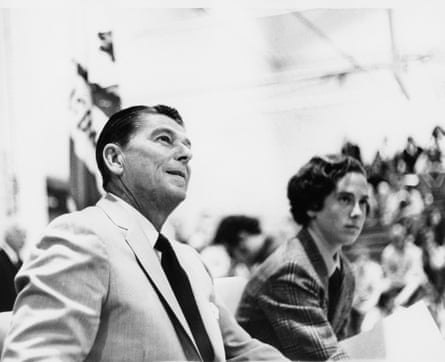
Michael Sandel was 18 years old when he received his first significant lesson in the art of politics. The future philosopher was president of the student body at Palisades high school, California, at a time when Ronald Reagan, then governor of the state, lived in the same town. Never short of confidence, in 1971 Sandel challenged him to a debate in front of 2,400 left-leaning teenagers. It was the height of the Vietnam war, which had radicalised a generation, and student campuses of any description were hostile territory for a conservative. Somewhat to Sandel’s surprise, Reagan took up the gauntlet that had been thrown down, arriving at the school in style in a black limousine. The subsequent encounter confounded the expectations of his youthful interlocutor.
“I had prepared a long list of what I thought were very tough questions,” recalls Sandel, now 67, via video-link from his study in Boston. “On Vietnam, on the right of 18-year-olds to vote – which Reagan opposed – on the United Nations, on social security. I thought I would make short work of him in front of that audience. He responded genially, amiably and respectfully. After an hour I realised I had not prevailed in this debate, I had lost. He had won us over without persuading us with his arguments. Nine years later he would get elected to the White House in the same way.”
Undeterred by this early setback, Sandel has become one of the most famous public intellectuals and debaters in the English-speaking world, taking a berth at Harvard after receiving a doctorate as a Rhodes scholar in Oxford. He has been described as “a philosopher with the global profile of a rock star”, reaching audiences of millions online from his Harvard base. Listeners to his BBC Radio 4 series, The Public Philosopher, will have become familiar with the Socratic style of questioning, as Sandel artfully tests the assumptions in the arguments of his audience. Millions of YouTube viewers, where his lectures on justice can be freely accessed, will be familiar with the high, serious forehead and gentle, softly spoken delivery.
Sandel’s politics are squarely on the left. In 2012, he added intellectual lustre to Ed Miliband’s renewal project for Labour, speaking to that year’s party conference on the moral limits of markets. The speech, and his book of the same year, What Money Can’t Buy, helped inspire Miliband’s critique of “predatory capitalism”, which was the Labour leader’s distinctive contribution to post-crash political debate in Britain.
What Money Can’t Buy sealed Sandel’s status as perhaps the most formidable critic of free-market orthodoxy in the English-speaking world. But as an age of violently polarised, partisan and poisonous politics has taken hold, it is that early encounter with Reagan that has begun to play on his mind. “It taught me a lot about the importance of the ability to listen attentively,” he says, “which matters as much as the rigours of the argument. It taught me about mutual respect and inclusion in the public square.”
The question of how to revive these civic virtues lies at the heart of Sandel’s new book, published this month. As American commentators warn of an “Armageddon” election in a divided country, how can a less resentful, less rancorous, more generous public life be revived? The starting point, uncomfortably, turns out to be a bonfire of the vanities that sustained a generation of progressives.
Michael Sandel, aged 18, debating with Ronald Reagan, then governor of California, 1971.
Michael Sandel, aged 18, debating with Ronald Reagan, then governor of California, 1971. Photograph: Courtesy of Michael Sandel
The Tyranny of Merit is Sandel’s response to Brexit and the election of Donald Trump. For figures such as Barack Obama, Hillary Clinton, Tony Blair and Gordon Brown, it will make challenging reading. By championing an “age of merit” as the solution to the challenges of globalisation, inequality and deindustrialisation, the Democratic party and its European equivalents, Sandel argues, hung the western working-class and its values out to dry – with disastrous consequences for the common good.
As he talks, the tone is as modulated as ever; the phrasing characteristically elegant and fluent. But a sense of frustration is palpable, as Sandel charts the rise of what he sees as a corrosive leftwing individualism: “The solution to problems of globalisation and inequality – and we heard this on both sides of the Atlantic – was that those who work hard and play by the rules should be able to rise as far as their effort and talents will take them. This is what I call in the book the ‘rhetoric of rising’. It became an article of faith, a seemingly uncontroversial trope. We will make a truly level playing field, it was said by the centre-left, so that everyone has an equal chance. And if we do, and so far as we do, then those who rise by dint of effort, talent, hard work will deserve their place, will have earned it.”
The recommended way to “rise” has been to get a higher education. Or, as the Blair mantra had it: “Education, education, education.” Sandel homes in on a 2013 speech by Obama in which the president told students: “We live in a 21st-century global economy. And in a global economy jobs can go anywhere. Companies, they’re looking for the best-educated people wherever they live. If you don’t have a good education, then it’s going to be hard for you to find a job that pays the living wage.” For those willing to make the requisite effort, there was the promise that: “This country will always be a place where you can make it if you try.”
Sandel has two fundamental objections to this approach. First, and most obvious, the fabled “level playing field” remains a chimera. Although he says more and more of his own Harvard students are now convinced that their success is a result of their own effort, two-thirds of them come from the top fifth of the income scale. It is a pattern replicated across the Ivy League universities. The relationship between social class and SAT scores – which grade high school students ahead of college – is well attested. More generally, he notes, social mobility has been stalled for decades. “Americans born to poor parents tend to stay poor as adults.”
But the main point of The Tyranny of Merit is a different one: Sandel is determined to aim a broadside squarely at a left-liberal consensus that has reigned for 30 years. Even a perfect meritocracy, he says, would be a bad thing. “The book tries to show that there is a dark side, a demoralising side to that,” he says. “The implication is that those who do not rise will have no one to blame but themselves.” Centre-left elites abandoned old class loyalties and took on a new role as moralising life-coaches, dedicated to helping working-class individuals shape up to a world in which they were on their own. “On globalisation,” says Sandel, “these parties said the choice was no longer between left and right, but between ‘open’ and ‘closed’. Open meant free flow of capital, goods and people across borders.” Not only was this state of affairs seen as irreversible, it was also presented as laudable. “To object in any way to that was to be closed-minded, prejudiced and hostile to cosmopolitan identities.”
For all the lies Trump tells, the one authentic thing about him is his insecurity and resentment against elites
A relentless success ethic permeated the culture: “Those at the top deserved their place but so too did those who were left behind. They hadn’t striven as effectively. They hadn’t got a university degree and so on.” As centre-left parties and their representatives became more and more middle-class, the focus on upward mobility intensified. “They became reliant on the professional classes as their constituency, and in the US as a source of campaign finance. In 2008 Barack Obama became the first Democratic candidate for president to raise more than his Republican opponent. That was a turning point but it wasn’t noticed or highlighted at the time.”
Blue-collar workers were in effect given a double-edged invitation to “better” themselves or carry the burden of their own failure. Many took their votes elsewhere, nursing a sense of betrayal. “The populist backlash of recent years has been a revolt against the tyranny of merit, as it has been experienced by those who feel humiliated by meritocracy and by this entire political project.”
It is a withering analysis. Does he empathise, then, with Trumpism? “I have no sympathy whatsoever for Donald Trump, who is a pernicious character. But my book conveys a sympathetic understanding of the people who voted for him. For all the thousands and thousands of lies Trump tells, the one authentic thing about him is his deep sense of insecurity and resentment against elites, which he thinks have looked down upon him throughout his life. That does provide a very important clue to his political appeal.
“Am I tough on the Democrats? Yes, because it was their uncritical embrace of market assumptions and meritocracy that prepared the way for Trump. Even if Trump is defeated in the next election and is somehow extracted from the Oval Office, the Democratic party will not succeed unless it redefines its mission to be more attentive to legitimate grievances and resentment, to which progressive politics contributed during the era of globalisation.”
So much for the diagnosis. The only way out of the crisis, Sandel believes, is to dismantle the meritocratic assumptions that have morally rubber-stamped a society of winners and losers. The Covid-19 pandemic, and in particular the new appreciation of the value of supposedly unskilled, low-paid work, offers a starting point for renewal. “This is a moment to begin a debate about the dignity of work; about the rewards of work both in terms of pay but also in terms of esteem. We now realise how deeply dependent we are, not just on doctors and nurses, but delivery workers, grocery store clerks, warehouse workers, lorry drivers, home healthcare providers and childcare workers, many of them in the gig economy. We call them key workers and yet these are oftentimes not the best paid or the most honoured workers.”
There must be a radical re-evaluation of how contributions to the common good are judged and rewarded. The money to be earned in the City or on Wall Street, for example, is out of all proportion with the contribution of speculative finance to the real economy. A financial transactions tax would allow funds to be channelled more equably. But for Sandel, the word “honour” is as important as the question of pay. There needs to be a redistribution of esteem as well as money, and more of it needs to go to the millions doing work that does not require a college degree.
“We need to rethink the role of universities as arbiters of opportunity,” he says, “which is something we have come to take for granted. Credentialism has become the last acceptable prejudice. It would be a serious mistake to leave the issue of investment in vocational training and apprenticeships to the right. Greater investment is important not only to support the ability of people without an advanced degree to make a living. The public recognition it conveys can help shift attitudes towards a better appreciation of the contribution to the common good made by people who haven’t been to university.”
A new respect and status for the non-credentialed, he says, should be accompanied by a belated humility on the part of the winners in the supposedly meritocratic race. To those who, like many of his Harvard students, believe that they are simply the deserving recipients of their own success, Sandel offers the wisdom of Ecclesiastes: “I returned, and saw under the sun, that the race is not to the swift, nor the battle to the strong, neither yet bread to the wise, nor yet riches to men of understanding… but time and chance happeneth to them all.”
“Humility is a civic virtue essential to this moment,” he says, “because it’s a necessary antidote to the meritocratic hubris that has driven us apart.”
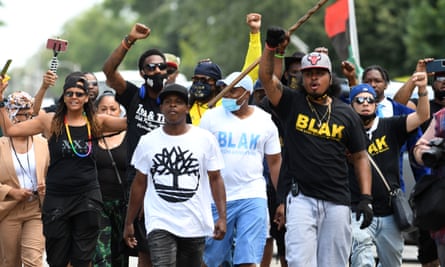
A Black Lives Matter protest in Kenosha, Wisconsin last week.
A Black Lives Matter protest in Kenosha, Wisconsin last week. Photograph: Mark Hertzberg/Zuma/Rex/Shutterstock
The Tyranny of Merit is the latest salvo in Sandel’s lifelong intellectual struggle against a creeping individualism that, since the Reagan and Thatcher era, has become pervasive in western democracies. “To regard oneself as self-made and self-sufficient. This picture of the self exerts a powerful attraction because it seems on the face of it to be empowering – we can make it on our own, we can make it if we try. It’s a certain picture of freedom but it’s flawed. It leads to a competitive market meritocracy that deepens divides and corrodes solidarity.”
The Black Lives Matter movement has given moral energy to progressive politics
Sandel draws on a vocabulary that challenges liberal notions of autonomy in a way that has been unfashionable for decades. Words such as “dependency”, “indebtedness”, “mystery”, “humility” and “luck” recur in his book. The implicit claim is that vulnerability and mutual recognition can become the basis of a renewed sense of belonging and community. It is a vision of society that is the very opposite of what came to be known as Thatcherism, with its emphasis on self-reliance as a principal virtue.
There are, he believes, optimistic signs beyond the “clap for carers” moment that an ethical shift is finally taking place. “The Black Lives Matter movement has given moral energy to progressive politics. It has become a multiracial, multigenerational movement and is opening up space for a public reckoning with injustice. It shows that the remedy for inequality is not simply to remove barriers to meritocratic achievement.”
In the closing section of his book, Sandel recalls the story of Henry Aaron, the black baseball player who grew up in the segregated south and broke Babe Ruth’s record for career home runs in 1974. Aaron’s biographer wrote that hitting a baseball “represented the first meritocracy in Henry’s life”. It’s the wrong lesson to draw, says Sandel. “The moral of Henry Aaron’s story is not that we should love meritocracy but that we should despise a system of racial injustice that can only be escaped by hitting home runs.”
Fair competition does not constitute a just vision of society. Even if Trump is defeated in November’s presidential election, this is a truth, Sandel says, that Joe Biden, and his counterparts in Europe, must take on board. For inspiration, he says, they could do worse than turn to one of his intellectual heroes, the English Christian socialist RH Tawney.
“Tawney argued that equality of opportunity was at best a partial ideal. His alternative was not an oppressive equality of results. It was a broad, democratic ‘equality of condition’ that enables citizens of all walks of life to hold their heads up high and to consider themselves participants in a common venture. My book comes out of that tradition.”
The Tyranny of Merit is published by Penguin on 10 September (£20). To order a copy go to guardianbookshop.com. Free UK p&p over £15
…as you’re joining us today from Taiwan, we have a small favour to ask.
The Guardian has spent the past 13 years tirelessly investigating the shortcomings of the British Conservative government - austerity, Brexit, partygate, cronyism, the Liz Truss debacle and the individual failings of ministers who behave as if the rules don’t apply to them.
Our work has resulted in resignations, apologies and policy corrections. And with an election just round the corner, we won’t stop now. It’s crucial that we can all make informed decisions about who is best to lead the UK. Will you invest in the Guardian this year?
Unlike many others, the Guardian has no shareholders and no billionaire owner. Just the determination and passion to deliver high-impact global reporting, always free from commercial or political influence. Reporting like this is vital for democracy, for fairness and to demand better from the powerful.
And we provide all this for free, for everyone to read. We do this because we believe in information equality. Greater numbers of people can keep track of the events shaping our world, understand their impact on people and communities, and become inspired to take meaningful action. Millions can benefit from open access to quality, truthful news, regardless of their ability to pay for it.
Whether you give a little or a lot, your funding will power our reporting for the years to come. If you can, please support us on a monthly basis from just $2. It takes less than a minute to set up, and you can rest assured that you’re making a big impact every single month in support of open, independent journalism. Thank you.
Contribution frequency
Single
Monthly
Annual
Contribution amount
$3 per month
$6 per month
Other
Continue
Remind me in April
Accepted payment methods: Visa, Mastercard, American Express and PayPal
Topics
Michael Sandel
The Observer
Philosophy books
Philosophy
Donald Trump
features
Reuse this content
More on this story
French philosopher urges people to rebel – by making friends
3d ago
‘Moral duty’ to allow family and friends to make big life choices, says Cambridge philosopher
26 Jan 2023
John Gray: 'What can we learn from cats? Don't live in an imagined future'
25 Oct 2020
516
Oedipus vex: French philosopher disowns son over novel
3 Sept 2020
Germany finds it hard to love Hegel 250 years after his birth
27 Aug 2020
Bruno Latour: 'This is a global catastrophe that has come from within'
6 Jun 2020
From the wreck of the pandemic we can salvage and resurrect an inner life
9 Aug 2020
'Can I sunbathe in the park?' is now a deep moral question
10 Apr 2020
1,775
More from Culture
Baillie Gifford prize
Six books shortlisted for ‘winner of winners’ award
42m ago
The Fabelmans
Why it should win the best picture Oscar
2h ago
31
Book of the day
Cuddy by Benjamin Myers review – a visionary history
3h ago
Books
The Norse Myths That Shape the Way We Think by Carolyne Larrington review – Thor blimey
2h ago
Best podcasts of the week
Best podcasts of the week: Civil rights activist James Meredith reflects on his remarkable life
50m ago
‘We can do a great show’
This year’s Oscars producers on plans, rumors and ‘the slap’
14h ago
Film
Lunana: A Yak in the Classroom review – heart and feet-warming tale of a Bhutan village
2h ago
1
Art
The Rembrandt of Aberdeenshire: the extraordinary life of artist James McBey
3h ago
7
Kites review
Story of girls’ friendship doesn’t quite fly
5h ago
2
Joya Berrow’s best photograph
A former inmate returns to HMP Holloway
20h ago
comments (387)
This discussion is now closed for comments but you can still sign in or create your Guardian account to join the discussion next time
Guardian Pick
Michael Sandel is not someone I've consciously come across before which, after reading this article is, I think, my loss.
There seems to be a definite coherence in the views he puts forward, especially during a pandemic during which too many national leaders haven't seemed able to do more than run around like helpless chickens, although whether the solutions he proposes are going to make it past those who currently pull the strings is somet…
Jump to comment
fraser48
6 Sep 2020 20.40
68
Guardian Pick
This is very interesting, and I am looking forward to reading the book.
I haven't believed in the myth of meritocracy for a long time, mainly from my own and my family's (positive and negative) experiences of coming from a dirt-poor, Irish immigrant background to secure professional status. The concept is not wrong though: that we should all be able to grow and develop, to contribute and to benefit from our own efforts. Sadly, too much …
Jump to comment
chrisecurtis
6 Sep 2020 20.40
66
View more comments
Most viewed
BooksMusicTV & radioArt & designFilmGamesClassicalStage
News
Opinion
Sport
Culture
Lifestyle
Original reporting and incisive analysis, direct from the Guardian every morning
Sign up for our email
Help
Complaints & corrections
SecureDrop
Work for us
Privacy settings
Privacy policy
Cookie policy
Terms & conditions
Contact us
All topics
All writers
Digital newspaper archive
Facebook
YouTube
Instagram
LinkedIn
Twitter
Newsletters
Advertise with us
Search UK jobs
Back to top
© 2023 Guardian News & Media Limited or its affiliated companies. All rights reserved. (modern)








评论( 387 )
此讨论现已关闭以征求意见,但您仍然可以登录或创建您的 Guardian 帐户以在下次加入讨论Guardian Pick
Michael Sandel is not someone I've consciously come across before which, after reading this article is, I think, my loss.
There seems to be a definite coherence in the views he puts forward, especially during a pandemic during which too many national leaders haven't seemed able to do more than run around like helpless chickens, although whether the solutions he proposes are going to make it past those who currently pull the strings is somet…
Guardian Pick
This is very interesting, and I am looking forward to reading the book.
I haven't believed in the myth of meritocracy for a long time, mainly from my own and my family's (positive and negative) experiences of coming from a dirt-poor, Irish immigrant background to secure professional status. The concept is not wrong though: that we should all be able to grow and develop, to contribute and to benefit from our own efforts. Sadly, too much …