Skip to main contentSkip to navigation
Sign in
The Guardian - Back to homeThe Guardian
Support us
News
Opinion
Sport
Culture
Lifestyle
Show More
Search input
Search
google-searchSearch
Support us
Print subscriptions
Search jobs
Holidays
Digital Archive
Guardian Puzzles app
Guardian content licensing site
The Guardian app
Video
Podcasts
Pictures
Newsletters
Today's paper
Inside the Guardian
The Observer
Guardian Weekly
Crosswords
Corrections
Facebook
Twitter
WorldEuropeUSAmericasAsiaAustraliaMiddle EastAfricaInequalityGlobal development
More
The long read
Who killed the 20th century’s greatest spy?
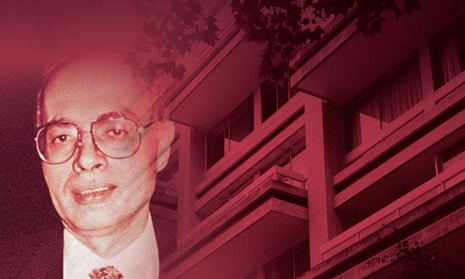
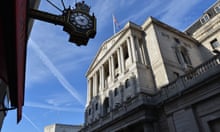
Ashraf Marwan and the block of flats from which he fell to his death in 2007
When Ashraf Marwan fell to his death from the balcony of a London flat, he took his secrets with him. Was he working for Egypt or Israel? And did the revelation of his identity lead to his murder?
Simon Parkin
Simon Parkin
Tue 15 Sep 2015 08.44 BST
118
This much is certain: Ashraf Marwan, a man some describe as the 20th century’s greatest spy, was alive when he tumbled from the fifth-floor balcony of his £4.4m London flat. The Egyptian businessman landed, shortly after 1.30pm on 27 June 2007, in the private rose garden at number 24 Carlton House Terrace, a street whose former occupants include three prime ministers (Palmerston, Earl Grey and Gladstone) and which lies a few hundred metres from Piccadilly Circus. Overhead, the lunchtime sky was obnoxious with helicopters, swarming above Tony Blair’s Teflon-plated convoy as it carried the prime minister to Buckingham Palace, where he would hand in his resignation. A woman screamed. Someone called the police. The paramedics arrived too late. Marwan died from a ruptured aorta.
The details of the final minutes of Marwan’s life are much more opaque. Not that there weren’t witnesses: on the morning of his death, four men were meeting on the third floor of an adjacent building, 116 Pall Mall, in a room with a clear view of Marwan’s balcony. In a curious twist, these men – József Répási, Essam Shawki, Michael Parkhurst and John Roberts – worked for one of Marwan’s companies, Ubichem PLC; they were waiting for their boss to join them. He was late. When they called around midday to find out why, he assured the group that he would be with them shortly.
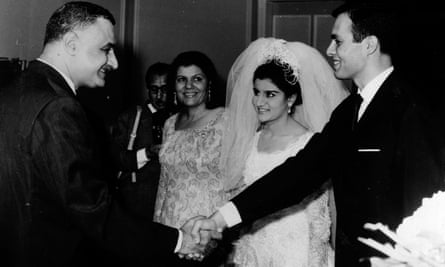
** FILE ** Nineteen-year-old Mona Nasser, center, smiles up at her father, President Nasser of Egypt, left, as he shakes hands with his son-in-law, chemist Ashraf Marwan, right, during Ashraf's wedding to Nasser's daughter, in a July 7, 1966 file photo. Mrs Nasser is also seen. Ashraf Marwan, the controversial son-in-law of Egypt's late President Gamal Abdel Nasser who was suspected of being an Israeli double agent, has died, a state-run news agency reported Wednesday, June 27, 2007. He was 62. (AP Photo/HO)
Who killed the 20th century’s greatest spy? - Podcast
Read more
Répási, who was sitting with the window to his left, recalled that he was startled by one of his colleagues crying out, “Look what Dr Marwan is doing!” Two of the other witnesses claimed at the time that they saw Marwan leap from the balcony. By the time Répási had moved to see out of the window he saw “Dr Marwan falling”. Shawki, who was then the director of Ubichem, ran downstairs to help. The other three men remained in the room, shocked and bewildered. After a moment, Répási looked out of the window again, straining to see the spot where Marwan had landed. “I saw two Middle Eastern-looking persons looking down from the balcony of one of the apartments,” he told me via email – although neither he nor his colleagues knew whether or not the men were standing on the balcony of apartment number 10, Marwan’s address.
Did Marwan jump or was he pushed? The postmortem examination found traces of antidepressants in Dr Marwan’s blood. A report from his doctor said that he had been “under considerable stress of late”, and had lost 10kg in two months. But there are reasons to believe suicide was unlikely. There was no note. Marwan was due to fly to the US that evening for a meeting with his lawyer. He had just been accepted into the Reform Club, whose members include Prince Charles and former MI5 boss Dame Stella Rimington. A few days earlier he had bought his grandson a PlayStation 3 for his birthday. Marwan and his wife, Mona Nasser, the daughter of the former Egyptian president, were due to take their five grandchildren on holiday. Marwan had plans. He had appointments. He had reasons to live. “There is no evidence of mental or psychiatric disorder,” the coroner William Dolman said, after a 2010 inquest into Marwan’s death, which did not reach a verdict. There was “no evidence of any intention to commit suicide”, Dolman concluded. But paradoxically, he also declared there was “absolutely no evidence” to support claims that Marwan was murdered.
But while Marwan may not have intended to take his life, he certainly feared for it. The last time he was alone in his apartment with his wife, he told her that he “might be killed”. He added, portentously: “I have a lot of different enemies.” In the months leading up to his death, Nasser recalled that her husband checked the door and locks every night before bed, a new habit unseen during their 38 previous years of marriage.
According to Marwan’s family, there was another clue at the scene – or, more precisely, the absence of a clue. The only known copy of his memoirs, which he was close to completing, allegedly disappeared from his bookshelves on the day of his death. The three volumes, each around 200 pages, as well as the tapes on which Marwan had dictated the text, have never been recovered.
mona nasser
Mossad agents murdered my husband, says widow of billionaire arms dealer
Read more
According to one scholar, Marwan had worked, over the years, for Egyptian, Israeli, Italian, American and British intelligence; was he preparing to spill secrets that could embarrass kings and nations? Who took the documents, if indeed they existed? And was his death part of a pattern? Marwan was the third Egyptian living in London to die in similar circumstances. (June 2001: the actor Soad Hosny fell from the balcony of Stuart Tower, a block of flats in Maida Vale, after she approached a publisher offering to write her memoirs. August 1973: El-Leithy Nassif, former head of the late Egyptian president Anwar Sadat’s presidential guard, fell from a balcony in the very same tower. He too was writing his memoirs.) All three victims had links to the Egyptian security services.
The inquest into Marwan’s death failed to provide many answers. “We simply don’t know the facts, despite careful investigation,” Dolman, the coroner, told the court in 2010. Indeed, after three years of examination by two separate murder squads, including Scotland Yard’s elite Specialist Crime Directorate, there remain, as Dolman put it, “many unanswered questions”. The story is alluring because its mysteries jar with the circumstances of the day – a death at lunchtime, in central London, with witnesses. The scene is littered with clues, but there is apparently no evidence to settle the story. And yet Marwan’s tale continues to itch at the curious. The doorman at 24 Carlton House Terrace told me that journalists drop by at a rate of “around one a year”, seeking answers about what happened that day. File a freedom of information request on the subject of Ashraf Marwan and you’ll receive an exhaustive list that outlines the many exemptions protecting the British intelligence agencies’ files on the matter. Both Marwan’s life and death remain opaque, composed of fuzzy details that sent obituary writers glumly reaching for the ifs and maybes.
At the precise moment that Ashraf Marwan tumbled from his balcony, Ahron Bregman was sitting in his office in the war studies department at King’s College London, waiting for a call from the spy that never came. After a few hours, Bregman left to return to Wimbledon, where he took his family to lunch at Nando’s. As he left the restaurant, his mobile phone rang. It was his sister, calling from Israel: Marwan was dead. The news disoriented Bregman, but, in the context of their missed appointment, it was not entirely unexpected. Marwan had also left him a string of stricken answerphone messages in the preceding days. Bregman knew that his friend feared his life was in danger. Moreover, Bregman knew that he was partly responsible for this state of affairs.
Bregman’s relationship with Marwan was complicated. They had met only once before in person, four years earlier, at the InterContinental hotel in London. (“I approached carefully through small streets to ensure I was not followed,” Bregman said. “I was late. He was already there. Tall. Wearing a red scarf.”) Nevertheless, their lives had become entwined. Before Bregman entered Marwan’s life, the Egyptian was known, if he was known at all, as a wealthy businessman and an avid Chelsea fan (he owned a 3.2% stake in the club and, at one point, one of his property companies took over both Chelsea and Fulham’s football grounds, before selling them at a vast profit). All that changed when Bregman came along.
Marwan was born in Egypt in 1944. His father was a military officer who served in the presidential guard brigade. At the age of 21, Marwan graduated with a first-class honours degree in chemical engineering from Cairo University, and was conscripted into the army. In 1965, Marwan was playing a game of tennis in Heliopolis, a suburb of Egypt’s capital, when he spied an attractive young girl, Mona Nasser, the president’s third and favourite daughter, who was 17 at the time. Love flowered, and the pair married the following year, drawing Marwan into the circles of the elite. The young man continued his military service for two more years, before moving to London to begin studying for an MA in chemistry.
President Nasser of Egypt (left), shakes hands with Ashraf Marwan (right), during Marwan’s wedding to Nasser’s daughter, Mona (centre), on 7 July 1966.
President Nasser of Egypt (left), shakes hands with Ashraf Marwan (right), during Marwan’s wedding to Nasser’s daughter, Mona (centre), on 7 July 1966. Photograph: Anonymous/AP
There, some sources claim that Marwan became dissatisfied with the family allowance he had been given. (Marwan was financially ambitious throughout his life; his eventual fortune exceeded £400m. Cabra Investments, the name given to Marwan’s property umbrella company, means “to grow large” in Arabic.) To supplement his student income – according to one historian – he charmed the wife of a Kuwaiti sheikh, who provided him with additional financial support. When President Nasser learned of the arrangement from the Egyptian embassy in London a few months later, he ordered his son-in-law to return to Cairo and summarily demanded that Marwan divorce his daughter. The pair refused and over time Nasser cooled. He ordered instead that Marwan remain in Cairo, flying to London only to submit his course papers and sit his exams.
In the spring of 1969, while the Beatles’ White Album was still clinging to the charts, Marwan visited London, ostensibly to consult a Harley Street doctor about a stomach ailment. According to the rather theatrical account presented by the historian Howard Blum in his 2003 book The Eve of Destruction, a history of the Yom Kippur war, Marwan handed the doctor his x-rays along with a file fat with official Egyptian state documents. He demanded that they be delivered to the Israeli embassy in London. Three days later, an agent from Mossad, the Israeli equivalent of MI6, contacted Marwan as he strolled through Harrods, the London department store (with whose future owner, Mohamed al-Fayed, he would later feud).
Not so, say senior Mossad agents – who narrated their own equally vivid version of the story to the former IDF intelligence analyst Uri Bar-Joseph for his 2010 book, Hamalach (The Angel). Marwan, they claim, called in on the Israeli embassy and requested to speak to a member of the security team. He was turned away – at least twice – before he was finally permitted to leave a message. Marwan identified himself by name and stated that he wished to work for Israeli intelligence. He chose not to leave a phone number but, as he was due to return to Egypt the next day, said that he would call again later that afternoon. When he did there was no response. This time Marwan left the phone number of his hotel.
Shmuel Goren, the European head of Mossad, was in London at the time. Goren picked up Marwan’s message and immediately recognised the name. Thanks to Marwan’s proximity to Egypt’s leaders, Mossad had already opened a file on him as a potential recruit. They even had a photograph of Marwan to hand, one taken on his wedding day four years earlier. Goren called the number that Marwan had left and, knowing that time was short, told him to remain in his hotel room. The phone rang again. Marwan was to go to a cafe close to the hotel.
Inside the cafe, a man sat at one of the tables reading a newspaper. He glanced down at the photograph next to his coffee cup and compared it to the rakish man who had just walked through the front door. Then he looked out of the window and nodded to a second figure waiting outside, who entered the cafe, strode up to Marwan and said: “Mr Marwan? I’m pleased to meet you. My name is Misha.” Marwan rose to shake his hand. The man with the newspaper, Shmuel Goren himself, left the building, unnoticed. As they talked, Marwan told Misha (whose real first name was Dubi) about his connections and what he might offer the Israelis. Marwan pushed an envelope across the table. “Here’s a sample of what I can give you,” he said. “I’m not asking for anything now, but I expect to be compensated at our next meeting.” His fee? $100,000.
Mossad doubted Marwan’s intentions. Was he planning to become a double agent in order to feed Israel incorrect information, or to pass secrets back to his father-in-law? Marwan had an answer for this. He was, he told Misha, dismayed with the fact that Egypt had been defeated in the six-day war in 1967. He simply wanted to be on the winning side. After the meeting, Misha reconvened with Goren in a taxi. The pair went over Marwan’s documents as they rode to the embassy. The papers seemed to be genuine. “Material like this from a source like this is something that happens once in a thousand years,” Goren said that day, according to the Jerusalem Post. According to Blum, another Mossad agent described the situation “as if we had someone sleeping in Nasser’s bed”. Marwan’s nickname within Mossad shows the near-celestial regard with which he would come to be regarded: Angel.
Marwan continued to gain trust in Egypt. Following his father-in-law’s death in September 1970, he supposedly passed secret Israeli documents to Nasser’s successor, Anwar Sadat, and as a result gained more influence. Any doubts that Mossad might still have harboured about Marwan were complicated three years later when, in April 1973, he sent a message to the Israelis warning of an imminent Egyptian attack. Israel sent tens of thousands of reservists and several brigades to the Sinai. No attack came. The state of alert reportedly cost Israel around $35m. On 4 October 1973, the spy again warned Israel of a looming Egyptian assault (Marwan called his case officer from Paris, where he was on a visit with an Egyptian delegation. He said that he wanted to discuss “lots of chemicals” – the agreed-upon code phrase to warn of impending war). At 8am the next morning the Israeli cabinet met in an emergency session. They decided to act upon Marwan’s information and began to mobilise their tanks. This time the information was correct, albeit four hours out: Marwan warned that the Egyptians would strike at sunset. The invasion began four hours earlier, at 2pm.
Nostalgia for Egypt's Nasser
Amira Nowaira
Read more
Why did Marwan enter the London cafe that afternoon? He certainly knew that his services would be in demand. At the time, Israel’s population numbered less than three million. The country’s military relied upon reservists, and the government needed informants to help them know when to mobilise those reservists. Marwan’s motivation almost certainly holds the key to decoding his true loyalties, as well as, perhaps, the identity of his eventual killers. Did he, cash-strapped and fuming at his father-in-law, decide to sell his services to Israel in order to become rich? (One source claims that over the course of his career, he received more than $3m from the Israelis.) Or did he, as an impeccable patriot, simply hope to provide Mossad with ruinous information in the role of a double agent?
That Marwan worked with the Israelis is not contested. His wife, Mona, has said that, in the early 2000s, she confronted her husband. At first he denied passing information to the Israelis. Later, he admitted he passed information, but claimed that it had been false. What is the truth? Bregman believes he knows the answer. But he is tortured by another question: was he responsible for the spy’s death?
“It’s a big mistake to expose living spies,” Bregman told me, with professorial gravitas. “Never do it. Don’t do it. Even if you get the chance.” Then, to sugar the counsel with flattery: “I can see you are clever. Don’t do it.”
We met on a grey February afternoon at his office in King’s College London, an old university full of warren-like corridors and fussy masonry. It was here that Bregman sat on 27 June 2007, awaiting a call from the spy to tell him where the pair could meet later that day. The call never came. Bregman was not unduly concerned. During their five-year relationship, he had grown used to Marwan’s capriciousness – a spy’s habit born of paranoia and precaution.
Clean-shaven, dimpled, with a smiling, half-whisper of a voice that caused me to lean in conspiratorially, Bregman was fidgety and excitable, eager to tell the story and his role in it. (Bregman’s meticulously kept papers on the affair, including transcripts of his conversations with Marwan, are held in the college’s archives; the author of A History of Israel seems keen to have his own place in some future edition.)
Bregman is one of the leading historians of Israel’s 20th-century wars (he has written more than 10 books on the subject, and acted as an adviser to the BBC on two related documentaries). But he described himself to me as an “academic with the soul of a journalist”. His talent for investigative work is clear in the story of how he came to identify Marwan as the renowned agent “Angel” – the details of which he has never revealed before. “I believed that it was possible to take all of the literature on the Yom Kippur war and triangulate their identity,” he says. As he pored over the documents and memoirs, Bregman’s suspicions grew. Marwan became his white whale. “I needed some kind of confirmation,” he says. “You can’t just accuse someone of being a spy. Marwan was a very rich man; he could have taken me to court.”
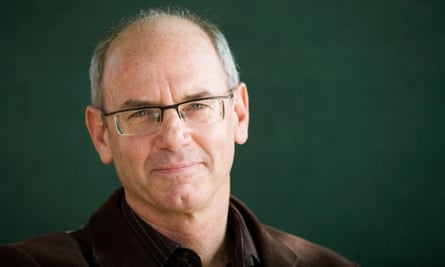
historian Ahron Bregman
‘It’s a big mistake to expose living spies. Never do it, even if you get the chance’ … historian Ahron Bregman. Photograph: Murdo Macleod/The Guardian
From 1999, Bregman began to send Marwan his articles, hoping to bait the spy into an admission. None came. Finally, the academic devised a plan. He would travel to Israel and meet the book editor who had published the memoirs of General Eli Zeira, the former director of Israel’s military intelligence, a few years earlier. Zeira, who was fired for acting on the spy’s incorrect information in April 1973, made numerous references in the book to Angel. “My assumption was that, even if Zeira would never confirm the name, his editor might.”
The pair met in a Tel Aviv cafe in 2000. “I planned my meeting very carefully,” says Bregman. The academic sat down and made small talk. “Ten minutes into the conversation, when he was warm to me but not tired of me, I asked the question.” Bregman could not have been more direct: “Is Marwan the spy?” The editor looked away and smiled. “This was my confirmation,” says Bregman. “Marwan was Angel.”
In London and in print, Bregman remained cautious. In his first book on the subject, Israel’s Wars, published later in 2000, he referred to Angel elliptically as “Nasser’s right-hand man”. He sent Marwan a copy. No response. Emboldened by the snub, Bregman went further in his second book, History of Israel, which was published in September 2002. “I wrote that Angel was one of Nasser’s relatives,” Bregman said. “And I claimed that he was sometimes code-named the ‘son-in-law’.” It was a lie, designed to provoke Marwan and tip off other journalists. Again, Bregman sent Marwan a copy of his book, this time bearing the inscription: “To Ashraf Marwan, hero of Egypt.” Still nothing. Nevertheless, the plan worked. In Egypt, another journalist arranged an interview with Marwan and asked him directly what he thought of Bregman’s claim. “Bregman’s book is a stupid detective story,” Marwan replied.
“I was hurt,” Bregman recalled. “I worked on that book for four years. How dare he?” Not only that, Bregman believed that Marwan had “blinked”. By dismissing the book as fiction, rather than threatening to take its author to court for libel, Marwan had, Bregman believed, given him further confirmation. “The journalist in me knew that I had a scoop. To not expose … it made no sense.” With a mixture of indignation and triumph, the following week Bregman gave an interview to the Egyptian weekly magazine Al-Ahram Al-Arabi. He met the paper’s journalist in a Starbucks in Wimbledon (close to the Nando’s where, years later, he would hear of Marwan’s death) and, during the course of the conversation, explicitly named Marwan as the spy. In the interview he said: “I have to defend my good name as a historian.”
On 29 December 2002, seven days after Bregman’s interview was published in Israel, he was in his garden, sweeping the winter leaves, when his wife called him into the house. There was a phone call. Bregman picked up the receiver. A voice on the other end of the line said, through a thick Arabic accent: “I’m the man that you have written about.” Bregman replied: “How can I be sure?” The voice said, simply: “You sent me the book with the dedication … ”
The two began a stuttering relationship. Bregman would call Marwan’s secretary in Cairo whenever he wanted to talk. “I would have to send her a fax to verify my identity. She would then pass that on to Marwan, in London, who would call me two minutes later.” Often Marwan would call, say nothing, hang up and call again minutes later – “spy stuff”, Bregman said. He’d identify himself only as “the subject of your book”. He warned Bregman that all of his calls were recorded by both the Egyptian and British intelligence services. Contrary to Bregman’s expectations, Marwan was not angry. “I had confused him, I think,” he says. “An academic, out of the blue, saying things … He was logical. He understood that his secret was out. He was clever. He turned me. He was charming, but also someone who could be very cruel. You could see. He used his charm. He turned me into his defender. All of a sudden I saw not the elusive spy, but the person with heart problems. The person with stress and all of the rest.” Bregman recalls that many of the calls were long. “He had nobody to talk to about all of this. You can’t discuss [espionage] with your wife or kids.”
Eventually Bregman asked whether he could write Marwan’s biography. Marwan declined. “He wanted the story to die. No biography.” This is puzzling in the light of the alleged missing memoir. Why would Marwan begin to write his autobiography if he wanted the story to go away? “The billion-dollar question,” Bregman told me. “Did he actually ever work on the book? Perhaps it was his way to stop me from writing mine.” As the months passed and Marwan asked Bregman’s advice on the writing process – he even asked Bregman to edit the book when he was finished with it – the academic became increasingly suspicious. “I’d ask him from time to time: what’s the name of the book? When will it be ready? Is it in English or Arabic? He told me it was in English because Arabs don’t read books.”
After Marwan’s death, finding proof of the memoir’s existence became an obsession for Bregman. He contacted every archive in the UK and the US to see if Marwan had left any copies. Only one respondent got back to him: Mary Curry, a librarian from the national archives in Washington. In a long email, Curry confirmed that Marwan had visited the archives twice, in January and March 2007, both times unannounced. Curry helped Marwan to search for his name on a database of declassified US government documents. It turned up in a transcript of a conversation between Henry Kissinger and Ismail Fahmi, the Egyptian foreign minister, from the mid-1970s, in which the three men discussed an arms deal. Marwan walked with a cane. He never mentioned a memoir. After he left the second time, Marwan sent Curry two boxes of Godiva chocolates. He never returned. Bregman told the police that he believed there was a book, but now he is unconvinced. Despite repeated requests, he never saw a word.
The pair met only once in person, in October 2003. Marwan initially invited Bregman to meet at the Dorchester hotel. “For Israelis like me, the Dorchester is a nightmare,” said Bregman. (It was at the Dorchester, in June 1982, that members of a Palestinian splinter group shot the Israeli ambassador to the UK, triggering the Lebanon war, in which Bregman fought as an artillery officer.) Bregman asked that the men meet, instead, at the InterContinental in Park Lane. Marwan was already fearful for his life. He told Bregman that Howard Blum’s 2003 book on the Yom Kippur war, which explicitly named him as Angel and outlined in detail how the spy began working for the Israelis, was “an invitation to assassinate me”. Their relationship was remote but persistent; Bregman believes Marwan wanted him to tell the version of the story that the spy wanted out there. Nevertheless, their friendship had strands of affection. Marwan was also lonely, Bregman said. Then, in 2007, the relationship became, as Bregman puts it, “much more dramatic”, with the panicked answerphone messages.
While Bregman had placed Marwan in some danger by exposing him as Angel, this was still only the word of a historian. No higher power had offered confirmation of the fact. This was to come soon enough. In Israel, Marwan had become the subject of a high-profile court case between two senior Israeli officers, General Zeira (whose book editor had tipped off Bregman to Marwan’s identity) and Zvi Zamir, the former head of Mossad. Zamir accused Zeira of leaking Marwan’s identity to the press. Zeira sued Zamir for libel. The case dragged on until, finally, the judge, Theodore Or (“a very tough guy”, according to Bregman), ruled on 25 March 2007 that Zeira had leaked the identity of Angel to unauthorised persons. The verdict became public three months later, on 14 June. Within 13 days, Marwan was dead.
When Bregman saw the reports of the verdict, in which a judge officially named Marwan as “Angel” for the first time, he immediately wrote to Marwan, to warn him that his life might be in danger. By mistake, Bregman, who had been warned by Marwan not to call any more, sent the letter to the spy’s old address. “Usually he would get back to me within 48 hours,” he says. “I heard nothing for a week.” When Marwan eventually received the letter, he left a trio of panicked messages on Bregman’s answerphone, all within the space of an hour. “It was unheard-of,” Bregman says. “The first time this had happened in five years.”
This was how Ahron Bregman came to be waiting in his office for a call from Ashraf Marwan on the day of the spy’s death. And this is how Bregman came to feel tremendous guilt. “I was a big hero when I exposed him,” Bregman later wrote. “But a very small one after he died.”
“Look,” Bregman said, quietly now. “With journalists, we are sometimes so determined to crack the nut that we forget that there are things around us. Your family. His family. We are human beings. And then you hear a voice. You hear him breathing. You hear him tell you about his heart problems. And this person that you’ve seen all this time as a superhero spy, someone made of gold and all the rest? That is not true. He is a human being.”
Did Marwan jump or was he pushed? “Killing him didn’t have to be a physical push,” Bregman told me. “You can say to a person: you have two sons. If you want us to leave them alone, you should jump … Maybe something like that. But the inquest couldn’t decide.” As to which nation or organisation might have been behind the push, be it physical or psychological?
“I don’t know,” he says. “The British, maybe they know something. It’s here somewhere.”
If the British do know something, then they have not blinked. The police identified the two men who were standing on Marwan’s balcony when he fell to his death, but have never made their names public. All information pertaining to Marwan’s life or death is, as of 30 July 2015, subject to no fewer than six freedom of information exemptions, including:
Section 23(5) – Information relating to Security Bodies
Section 24(2) – National Security
Section 27(4) – International Relations
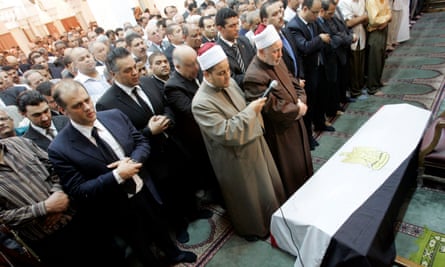
Hosni Mubarak, the president of Egypt at the time of Marwan’s death, is the only national leader to have publicly suggested a culprit (curveball: Libyans). If Egypt was behind Marwan’s murder, they certainly made it look otherwise. The spy’s funeral in Cairo was stately: the Egyptian flag and Marwan’s military decorations adorned the coffin. Mubarak’s son, Gamal, was in attendance, and the president even issued a statement saying: “I do not doubt his loyalty.”
But neither does Zvi Zamir, the former head of Mossad. Marwan spied loyally for the Israelis for reasons of “money and ego”, Zamir told me, in an interview from his apartment in Tel Aviv arranged by Uri Bar-Joseph. Now 90, Zamir is also haunted by his former agent’s death. “Not a single day passes without my torturing myself over the question of whether I could have protected him better,” he wrote, in his own memoir, With Open Eyes.
Ashraf Marwan’s funeral in Cairo on 1 Jul 2007.
Ashraf Marwan’s funeral in Cairo on 1 Jul 2007. Photograph: Nasser Nuri/Reuters/Corbis
At the time of the inquest, Marwan’s wife, Mona, said that she believed Mossad agents murdered her husband. But this seems unlikely. For one thing, killing a former agent after his name is revealed would seem to be a major disincentive for new recruits. Even if Israel believed that Marwan was a double agent, working for the Egyptians, better to do nothing and, through their silence, imply he was faithful to their cause. And in all this talk of whom Marwan worked for, the question of who Marwan was has been lost.
In late June, six months after my first attempt at making contact with Marwan’s family, a reply arrived from Ahmed, the late spy’s younger son. (The family’s British lawyer, John Harding, was copied in.) Ahmed agreed to meet me during a visit to London from his home in Cairo in early July. Just after midnight one Sunday morning I received an email, telling me to be in a hotel lobby in Green Park the following day.
I arrived on time; 15 minutes later, Ahmed entered through the sliding doors, and beckoned me outside. Charming and stubbled, handsome at 44, with the resonant voice of a chain smoker (he drags, with Gallic commitment, on a Philip Morris cigarette between each equally deliberate sentence). We sat outside, in a neighbouring cafe. I pulled my phone out of my pocket to record our conversation, concerned that we wouldn’t be heard over the ambient timpani of pneumatic drills and car horns. “I guess we’re both going to record this,” Ahmed replied, placing his identical phone next to mine.
He remembers his father in superlatives. Marwan was “the kindest man”, “the most human individual”, “full of life”, “very funny”. He “hardly ever lost his temper” and was “a very deliberate” individual. Ahmed moved with his father to London at the age of nine, the year before President Sadat’s assassination (contrary to many reports). All he remembers of his father in those early years was that he travelled and read a great deal. Ahmed and his father were close. They spoke most days, sometimes more than once. They’d talk about football. “He was a wise individual,” he says. “I enjoyed talking to him.”
Ahmed was in a meeting in Cairo when his father died. His secretary rang to ask if he was OK, not realising that he didn’t know yet. Ahmed told her that he was in a meeting and put the phone down. Eventually, the message came through from Ahmed’s older brother, Gamal: “Pappy is in the hands of God.” He arrived in London the following day at 6am.
I asked him about his mental state in all of the confusion. Did he want to know what happened? “We know what happened,” he said, quickly. “It’s very clear what happened.” It’s a strange response in a case that remains notorious for its lack of clarity.
“What happened?” I asked. “It is imperative that I am very careful and choosy of my words,” he said, after a moment. “There was an inquest. And in the inquest a lot of evidence was presented. And the judge said he rejects the possibility that my late father took his own life. There is no evidence to support that whatsoever. So it’s clear what did not happen.
“Now, to talk in terms of what did happen, you need certain amounts of evidence. The way things developed meant there was no single individual that a finger could be pointed towards. But it’s very clear what did not happen. It was important to get that settled. For my faith. For our family. For history.”
Surely, the knowledge that his father did not commit suicide only opens up fresh questions, I said. Those questions niggle at me. Has he made his peace with the mystery?
“I wouldn’t say I’m at peace,” he says. “But I accept what happened. I accept … ”
A long and difficult pause.
“I accept that my father is no longer here. It’s a fact. Do I miss him? Yes. Do I wish we spent more time together? Yes. He was young. Very young. It’s what happened. What else can you do? We’re never going to find a name to say who did this. Sometimes one has to accept the limitations of what one can do.”
Mona Marwan (centre) and Ahmed Marwan (centre right), widow and son of Ashraf Marwan, leaving court in London after the 2010 inquest into his death returned no verdict.
Mona Marwan (centre) and Ahmed Marwan (centre right), widow and son of Ashraf Marwan, leaving court in London after the 2010 inquest into his death returned no verdict. Photograph: Carl Court/AFP/Getty
“Why do you think he was killed?” I asked.
“I have to be very choosy … ”
“Why?”
“Because we are talking about … I am a father.”
“Are you worried there would be repercussions, even now?”
“There are always consequences for what people say and do. However, things are settled in court. Things are settled internally. Things are settled in society. History just unfolds. That’s why I choose to be careful.”
“Who killed your father?”
Another pause.
“Someone saw it in their interest,” he said. “They had a reason to do it. It’s very easy to look at: who was this individual? What did he do? Then you can start seeing a bunch of possibilities.
“As the saying goes,” he continued, “if you don’t see the sun at noon, it’s because you don’t want to see it. It’s right there.”
Midway through our conversation, the phone rings: it’s Mona. The incoming call paused Ahmed’s recording, and he frantically sent his mother to answerphone. Soon, she called again; apologising, Ahmed answered in Arabic, and stood and walked to the end of the street, out of earshot. I sat wondering why Ahmed had met with me, a foreign journalist; I imagined that Mona, who surely knew of our meeting, was checking in to see how things were going, to make sure he hadn’t said anything that might put them in danger. And then I remembered something Bregman had told me months earlier, about the sense of peace he felt after his secret was out. “You are only in danger when you have the information inside you,” he said. “As soon as it’s released, you’re not important any more.” Perhaps.
When Ahmed returned to the table, I asked him whether all of this had spoiled London. Until recently, he said, wherever he walked, he would see his father: the tailors in which they bought their suits, the shop where they bought chocolate bars, the pizza place where he would always order the same thing, decade in, decade out. Then, as sudden as it was gradual, Ahmed said that he felt settled when he visited the city. “London is London and the memories are there,” he said. “I can be sad that he is not here with me any more. I can also be full of joy and fondness remembering all these times together. Eight years … is enough time for wounds to start healing.”
I asked Ahmed what he had learned from his father.
“He once told me: ‘Ahmed. Everything you want to know in the world is public. You just have to look at it and research it and put the dots together. Anything and everything you want to know is there for us to see.’”
A few weeks after I met Marwan’s youngest son, I contacted Bregman again. I asked him why he thinks Ahmed was so careful with his words. “Because he believes it is a murder,” he replied. “Better to shut up. It’s too dangerous otherwise. This world is extremely murky.”
I recall that Bregman dedicated his book to Marwan, a “hero of Egypt”. And yet, after spending so much time considering the case, it was hard not to conclude that Egypt had the most to gain through Marwan’s death, just as they had the most to lose from a formal admission in a memoir that Marwan had double-crossed them. Then there are those other Egyptian bodies, thrown from high-rise London buildings. Marwan’s murder is another stitch in a pattern that’s difficult to ignore. I asked Bregman bluntly what he would say to refute my impression that the Egyptians had a hand in Marwan’s death. He answered, plainly: “I would not.”
Bregman patiently answered my final questions while he was supposed to be relaxing on a holiday in Wyoming. The symbolism is clear; this is a story that won’t leave the historian alone. Eight years on, and still he cannot flee the questions. And yet he chooses to reply, even when he has no answers – no doubt because they are the same questions he continues to ask of himself. “I don’t know whether Marwan died because of me,” Bregman said, “but what I do know is that it was not a good idea to unmask a living spy. It was a big mistake.”
“I have never put the matter to rest,” he tells me, before we finally say goodbye. “It is just too big.”
Follow the Long Read on Twitter at @gdnlongread, or sign up to the long read weekly email here.
… as you’re joining us today from Taiwan, we have a small favour to ask. Tens of millions have placed their trust in the Guardian’s fearless journalism since we started publishing 200 years ago, turning to us in moments of crisis, uncertainty, solidarity and hope. More than 1.5 million supporters, from 180 countries, now power us financially – keeping us open to all, and fiercely independent. Will you make a difference and support us too?
Unlike many others, the Guardian has no shareholders and no billionaire owner. Just the determination and passion to deliver high-impact global reporting, always free from commercial or political influence. Reporting like this is vital for democracy, for fairness and to demand better from the powerful.
And we provide all this for free, for everyone to read. We do this because we believe in information equality. Greater numbers of people can keep track of the events shaping our world, understand their impact on people and communities, and become inspired to take meaningful action. Millions can benefit from open access to quality, truthful news, regardless of their ability to pay for it.
Whether you give a little or a lot, your funding will power our reporting for the years to come. If you can, please support us on a monthly basis from just $2. It takes less than a minute to set up, and you can rest assured that you’re making a big impact every single month in support of open, independent journalism. Thank you.
Contribution frequency
Single
Monthly
Annual
Contribution amount
$3 per month
$6 per month
Other
Continue
Remind me in March
Accepted payment methods: Visa, Mastercard, American Express and PayPal
Topics
Espionage
The long read
Egypt
Middle East and north Africa
Crime
features
Reuse this content
Most viewed
WorldEuropeUSAmericasAsiaAustraliaMiddle EastAfricaInequalityGlobal development
News
Opinion
Sport
Culture
Lifestyle
Original reporting and incisive analysis, direct from the Guardian every morning
Sign up for our email
Help
Complaints & corrections
SecureDrop
Work for us
Privacy settings
Privacy policy
Cookie policy
Terms & conditions
Contact us
All topics
All writers
Digital newspaper archive
Facebook
YouTube
Instagram
LinkedIn
Twitter
Newsletters
Advertise with us
Search UK jobs
Back to top
© 2023 Guardian News & Media Limited or its affiliated companies. All rights reserved. (modern)












留言
張貼留言