乔科-维多多承认印尼过去存在侵犯人权的行为
乔科维承认印尼过去存在侵犯人权的行为
佐科-维多多说,他对侵权行为表示强烈遗憾
作者:凯利-吴
BBC新闻
印度尼西亚总统佐科-维多多承认他的国家历史上有 "严重侵犯人权的行为",并发誓要防止任何重复。
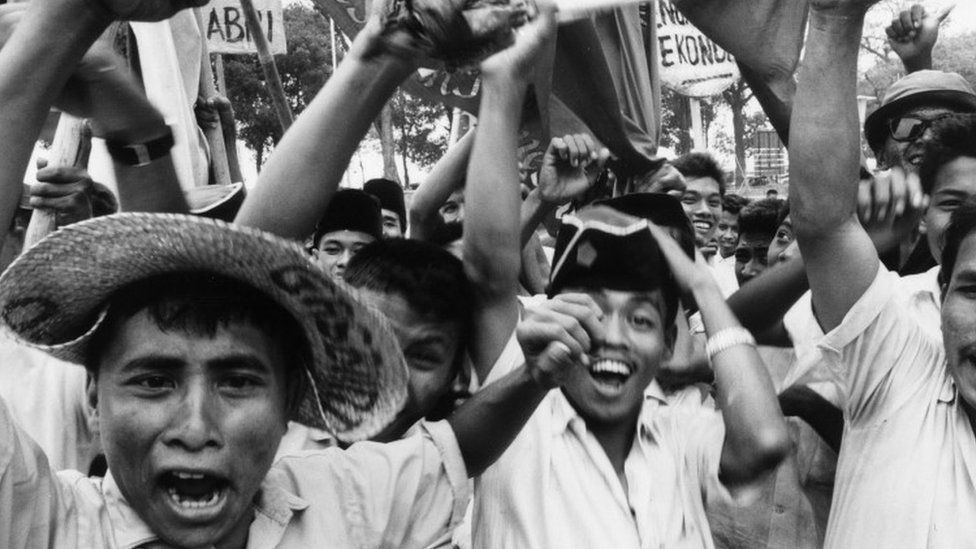
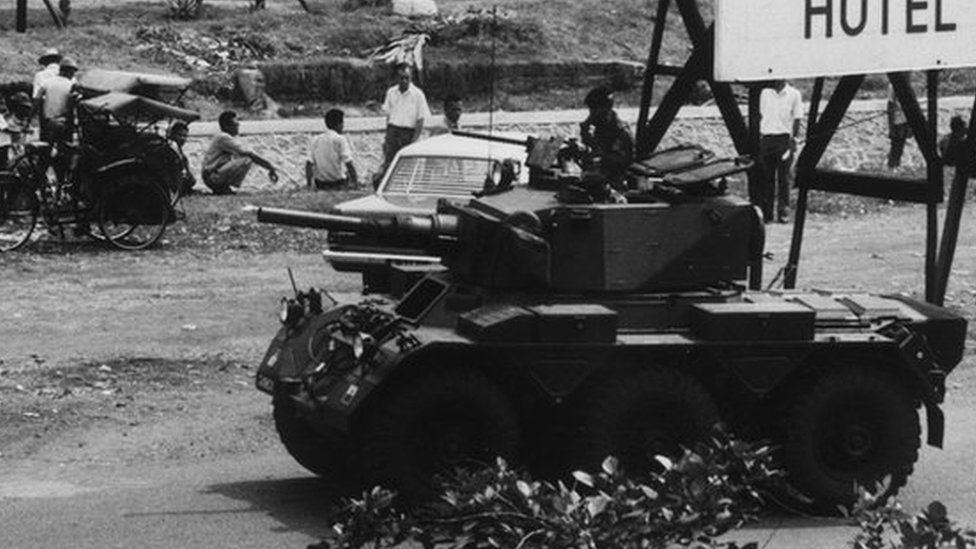
他列举了12个 "令人遗憾 "的事件,包括冷战时期的反共产主义大清洗。
据一些人估计,这些大屠杀造成约50万人死亡。
维多多先生是继已故的阿卜杜拉赫曼-瓦希德(Abdurrahman Wahid)于2000年公开道歉后,第二位公开承认1960年代流血事件的印度尼西亚总统。
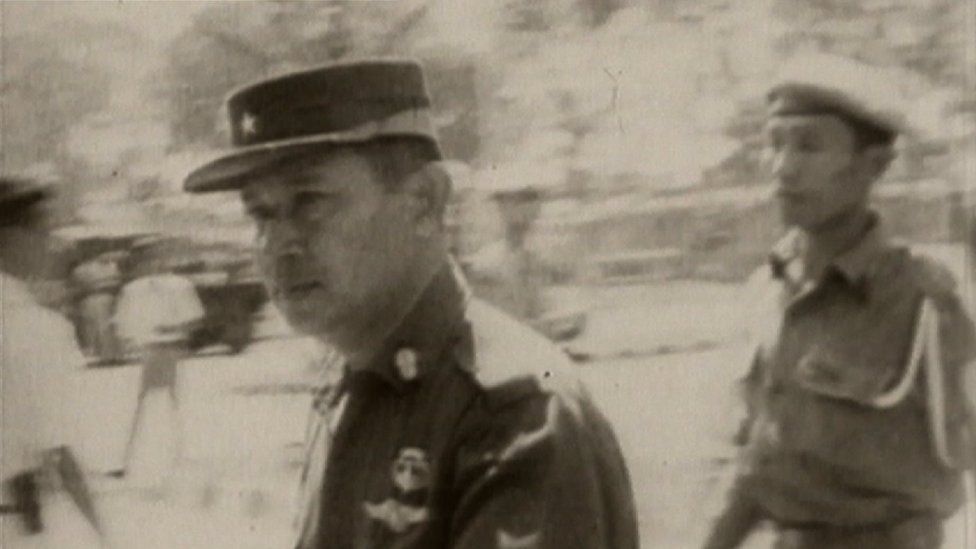
在共产党、军方和伊斯兰教团体争夺权力的过程中,共产党人被指控在一次未遂政变中杀害了六名将军,此后暴力事件就被释放出来了。
"周三,维多多先生在雅加达总统府外举行的新闻发布会上说:"作为(印度尼西亚)国家元首,我怀着清醒的头脑和真诚的心,承认在许多情况下确实发生了严重侵犯人权的行为。
"我对这些侵权行为的发生深感遗憾,"这位通常被称为Jokowi的总统补充说。
美国对印尼1960年代的屠杀事件知情
审视印度尼西亚过去的大屠杀
印度尼西亚最黑暗时期的见证者的时间已经不多了
他列举的事件发生在1965年至2003年之间,包括1990年代末在抗议前领导人苏哈托的铁腕总统任期期间绑架民主活动家。
总统还强调了巴布亚地区--与巴布亚新几内亚接壤的东部地区,那里有长期的分离主义运动--以及苏门答腊岛北部亚齐省的叛乱期间发生的侵犯权利事件。
他说,政府正在寻求恢复受害者的权利,"在不否定司法决议的情况下,公平和明智地恢复受害者的权利",但没有具体说明如何做到这一点。
"我将全心全意地努力确保严重侵犯人权的行为在未来不再发生,"他补充说。
行
东南亚记者乔纳森-海德的分析盒
在这个地区,即使是听到一位政治领导人承认国家的侵权行为也是罕见的,所以维多多总统对印尼过去的黑暗事件表示遗憾,通过了东南亚人权标准的极低标准,并将受到广泛欢迎。
这是向履行他在2014年首次竞选总统时做出的竞选承诺迈出的一步,即为过去的侵犯人权行为提供问责。但这只是一个步骤。
这一步来得非常晚,就在维多多总统即将下台的前一年。他只是在去年才成立了调查小组,对12起最恶劣的案件进行调查,其职权范围明确为非司法性;其目的是阐明所发生的事情,但不是在法庭上将肇事者绳之以法。相反,他承诺 "以公平和明智的方式恢复受害者的权利",并医治国家的创伤。
他所提议的听起来更像是在南非开创的真相与和解进程,以及在印度尼西亚结束对东帝汶的暴力镇压统治后,在离家较近的地方使用。对受害者来说,只要国家承认他们的痛苦并表示遗憾,就能起到宣泄的作用,但对一些人来说,这还不够深入。
批评者指出,在维多多总统的领导下,被指控犯有一些最严重侵权行为(如1998年初绑架和谋杀政治活动家)的军官得到晋升,而不是被追究责任。
最近通过的新法律限制而不是扩大了1998年专制的苏哈托政权垮台后赢得的自由。在动荡的巴布亚省,人权环境本来就很糟糕,自2014年以来更加恶化。而现在对1965-66年的大屠杀进行的任何清算,其中至少有50万疑似左派人士在军方的勾结或直接指挥下被谋杀,将在大多数涉案人员已经死亡后很久才会发生。
然而人权活动家们说,他的承认未能解决政府的责任。
大赦国际印度尼西亚执行主任乌斯曼-哈米德呼吁对这些行为的实施者采取法律行动。
"仅仅承认而不设法将过去侵犯人权的责任人绳之以法,只会在受害者及其家属的伤口上撒盐。简单地说,如果不追究责任,总统的声明就毫无意义。"他说。
人权观察的安德烈亚斯-哈索诺说,维多多先生 "没有明确承认政府在暴行中的作用,也没有做出任何追究责任的承诺"。
维多多先生最近收到了他去年委托的一个调查侵犯权利行为的小组的报告。
Jokowi acknowledges Indonesia's past human rights violations

Indonesian President Joko Widodo has acknowledged "gross human rights violations" in his country's history and vowed to prevent any repeat.
He cited 12 "regrettable" events, including an anti-communist purge at the height of the Cold War.
By some estimates, the massacres killed about 500,000 people.
Mr Widodo is the second Indonesian president to publicly admit the 1960s bloodshed, after the late Abdurrahman Wahid's public apology in 2000.
The violence was unleashed after communists were accused of killing six generals in an attempted coup amid a struggle for power between the Communists, the military and Islamist groups.
"With a clear mind and an earnest heart, I as (Indonesia's) head of state acknowledge that gross human rights violations did happen in many occurrences," Mr Widodo said on Wednesday at a news conference outside the presidential palace in Jakarta.
"And I strongly regret that those violations occurred," added the president, more commonly known as Jokowi.
The events he cited took place between 1965 and 2003 and included the abduction of democratic activists during protests against former leader Suharto's iron-fisted presidency in the late 1990s.
The president also highlighted rights violations in the region of Papua - the eastern region bordering Papua New Guinea where there has been a long-running separatist movement - as well as during an insurgency in the province of Aceh, in the north of the island of Sumatra.
The government was looking to restore the rights of victims "fairly and wisely without negating judicial resolution", he said, but did not specify how this would be done.
"I will endeavour wholeheartedly to ensure gross human rights violations never happen again in the future," he added.


Even to hear a political leader acknowledge abuses by the state is rare in this region, so President Widodo's expression of regret for the darker episodes in Indonesia's past passes what is a very low bar for human rights standards in South-East Asia, and will be broadly welcomed.
It is a step towards fulfilling a campaign pledge he made when he first ran for president in 2014, to provide accountability for past human rights violations. But only a step.
This has come very late, just a year before President Widodo is due to step down. He only set up the team to investigate 12 of the most egregious cases last year, and its remit is explicitly non-judicial; it aims to shed light on what happened, but not to bring the perpetrators to justice in a court of law. Instead he promised to "restore the rights of victims in a fair and wise manner", and the heal the nation's wounds.
What he is proposing sounds more like the truth and reconciliation process pioneered in South Africa, and used closer to home in Timor Leste after the end of Indonesia's violently repressive rule there. It can be cathartic for victims just to have their suffering acknowledged and regretted by the state, but for some this does not go far enough.
Critics have pointed out that under President Widodo military officers accused of some of the worst abuses, like the abduction and murder of political activists in early 1998, have been promoted rather than being held to account.
New laws passed recently have limited, not expanded the freedoms won after the fall of the authoritarian Suharto regime in 1998. The human rights environment in the troubled province of Papua, already bad, has deteriorated since 2014. And any reckoning now with the mass killings of 1965-66, in which at least half a million suspected leftists were murdered, with the collusion or under the direct command of the military, will happen long after most of those involved have already died.
However rights activists said his admission failed to address government responsibility.
Amnesty International's Indonesia executive director Usman Hamid called for legal action to be taken against the perpetrators of these acts.
"Mere recognition without trying to bring to justice those responsible for past human rights violations will only add salt to the wounds of the victims and their families. Simply put, the president's statement is meaningless without accountability," he said.
Andreas Harsono of Human Rights Watch said Mr Widodo "stopped short of explicitly admitting the government's role in the atrocities or making any commitments to pursue accountability".
Mr Widodo recently received a report from a team he commissioned last year to investigate rights violations.

留言
張貼留言