

美國現在沒有接受在台灣問題上的戰略明確性或戰略模糊性,而是以一種非常非戰略形式的模糊性告終。面對既要阻止中國入侵又不鼓勵台灣領導人進行政治冒險的雙重挑戰,歷屆政府只是用一系列相互矛盾的聲明和政策把水攪渾了。
在闡明更好的方法時,華盛頓最好研究冷戰初期哈里·杜魯門、德懷特·艾森豪威爾和約翰·肯尼迪處理中國和台灣問題的方式。每位總統的做法都包含三個要素:第一,美國保衛台灣意願的戰略清晰度;第二,明確限制他們支持的台灣政策;第三,承諾保持戰術靈活性和外交機動。雖然他們的政策傾向於戰略清晰度,但這種清晰度為北京留下了發洩和發出信號的空間並要求華盛頓根據每場危機的情況調整其對台灣的威懾和保證水平。三位總統都希望找到一個平衡點,以確保美國在台海的行動是由華盛頓而不是台北或北京的決定來決定的。
攪渾水
簡要回顧一下美國對台政策的近期歷史。唐納德·特朗普總統在 2016 年和 2017 年以令人頭暈目眩的速度首先挑戰但隨後承諾了“一個中國”政策。共和黨發起的立法,如 2021 年 2 月的《台灣入侵預防法》,預先授權使用武力應對襲擊中國對台灣。但這是在共和黨人失去對白宮和國會的控制權之後才出現的空洞姿態。
喬·拜登總統似乎全面躍升至戰略清晰度,他在2021 年8 月和2021 年 10月以及 2022 年5 月和2022 年 9 月宣布美國將保衛台灣。然而,他的政府撤回了一些聲明並堅稱美國的政策沒有改變,從而增加了歧義,甚至可能是混亂。甚至拜登 2022 年 10 月的國家安全戰略也傾向於戰略模糊。它表示,美國將“保持我們的能力,以抵制任何對台灣訴諸武力或脅迫的行為”。但是“我們可以”與“我們願意”並不完全相同。
美國支持台灣獨立的問題也一度變得混亂。美國國務院於 2022 年 5 月在其關於台灣的情況說明書中刪除了“我們不支持台灣獨立”這句話,然後在一個月後又恢復了這句話。眾議院議長南希·佩洛西 (Nancy Pelosi) 於 2022 年 7 月訪問台灣之前加入了自己的觀點,稱獨立問題“由台灣決定”。她的旅行和語言的轉變都激怒了中國,並加劇了本已惡化的美中關係。現在有分析認為,“第四次台海危機”已經來臨。
杜魯門在工作中學習
從 1945 年到 1947 年,杜魯門在喬治·馬歇爾將軍的領導下對中國採取的戰後直接政策是促成毛澤東的共產黨人和蔣介石的國民黨之間的權力分享安排。隨著談判失敗和中國內戰升級,政府得出結論認為國民黨無法獲勝,並於 1949 年 1 月終止了軍事援助。八個月後,毛澤東的軍隊佔領了北京,而蔣介石的國民黨在台灣建立了事實上的流亡政府。
然而,國民黨在美國得到了深厚的支持,並使他們的事業得以延續。一個資金雄厚的中國遊說團體及其在國會的盟友困擾和嘲弄杜魯門政府,質問“誰失去了中國”。政府在歷史性的 1949 年白皮書中為自己辯護,認為即使是美國的直接干預也無法挽救國民黨。
面對壓力,特朗普政府雖然挑釁,但仍試圖在威懾中國和致力於保衛台灣方面穿針引線。1950年1月5日,杜魯門在白宮發表聲明,正式宣布他的政府不會在台灣建立軍事基地,也不會提供軍事援助或建議,因為他認為蔣的軍隊足以自衛。杜魯門強調,他“不會採取會導致捲入中國國內衝突的做法”。雖然這似乎是對中國的邀請而不是威懾,並且明確結束了對台灣防禦的任何承諾,國務卿迪安艾奇遜在 1950 年 1 月 12 日的國家新聞俱樂部發表講話,試圖澄清杜魯門的聲明和內部管理思想。艾奇遜辯稱,雖然對台灣的攻擊不會導緻美國的干預,但它會觸發“整個文明世界根據《聯合國憲章》作出的承諾”。厭倦了肩負全部重擔並對國民黨感到失望的杜魯門試圖將保衛台灣作為一項多邊任務。
在修辭和政治上,這些聲明慘遭失敗。艾奇遜認為是分擔責任的問題被認為是放棄盟友。批評者指責政府放棄了對台灣和韓國的防禦。政府政策最終一字不漏地遵循艾奇遜:當朝鮮于 1950 年 6 月 25 日進攻韓國時,杜魯門政府毫不猶豫。它在收到有關朝鮮敵對行動的確認報告後兩小時內組織了一項基於聯合國的多邊努力,並決定在幾天內動用美國的空中和海上力量支持韓國軍隊。
在這一點上,杜魯門正在微調威懾與承諾之間的平衡。他採取行動威懾中國,命令美國第七艦隊在台灣海峽巡邏,以防北京打算利用朝鮮衝突作為掩護對台灣採取軍事行動。與此同時,杜魯門對台灣作出有明確限度的承諾。雖然杜魯門 6 月 27 日關於戰爭的公開聲明和艾奇遜給蔣介石的私人電報要求政府有義務保衛台灣不受中國的影響,但電報也要求蔣介石停止對大陸的攻擊,因為擔心他可能會利用朝鮮危機轉移他的注意力。大規模試圖奪回它。杜魯門指示第七艦隊既要保護台灣不受中國的影響,又要阻止台灣的行動反對大陸。當蔣介石自願在韓國使用他的軍隊時,政府拒絕了這一提議,擔心國民黨在該大陸立足的影響。對於杜魯門和艾奇遜來說,這正是它不需要的那種幫助——朝鮮和中國衝突的聯繫。實際上,在威懾中國和致力於台灣防禦的同時,杜魯門建立了一個機動緩衝墊,旨在將台灣海峽與朝鮮戰爭隔離開來。
艾克還有很多值得喜歡的地方
艾森豪威爾繼承了一項針對中國攻台的威懾政策,但明確限制了美國對台灣的承諾。最初,他稍微放鬆了蔣介石的束縛,在他1953 年的國情咨文中宣布,第七艦隊將不再受命阻止國民黨進攻大陸,他建議“要求美國海軍充當共產主義中國。” 最終,在處理兩次台海危機時,他通過書面協議將其製度化,從而增加了美國政策的清晰度和緩衝性。
The first Taiwan Strait crisis began on Sept, 3, 1954 with Chinese shelling of the Nationalist-held offshore islands of Quemoy (Jinmen) and Matsu (Mazu), which were closer to the mainland than to Taiwan. While the administration debated whether to use force — and the Nationalists retaliated against Chinese positions on the coast — Secretary of State John Foster Dulles visited Taiwan. The deal he struck with the Nationalists was a commitment with limitations. Even as Chiang lobbied for greater U.S. action, Eisenhower drew a line between how his administration would respond to attacks on Taiwan and how it would respond to strikes against Quemoy and Matsu. During National Security Council meetings on Sept. 9 and 12, 1954, Eisenhower reminded all involved that they were debating whether to commit to war with China. In the United States-Taiwan Mutual Defense Treaty, signed on Dec. 2, 1954, the administration agreed to defend Taiwan and the Pescadores (Penghus), but not Quemoy, Matsu, or the Tachen Islands. In a secret side agreement — that was eventually leaked by administration officials in order to restrain Chiang — Washington and Taipei agreed that the United States would not help the Nationalists retake the mainland. Retaliation against Chinese attacks was allowed, but any offensive action against the mainland required Washington’s approval.
Eisenhower then asked Congress for formal authority to defend Taiwan. The Formosa Resolution, passed in late January 1955, gave Eisenhower the authority to use force, but again, only in defense of Taiwan and the Pescadores. In Eisenhower’s eyes, a firm response could deter a larger attack by China, but the loss of Quemoy and Matsu would not lead to “a collapse of the free world position.” The distinction between what the United States would defend and what it would not gave Eisenhower his geographic cushion.
The Second Taiwan Strait Crisis, triggered by renewed Chinese shelling of Quemoy and Matsu in August 1958, tested the U.S. ability to limit that commitment. Chiang had redeployed roughly one third of all Nationalist forces to Quemoy and Matsu, creating an invitation for Beijing and a dilemma for Eisenhower. Significant attacks on the offshore islands might become a tripwire, requiring the United States to use, in Eisenhower’s words, its “full military power” to prevent a catastrophic defeat for Taiwan. Even while recognizing Chiang’s manipulation, the administration considered both threatening to use and actually using nuclear weapons. Pressure from Congress and from allies restrained the administration, particularly as it was clear to Dulles that the use of nuclear weapons might seriously damage U.S. relations with Japan. As the United States and Taiwan continued to resupply the islands into October, Chinese shelling tailed off. In the end, neither side chose to escalate. Eisenhower then made it clear to Chiang that he wanted a reduction in Taiwanese military operations against the mainland and a redeployment of troops out of the offshore islands. A joint communique, released after an October meeting between Dulles and Chiang, explicitly renounced the use of force as a means for Taiwan to retake the mainland.
Not Another Bay of Pigs for Kennedy
Kennedy’s challenge was preventing Chiang from using the political instability in China caused by the Great Leap Forward as a pretext for expanding attacks against the mainland. Deterrence was not the issue: Restraining Taiwan and limiting U.S. commitments were the tricky parts.
Chiang saw the new administration and China’s domestic turmoil as an opportunity to start a Taiwanese-led insurrection that might lead to the overthrow of the Communist regime. The administration, however, saw this as wishful thinking. Mao’s grip was not weakening, and a Taiwanese invasion of the mainland would be perceived as having Kennedy’s support, even if he had opposed it. The result might be a healing of the Sino-Soviet split, if not a larger war.
The administration reminded Taiwan that U.S. policy was still based on the 1954 understanding that “the use of force will be a matter of joint agreement.” The shadow of the Bay of Pigs debacle defined the administration’s thinking. Kennedy’s support for Cuban exiles in 1961 had been based on the belief that they could secure a beachhead and launch a counterrevolution overthrowing Fidel Castro. The plan failed miserably, and the administration faced considerable political fallout for both supporting the Cuban forces and not supporting them enough. Assistant Secretary of State for Intelligence and Research Roger Hilsman summed up the administration’s view of Chiang’s plans, calling them “an even grander Bay of Pigs.”
And yet, against its own judgment, in March 1962 the administration approved the planning and preparation for a potential airdrop of a maximum of 200 men onto the mainland. Chiang set a date of Oct. 1 for the operation, even as administration officials reminded him that he had not been granted approval. While Kennedy worked on discouraging Chiang, Beijing responded to Taipei’s preparations. In June, an estimated half a million Chinese troops redeployed to positions on the mainland coast.
On June 20, Kennedy met with his key advisors and made the same choice that Truman and Eisenhower had by imposing clear limits to what he would do in support of Taiwan. Military operations against the mainland that could pull the United States into a larger war were out of bounds. Having failed to discourage Chiang, the administration moved to outflank him by publicizing its decision as widely as possible, in effect undermining Chiang’s ability to manipulate it into supporting offensive attacks against the mainland. For political cover, officials briefed Eisenhower and received his support on June 21. Assistant Secretary of State for Far Eastern Affairs Averill Harriman met with Soviet Ambassador to the United States Anatoly Dobrynin on June 22, telling him that the administration hoped to deter Chinese action against Taiwan, and prevent Taiwanese action against the mainland. A similar message was sent to Beijing: “the US Government had no intention of supporting any GRC [Government of the Republic of China] attack on Mainland under existing circumstances.”
Finally at a June 27 press conference, Kennedy tried to shut the door on Chiang’s ambition, referencing Eisenhower’s policy several times, the 1954 Mutual Defense Treaty, and even quoting Dulles for further political cover. Kennedy used strategic clarity here to define the limits of U.S. commitments to Taiwan in hopes of providing a deterrent to China and a cushion for maneuver that might prevent Taipei from instigating a war. He emphasized that the United States still had a veto over any Taiwanese attacks on the mainland, and that its policy “is defensive,” working toward “a renunciation of the use of force.” In private to Chiang, Washington repeated its opposition to large-scale attacks on the mainland, even as Chiang continued to lobby through 1963 and into the Johnson years. Chiang would have to be content with studies of possible action against the mainland by the joint U.S.-Taiwanese Blue Lion Committee.
Conclusion
Truman, Eisenhower, and Kennedy’s policies demonstrate the value of clarity on the defense of Taiwan, limits on Taiwan’s ambitions, and preserving a cushion for tactical flexibility. Truman’s efforts to keep the Korean War and the Taiwan Strait separate issues, Eisenhower’s geographic limits on what the United States would defend, and Kennedy’s restraints on Taiwan and reassurance to China all represent efforts to preserve flexibility. In each case, deterrence and commitment had limits or restraining conditions that provided a cushion for tactical and diplomatic maneuver — bargaining and signaling — designed to prevent escalation. As Beijing increasingly stresses unification as a fundamental duty for the Communist Party and an integral part of the “great rejuvenation of the Chinese nation,” all while building its capacity to attempt reunification through force, deterrence becomes both more difficult and more urgent. These developments also threaten to eliminate the cushion that Truman, Eisenhower, and Kennedy employed. Today the commitment issue pivots on a Taiwanese declaration of independence. In response, the United States should design a strategy with three elements. First, strategic clarity on the defense of Taiwan, rather than a mix of clarity, ambiguity, and backtracking. Second, careful and precise language on support for “one China” and rejection of Taiwanese independence. Finally, a focus on where cushions for maneuver and tactical flexibility might exist.
For both domestic and foreign policy reasons, Beijing will vent at what it sees as provocations or interference in its internal affairs. For similar reasons, as well as for the reassurance of allies, the United States will feel compelled to respond. This means that while additional strategic clarity is essential in today’s environment, it should not be so rigid that it ties the hands of both sides. Preserving flexibility helped Cold War presidents to reduce the pressure of escalation and communicate intentions, allowing Beijing and Washington to avoid a war they did not want.
William W. Newmann is an associate professor of political science at Virginia Commonwealth University. His research and teaching focuses on U.S. foreign and national security policy, presidential decision-making, and East Asian security. He is the author of Isolation and Engagement: Presidential Decision Making on China from Kennedy to Nixon, University of Michigan Press, 2022.
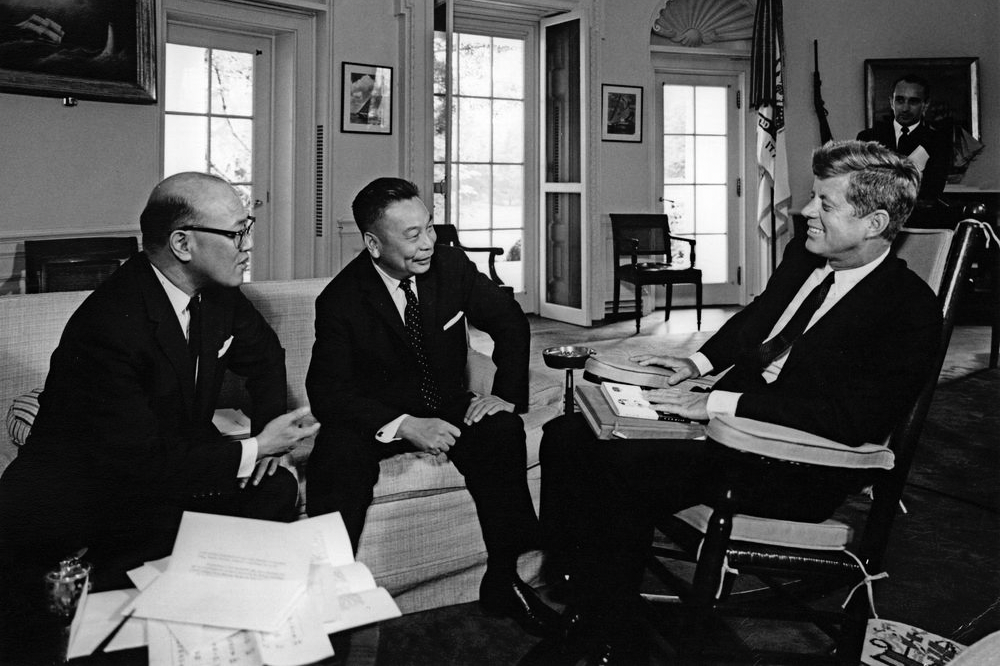
Image: Abbie Rowe, White House Photographs. John F. Kennedy Presidential Library and Museum, Boston.

留言
張貼留言