隨著2026年2月8日泰國大選逼近,人民黨(PP)前景不明朗。
政治學者意見分歧:
- 一派(Stithorn)認為當前經濟壓力、邊境緊張與民眾求穩心態不利改革派,預測人民黨可能只拿約120席,在曼谷恐大敗,需轉向強調穩定與務實政策。
- 另一派(Phichai)則從線上民調與東北部支持率上升判斷,人民黨仍有強勁動能,有望拿下180–200席成為第一大黨,攻擊反而可能幫助凝聚支持。
黨內承認最大挑戰已從「讓人認識我們」變成「證明我們能治理」。 這場選舉最終將反映泰國選民在「變革」與「穩定」之間的選擇。
☝☝☝☝☝
以下是該篇曼谷郵報專題報導《People's Party fortunes in air》(人民黨命運未卜)的繁體中文翻譯(使用傳統中文,適合台灣讀者):
泰國 專題報導 人民黨命運未卜 不確定的氣候、搖擺不定的過去可能影響其勝算
發布日期:2026年1月11日 06:31 作者:Aekarach Sattaburuth
隨著泰國逼近2月8日大選,**人民黨(PP)**的政治軌跡成為選舉景觀中最熱烈討論的問題之一。
曾以強大的改革浪潮定義,連續兩屆選舉重塑政治,該黨如今卻面臨更複雜且不確定的環境——這環境由經濟焦慮、區域安全緊張,以及多年政治動盪後的選民疲勞所塑造。
政治學者、選舉觀察者和黨內人士對人民黨的動能是減弱還是僅僅演變,意見分歧極大。
牽涉的不僅是該黨的選舉表現,還有更廣泛的問題:選民是否仍準備支持系統性變革——還是他們正退回穩定、務實,以及熟悉的權力結構。
不確定的時代 朱拉隆功大學政治學者**宋東·塔納尼提乔(Stithorn Thananithichot)**認為,政治氣候從根本上與人民黨的核心優勢不符。
「這次選舉的氛圍不像前幾次選舉那樣有利於人民黨,」宋東表示。「這黨在社會對變革、改革和新政治想像持開放態度時表現出色。但現在,選民似乎不願拆解現有結構。」
他指出,該黨早期的成功——首先作為未來前進黨,後來作為前進運動——是由相對政治平靜的時刻驅動,當時對根深蒂固的精英階層的不滿轉化為對改革替代方案的熱情。
相比之下,當前時刻的特徵是重疊的危機:全球經濟不確定性、國內生活成本壓力,以及重新點燃的邊境緊張。
「當人們感到不安全時,他們不想賭博,」這位學者說。「他們想要確定性。他們想知道誰能讓事情繼續運轉。」
他認為,這種選民心理的轉變,對一個身份緊密連結於轉型而非延續的黨不利。在這種條件下,選民更可能偏好具行政經驗、機構影響力,或能提供即時成果的政黨。
宋東:選民不願改變
黯淡的預測 從這個角度,宋東為人民黨提供了一個令人警醒的選舉預測。他警告該黨在選區競賽中可能遭受重大損失,特別是在曼谷,那裡的投票行為傾向於隨政治趨勢波動而非意識形態忠誠。
「曼谷是一個受動能驅動的選民,」他說。「當浪潮消失時,選民轉變非常快。」
他估計該黨可能失去多達一半的曼谷席位,並在其他城市選區看到急劇下降。總體而言,他預測人民黨可能僅獲得約80個選區國會議員,黨派名單席位相對穩定——總數約120席。
這樣的結果將標誌著該黨從先前高點的戲劇性收縮,並可能將其降級為聯盟談判中的次要角色。
穩定勝過擾亂 宋東表示,人民黨仍有時間調整策略——但僅當它重新校準訊息時。
「他們需要回到政策清晰,」他說。「不是散亂的提案,而是少數直接解決人們安全感的政策——經濟、社會和個人。」
在他看來,這次選舉不是關於大膽的改革議程或對抗性言辭。相反,它是關於說服選民變革不一定意味著混亂。
「這不要求放棄改革,」他補充說。「它要求排序——從穩定的基礎開始。」
關於軍事改革和刑法第112條(冒犯君主罪法)等爭議議題,宋東建議克制:「積極參與,聚焦政策,並快速結束。這些辯論持續越久,就越強化焦慮而非信任。」
他也淡化支持者對該黨過去議會投票支持布姆賈泰黨(BJT)領袖阿努廷擔任總理的持續不滿,認為真誠道歉與堅定保證可化解問題。「政治是情感的,但如果選民相信不會再次發生,寬恕是可能的。」
在更廣泛的選舉前景中,宋東預測BJT將成為最大黨,人民黨與為泰黨激烈競爭第二,Klatham與民主黨爭奪較低排名。
皮猜:線上民調有利於人民黨
不同的景觀閱讀 相對地,國家發展行政學院講師**皮猜·拉特納蒂拉卡·納布凱(Phichai Ratnatilaka Na Bhuket)**對同一環境有截然不同的判讀。
「如果你看民調數據,特別是線上和社交媒體調查,人民黨的支持正在上升,」皮猜說。「這表明中產階級選民和年輕世代的接受度增加。」
他指出東北部(長期由為泰黨主導)最近民調顯示,人民黨平均支持率34%,超越為泰黨與BJT的26%。「這是結構性轉變,為泰黨主導地位正在削弱,其選票正在重新分配。」
皮猜認為,為泰黨基礎碎片化為人民黨與BJT創造擴張空間,形成三方競爭,重塑泰國選舉地圖。
感知的力量 在曼谷,多項民調顯示人民黨超過30%且呈上升趨勢。他歸因於高調辯論表現、黨領袖曝光增加,以及競選中黨人物被視為受不公待遇而產生的公眾同情。新年前辯論顯著提升了人民黨領袖納塔蓬的形象,選民看到黨代表在壓力下展現鎮定與理性。
納差:必須證明我們能治理
攻擊適得其反 皮猜認為,軍事與第112條等爭議話題的批評反而可能強化人民黨立場。「這些是長期議題,支持者已理解黨的立場。過去猶豫的前支持者正因黨澄清立場而回歸。」
他評估,若趨勢持續,人民黨PP可能以180–200席名列第一,泰自豪黨BJT第二(130–140席),為泰黨90–100席,泰國經濟黨Klatham 40–50席,民主黨20–30席。
置於包圍但不動搖 黨內,前曼谷前進運動黨議員**納差·布恩猜因薩瓦(Natcha Boonchaiinsawat)**承認本次選舉挑戰獨特:「過去我們要讓人認識我們、信任我們;現在人們相信我們能贏——但不確定我們能否治理。」
因此競選策略聚焦展示領導準備,而非僅反對。他承認領跑地位引來更多攻擊,但相信選民能分辨真假。
敏感的斷層線 關於阿努廷投票,他認為僅造成失望而非持久憤怒,可透過直接溝通解決。軍事改革批評常受泰柬緊張時民族主義敘事放大。「我們的目標不是削弱軍隊,而是讓它更強大、專業、負責。」關於第112條,黨重申無修法政策。
決定性的選舉 隨著選舉日逼近,人民黨處於關鍵關頭——不僅關乎自身未來,也關乎泰國整體政治方向。這場競賽反映變革與謹慎、改革雄心與不確定時代對安全的渴望之間的深層緊張。
選民最終選擇穩定勝過轉型,或找到調和兩者的方式,將決定誰贏得最多席位,以及國家如何邁向下一個篇章。
(翻譯完畢)
文章4個重點(每個重點附3個簡短說明):
- 當前政治氣候不利於人民黨的改革形象
- 經濟不安全、生活成本壓力與邊境緊張讓選民優先追求穩定而非大膽變革。
- 宋東認為人民黨過去成功仰賴社會對改革的開放,如今選民不願冒險拆解現有結構。
- 危機時刻,選民傾向選擇具行政經驗與即時成果能力的政黨,而非轉型型政黨。
- 專家對人民黨席次預測兩極分化
- 宋東預測人民黨僅約120席(選區80席),特別在曼谷可能損失一半席位,淪為次要角色。
- 皮猜則看好人民黨可拿180–200席,成為第一大黨,認為線上民調與東北部支持率上升顯示結構性轉變。
- 兩種看法反映選民在「穩定」與「改革」之間的拉扯,結果可能決定聯盟主導權。
- 人民黨需調整策略以因應選民焦慮
- 宋東建議聚焦少數清晰、直接解決安全感的政策,從穩定基礎開始推進改革。
- 在爭議議題(如軍改、第112條)上應克制、快速結束辯論,避免強化民眾不安。
- 黨內人士納差強調必須證明「能治理」而非只會反對,並展示完整領導團隊。
- 過去爭議(如支持阿努廷當總理)影響有限但需處理
- 支持阿努廷一事造成部分支持者失望,但宋東認為真誠道歉與保證可化解。
- 納差指出這僅是失望而非持久憤怒,可透過直接溝通與澄清立場修復。
- 皮猜認為相關批評反而讓猶豫選民回流,攻擊可能適得其反強化人民黨支持。
People's Party fortunes in air
Uncertain climate, wobbly past may count against its chances
PUBLISHED : 11 Jan 2026 at 06:31
WRITER: Aekarach Sattaburuth
 Play
Play
As Thailand moves closer to the Feb 8 general election, the political trajectory of the People's Party (PP) is one of the most hotly debated questions in the electoral landscape.
Once defined by a powerful reformist surge that reshaped politics over two election cycles, the party now finds itself navigating a more complex and uncertain environment -- one shaped by economic anxiety, regional security tensions, and voter fatigue after years of political volatility.
Political scientists, poll watchers, and party insiders are sharply divided over whether PP's momentum is waning or merely evolving.
At stake is not only the party's electoral performance, but also the broader question of whether voters are still prepared to endorse systemic change -- or whether they are retreating toward stability, pragmatism, and familiar power structures.


ADVERTISEMENT
Age of uncertainty
Stithorn Thananithichot, a political scientist at Chulalongkorn University, argues the political climate is fundamentally misaligned with PP's core strengths.
"The atmosphere surrounding this election does not favour PP in the way previous elections did," Mr Stithorn said. "This party excels when society is receptive to change, reform, and new political imagination. But right now, voters appear reluctant to dismantle existing structures."
He said the party's earlier successes -- first as Future Forward and later as Move Forward --were driven by moments of relative political calm, when dissatisfaction with entrenched elites translated into enthusiasm for reformist alternatives.
In contrast, the present moment is marked by overlapping crises: global economic uncertainty, domestic cost-of-living pressures, and renewed border tensions.
"When people feel insecure, they don't want to gamble," the academic said. "They want certainty. They want to know who can keep things running."
This shift in voter psychology, he argued, disadvantages a party whose identity is closely tied to transformation rather than continuity.
In such conditions, voters are more likely to prefer parties associated with administrative experience, institutional leverage, or the ability to deliver immediate results.

Stithorn: Voters reluctant to change
A bleak projection
From this perspective, Mr Stithorn offered a sobering electoral forecast for PP. He warned the party could suffer heavy losses in constituency races, particularly in Bangkok, where voting behaviour tends to swing with political trends rather than ideological loyalty.
"Bangkok is a momentum-driven electorate," he said. "When the wave disappears, voters shift very quickly."
He estimated the party could lose up to half of its Bangkok seats and see sharp declines in other urban constituencies. Overall, he projected that PP might secure only around 80 constituency MPs, with party-list seats remaining relatively stable -- bringing the total to roughly 120 seats.
Such an outcome would mark a dramatic contraction from the party's previous highs and could relegate it to a secondary role in coalition negotiations.
Stability over disruption
Mr Stithorn said PP still has time to adjust its strategy -- but only if it recalibrates its message.
"They need to return to policy clarity," he said. "Not scattered proposals, but a small number of policies that directly address people's sense of security -- economic, social, and personal."
In his view, this election is not about bold reform agendas or confrontational rhetoric. Instead, it is about convincing voters that change does not necessarily mean chaos.
"It doesn't require abandoning reform," he added. "It requires sequencing it -- starting with foundations of stability."
On controversial issues such as military reform and Section 112 of the Criminal Code or the lese majeste law, Mr Stithorn advised restraint.
"Engage positively, zero in on policy, and conclude quickly," he said. "The longer these debates linger, the more they reinforce anxiety rather than trust."
He also downplayed lingering dissatisfaction among supporters over the party's past parliamentary vote backing Anutin Charnvirakul, leader of the ruling Bhumjaithai (BJT) Party, as prime minister, suggesting sincere apologies and firm assurances could neutralise the issue.
"Politics is emotional," he said. "But forgiveness is possible if voters believe it won't happen again."
In the broader electoral outlook, Mr Stithorn predicted BJT would emerge as the largest party, followed by a close contest between PP and Pheu Thai, with Klatham and the Democrats competing for lower rankings.
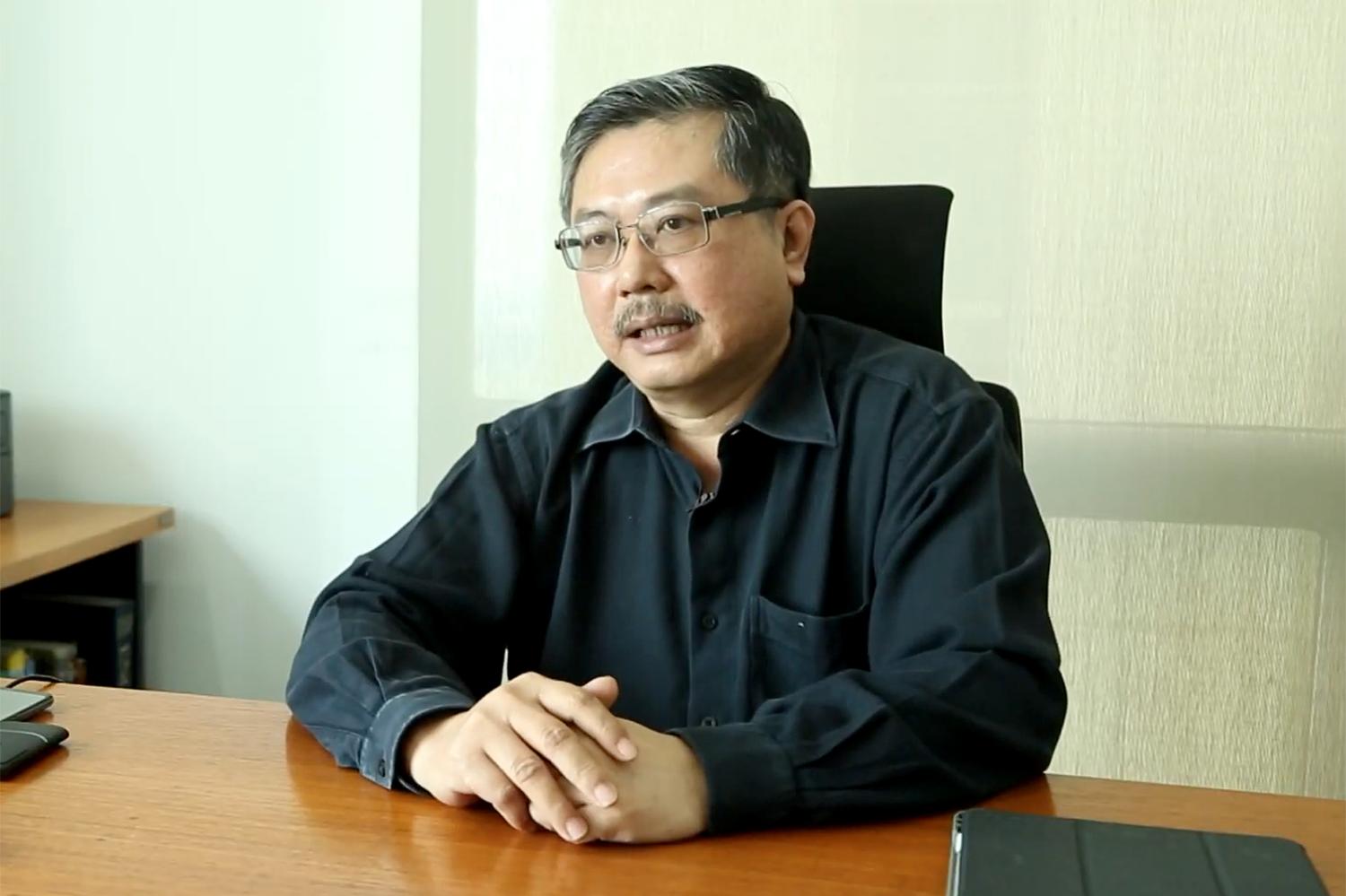
Phichai: Online polls favour PP
Different reading of landscape
In contrast, Phichai Ratnatilaka Na Bhuket, a lecturer in the Social Development and Management Strategy Programme at the National Institute of Development Administration (Nida), sees the same environment producing a very different outcome.
"If you look at polling data, especially online and social media-based surveys, the PP's support is rising," Mr Phichai said. "It indicates growing acceptance among middle-class voters and younger generations who closely follow political developments."
He pointed to recent polling in the Northeast, a region long dominated by Pheu Thai, where PP averaged 34% support, surpassing both Pheu Thai and BJT, which stood at 26%.
"This is a structural shift," he said. "Pheu Thai's dominance is weakening, and its votes are being redistributed."
Mr Phichai said the fragmentation of Pheu Thai's base has created space for both PP and BJT to expand, resulting in a three-way competition that is reshaping Thailand's electoral map.
Power of perception
In Bangkok, Mr Phichai noted, multiple polls show PP polling above 30%, with an upward trend. He attributed this to several factors: high-profile debate performances, increased visibility of party leadership, and public sympathy generated by perceived unfair treatment of party figures during the campaign.
"The debates before the New Year significantly lifted the profile of (PP leader) Natthaphong Ruengpanyawut," he said.
"At the same time, voters saw composure and rationality from party representatives under pressure."
Such moments, Mr Phichai argued, reinforce perceptions of competence and emotional maturity -- qualities that matter greatly to undecided voters.

Natcha: Must prove we can govern
Attacks backfire
On controversial topics such as the military and Section 112, Mr Phichai suggested that criticism may actually bolster PP's position.
"These are longstanding issues," he said. "Supporters already understand the party's stance. Meanwhile, former supporters who hesitated following PP's vote for Mr Anutin to premier are returning as the party clarifies its position."
In his assessment, PP remains well-positioned to finish first, with a projected 180 to 200 seats if current trends continue. He placed BJT in second place with 130–140 seats, followed by Pheu Thai at 90–100, Klatham at 40–50, and the Democrats at 20–30.
Under siege but unshaken
From within the party, Natcha Boonchaiinsawat, a former Move Forward Party MP for Bangkok, acknowledged the Feb 8 election poses unique challenges.
"In the past, we had to convince people to know us, then to trust us," he said. "Now, people believe we can win -- but they're unsure whether we can govern."
Such uncertainty, he said, explains much of the current campaign strategy: demonstrating readiness to lead, not just to oppose.
"We must show that we have a complete leadership team ready to govern," he said. Mr Natcha conceded that being perceived as a frontrunner has intensified attacks.
"When you are a top contender, every party targets you," he said. "Smears, distortions, and coordinated attacks come from all directions."
Yet he expressed confidence that voters understand this dynamic and are able to distinguish between genuine concerns and political tactics.
Sensitive fault lines
On contentious issues, Mr Natcha acknowledged limited but manageable impact. The Anutin vote, he said, caused disappointment rather than lasting anger and could be addressed through direct engagement. Military reform criticism, he argued, is often driven by nationalist narratives amplified during Thai-Cambodian tensions.
"Our goal is not to weaken the military," he said. "It is to make it stronger, more professional, and more accountable."
Regarding Section 112, Mr Natcha reiterated the party's position: it has no policy to amend the law, a stance repeatedly affirmed by party leadership.
A defining election
As election day approaches, PP stands at a defining juncture -- not only for its own future, but for Thailand's political direction as a whole. The contest reflects a deeper tension between change and caution, between reformist ambition and the human desire for security in uncertain times, according to an observer.
Whether voters ultimately choose stability over transformation -- or find a way to reconcile the two -- will determine not only who wins the most seats, but how the country navigates its next chapter.
Please credit and share this article with others using this link: https://www.bangkokpost.com/thailand/special-reports/3173058/peoples-party-fortunes-in-air. View our policies at http://goo.gl/9HgTd and http://goo.gl/ou6Ip. © Bangkok Post PCL. All rights reserved.


沒有留言:
張貼留言
注意:只有此網誌的成員可以留言。