旨在排擠中國的關稅替代理論

 《新聞週刊》是信託計畫成員
唐納德·川普總統所謂的「解放日」關稅,甚至對赫德島和麥克唐納島等偏遠地區及其企鵝種群徵收關稅,其目的並非為了實現經濟精準性。
相反,一些專家認為,這些措施的目的是封鎖中國商品進入美國的所有可能途徑,將中國排除在全球供應鏈之外,並重塑世界貿易體系。
新加坡管理大學教授、貿易專家 Henry Gao 在 X(前身為Twitter)上寫道: “該公式受到了廣泛嘲笑,但這並沒有抓住要點。” “這些數字不是為了在博士論文答辯中站得住腳,而是為了引起震驚,創造影響力。數字越極端,其他國家與美國坐到談判桌上的動力就越大。”
高雲翔在一系列貼文中將該策略描述為“故意製造混亂”,但有一個共同的目標:不惜一切代價孤立中國,即使這會與美國長期的貿易夥伴產生摩擦。他說:“所有國家都成為了中美經濟僵局的附帶損害。”
儘管白宮並未明確支持這一理論,但美國商務部長霍華德·盧特尼克 (Howard Lutnick)週日在哥倫比亞廣播公司 (CBS ) 的《面向全國》節目中,對這一理論進行了誇張的陳述,為拖累美國股市下跌的關稅進行了辯護,這是近年來華爾街最動蕩的一周。
盧特尼克告訴哥倫比亞廣播公司(CBS)的瑪格麗特·布倫南:“中國開始做的是,他們開始通過其他國家進入美國。” “所以他(特朗普)基本上是說,看,我不能讓世界任何地方成為中國或其他國家船隻經過的地方……他要解決這個問題。”
針對單一目標的全球關稅網?
儘管「互惠」關稅清單看似雜亂無章——針對美國的盟友以及歐洲和亞洲的重要貿易夥伴——但一些分析人士傾向於認為,總統的根本目標是關閉中國可能用來維護其出口主導地位的一切後門。
這種邏輯有助於解釋為什麼美國政府在最新一輪關稅中包括柬埔寨和越南等國家——這些國家通常被視為中國供應鏈的延伸。越南是首批對美國關稅作出反應的國家之一,該國將對美國的出口關稅降至零。目前尚不清楚這是否足以安撫白宮。
喬治華盛頓大學政治管理研究生院院長托德貝爾特表示,孤立中國的目標最初可能並非完全有意為之,但它已成為故事的核心。
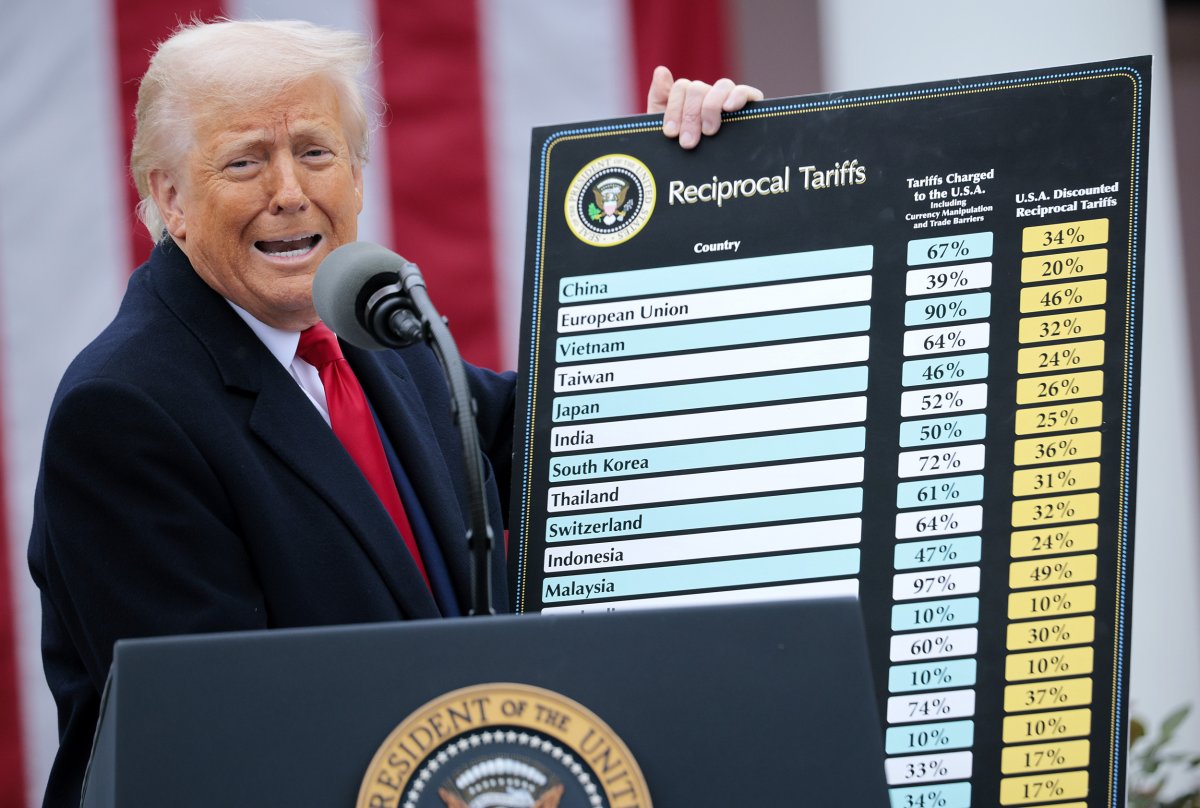
貝爾特告訴《新聞周刊》: “川普的關稅最初設計時並沒有考慮到這種複雜性。”
這與北京面對一系列新關稅的升級姿態一致,白宮表示,最新一輪關稅將於週三午夜如期生效。
前白宮中國事務顧問朱利安·格維茨向《紐約時報》表示: “(中國國家主席習近平)樹立了領導強大國家的強人形象。”
中國外交部稱這些關稅是“經濟霸凌”,並誓言“戰鬥到底”。北京方面對上周美國實施的「對等」關稅作出了回應,將對美國商品的關稅上調了 34 個百分點。
美國公司已採取行動
隨著關稅生效,據稱科技巨擘蘋果正在加大在印度的產量,轉移曾經直接經過中國的供應線,以逃避中國嚴厲的關稅。據悉,蘋果公司從新德里向印度運送了滿載 iPhone 的飛機。同一天,《華爾街日報》報道稱,蘋果計劃今年在印度生產多達 2,500 萬部 iPhone,可能滿足其美國市場需求的一半。

此舉可能不僅是為了逃避中國的關稅,也是為了戰略調整。根據新政策,蘋果對中國製造的產品徵收 54% 的關稅,而對印度出口產品的關稅僅為 26%,較為容易接受。蘋果的轉變產生了次要的影響,也許是心理上的影響:削弱了中國生產全球最受歡迎消費產品的能力,並將生產轉移到其在東方的最大競爭對手。
彭博社週一報道稱,蘋果公司在關稅生效前囤積了庫存,為關稅的到來做準備,這應該會將關稅對蘋果利潤的影響至少推遲到下個季度。同時,該公司也尋求新關稅豁免,重複了川普第一任期內奏效的策略。
如果「不惜一切代價孤立中國」的理論是正確的,那麼這將成為川普迄今最冒險的賭注之一,可能對美國關係以及國內經濟造成巨大附帶損害。去年,美國國內經濟受惠於中國 4,400 億美元的進口商品。
紐約大學史登商學院教授約瑟夫·福迪對該策略的連貫性提出了質疑。福迪說:“我們實際上是在與世界上每個主要國家挑起爭端。” “即使我們最終達成協議,雙方的激烈爭論以及美國不再是可靠的長期合作夥伴的信號也會削弱我們的地位。”
福迪辯稱,如果川普政府的目標是北京,那麼它本可以製定更有針對性的策略——首先只對中國徵收關稅,然後只有當發現中國通過將出口轉移到非關稅國家或地區來違反關稅規定時,才擴大徵收範圍。

「但相反,我們卻對像澳洲這樣的國家徵收關稅,而澳洲實際上對美國有貿易順差,這讓人懷疑這是否真的是一個有針對性的戰略,還是事後對更廣泛的關稅政策的重新包裝。”
因其對中國問題具有影響力的著作而聞名的美國律師張家輝本週在《新聞周刊》的一篇評論文章中指出,中國經濟比人們所宣傳的更加不穩定,北京在這場貿易戰中處於弱勢地位。
張寫道:“川普手裡握著所有強牌。” “簡而言之,習近平把中國經濟的命運交到了不可替代的出口市場領導者——美國手中。”他補充道,“貿易戰有贏家。但在這場貿易戰中,贏家不會是中國。”
眾所周知,川普視自己為交易撮合者,他或許希望中國最終能參與談判。 「我也不認為他在虛張聲勢,」貝爾特說。 “他願意讓美國承受一些短期痛苦,以達成他認為對美國有利、對他本人有利的協議。”


The Alternative Theory on Tariffs That's All About Boxing Out China
President Donald Trump's so-called "Liberation Day" tariffs, which imposed levies even on obscure and remote territories like the Heard and McDonald Islands and its population of penguins — were not designed for economic precision.
Instead, some experts argue, they are meant to block every conceivable route for Chinese goods to reach the United States—boxing China out of the global supply chain and reordering the world's trading system.
"The formula has been widely mocked, but that misses the point," trade expert Henry Gao, professor at Singapore Management University, wrote on X, formerly Twitter. "The numbers aren't meant to hold up in a PhD defense—they're meant to shock, to create leverage. The more extreme the figure, the stronger the incentive for other countries to come to the negotiating table with the U.S."
In a series of posts, Gao described the strategy as "intentionally chaotic," but with a focused aim: isolating China by any means necessary, even if it causes friction with long-standing U.S. trade partners. "All countries have become collateral damage in the U.S.-China economic standoff," he said.
That theory, while not explicitly backed by the White House, was eluded by U.S. Secretary of Commerce Howard Lutnick during a bombastic appearance on CBS's "Face the Nation" on Sunday, where he defended the tariffs that have dragged U.S. stocks lower, marking one of the most volatile weeks for Wall Street in recent memory.
"What China started doing was they started going through other countries to America," Lutnick told CBS's Margaret Brennan. "So basically he [Trump] said, look, I can't let any part of the world be a place where China or other countries can ship through them... He's going to fix that."
A Global Tariff Net Aimed at One Target?
While the list of "reciprocal" tariffs may seem scattershot—targeting American allies and critical trading partners in Europe and Asia—some analysts have warmed to the theory that the president's underlying goal is to close every possible backdoor China could use to preserve its export dominance.
That logic helps explain why the administration included countries like Cambodia and Vietnam in its latest round of tariffs—nations often viewed as extensions of China's supply chain. For its part, Vietnam was among the first nations to respond to the tariffs by dropping its export duties for the U.S. to zero. It's not yet clear if that is enough to placate the White House.
Todd Belt, director of the Graduate School of Political Management at George Washington University, said the goal of isolating China may not have been fully intentional at first, but it has become central to the story.
"Trump's tariffs weren't originally designed with this complexity in mind," Belt told Newsweek. "But the Chinese government understands the dynamic well. We can already see them responding by trying to build new markets for component parts."
This aligns with Beijing's escalating posture in the face of a cascade of new tariffs, the latest of which the White House said would go into effect as scheduled at midnight Wednesday.
"[Chinese President] Xi has built up an image of himself as a defiant strongman helming a powerful country," Julian Gewirtz, a former White House China adviser, told The New York Times. "China's official messaging is conveying that they are determined to stand up to U.S. pressure even at high costs."
The Chinese foreign ministry has called the tariffs "economic bullying" and vowed to "fight to the end," and Beijing responded to last week's round of "reciprocal" tariffs with its own 34 hike in tariffs on U.S. goods.
US Companies Already Making Moves
As the tariffs took effect, tech giant Apple was said to be ramping up its production in India, shifting supply lines that once ran directly through China, in a bid to escape the harsh Chinese tariffs. The same day it was reported Apple flew planes full of iPhones from New Delhi, the Wall Street Journal reported that the company is planning to produce up to 25 million iPhones in India this year, potentially covering half of its U.S. market demand.
The move may be as much about evading Chinese tariffs as it is about strategic realignment. Apple faced a 54 percent levy on Chinese-manufactured goods under the new policy, compared to a more manageable 26 percent on Indian exports. The shift from Apple had a secondary, perhaps psychological, effect: denting China's ability to produce the most popular consumer product in the world, and shifting that production to its biggest rival in the East.
Bloomberg reported Monday that Apple stocked up on inventory ahead of the tariffs as part of its efforts to prepare for their arrival, which should delay the impact of the tariffs on Apple's bottom line at least into the next quarter. In the meantime, the company has also sought exemptions from the new tariffs, repeating a strategy that worked during Trump's first term.
If the "isolate China at all costs" theory is correct, it would amount to one of the riskier bets Trump has ever taken, with profound opportunities for collateral damage to U.S. relationships as well as the domestic economy, which was the beneficiary of $440 billion in Chinese imports last year.
Joseph Foudy, professor at NYU's Stern School of Business, questioned the coherence of the strategy. "We're essentially picking fights with every major country in the world," Foudy said. "Even if we end up cutting deals, the level of acrimony and the signal that the U.S. is no longer a reliable long-term partner weakens our position."
Foudy argued the administration could have crafted a more targeted approach if its goal was to target Beijing—starting with tariffs solely on China, then expanding only if it was detected that China was flouting the tariffs by rerouting exports through non-tariffed countries or territories.
"But instead, we're imposing tariffs on countries like Australia, which actually has a trade surplus with the U.S. That raises doubts about whether this is really a focused strategy—or just a repackaging of a broader tariff policy after the fact."
Gordon G. Chang, an American lawyer known for his influential writings on China, wrote in a Newsweek opinion piece this week that China's economy is more precarious than advertised, and that Beijing enters into this trade war in a weakened position.
"Trump holds all the high cards," Chang wrote. "Xi, in short, has placed the fate of the Chinese economy in the hands of the leader of that irreplaceable export market, the American one." He added that "there are winners in trade wars. In this particular trade war, the winner will not be China."
Trump, who famously sees himself as a dealmaker above all else, may be expecting China to come to the table in the end. "I don't think he's bluffing either," said Belt. "He's willing to put the U.S. through some short-term pain to get what he sees as a deal that benefits the country and reflects well on him."
Newsweek logo
Go Ad-Free
Login
Newsweek logo
×
Go Ad-Free
Login
U.S.
World
Science
Health
Life
Rankings
Opinion
Entertainment
Fact Check
My Turn
Education
Events
Sports
Podcasts
Better Planet
Better Workplaces
Vault
Mightier
Autos
Newsletters
Unconventional
Vantage
Experts
Voices
Politics
Donald Trump
Tariffs
U.S. tariffs
Economy
The Alternative Theory on Tariffs That's All About Boxing Out China
Published Apr 08, 2025 at 5:48 PM EDT
CLOSE X
Pause
Unmute
Current TimeÂ1:15
/
DurationÂ1:32
Â
Quality
Fullscreen
By Jesus Mesa
Politics Reporter
Trust Project Icon
Newsweek Is A Trust Project Member
FOLLOW
news article
23
President Donald Trump's so-called "Liberation Day" tariffs, which imposed levies even on obscure and remote territories like the Heard and McDonald Islands and its population of penguins — were not designed for economic precision.
Instead, some experts argue, they are meant to block every conceivable route for Chinese goods to reach the United States—boxing China out of the global supply chain and reordering the world's trading system.
"The formula has been widely mocked, but that misses the point," trade expert Henry Gao, professor at Singapore Management University, wrote on X, formerly Twitter. "The numbers aren't meant to hold up in a PhD defense—they're meant to shock, to create leverage. The more extreme the figure, the stronger the incentive for other countries to come to the negotiating table with the U.S."
In a series of posts, Gao described the strategy as "intentionally chaotic," but with a focused aim: isolating China by any means necessary, even if it causes friction with long-standing U.S. trade partners. "All countries have become collateral damage in the U.S.-China economic standoff," he said.
That theory, while not explicitly backed by the White House, was eluded by U.S. Secretary of Commerce Howard Lutnick during a bombastic appearance on CBS's "Face the Nation" on Sunday, where he defended the tariffs that have dragged U.S. stocks lower, marking one of the most volatile weeks for Wall Street in recent memory.
"What China started doing was they started going through other countries to America," Lutnick told CBS's Margaret Brennan. "So basically he [Trump] said, look, I can't let any part of the world be a place where China or other countries can ship through them... He's going to fix that."
A Global Tariff Net Aimed at One Target?
While the list of "reciprocal" tariffs may seem scattershot—targeting American allies and critical trading partners in Europe and Asia—some analysts have warmed to the theory that the president's underlying goal is to close every possible backdoor China could use to preserve its export dominance.
That logic helps explain why the administration included countries like Cambodia and Vietnam in its latest round of tariffs—nations often viewed as extensions of China's supply chain. For its part, Vietnam was among the first nations to respond to the tariffs by dropping its export duties for the U.S. to zero. It's not yet clear if that is enough to placate the White House.
Todd Belt, director of the Graduate School of Political Management at George Washington University, said the goal of isolating China may not have been fully intentional at first, but it has become central to the story.
President Donald Trump
President Donald Trump holds his tariff chart in the Rose Garden at the White House on April 2, 2025 in Washington, DC. Chip Somodevilla/Getty Images
"Trump's tariffs weren't originally designed with this complexity in mind," Belt told Newsweek. "But the Chinese government understands the dynamic well. We can already see them responding by trying to build new markets for component parts."
This aligns with Beijing's escalating posture in the face of a cascade of new tariffs, the latest of which the White House said would go into effect as scheduled at midnight Wednesday.
Read more Donald Trump
MrBeast Says Trump Tariffs Make It Cheaper To Make His Chocolates Abroad
China Ramps Up Trade War With New Countermeasure Threat Over 50% Tariff
Donald Trump Addresses Whether He Crashed Markets On Purpose
Howard Lutnick's Remarks on Bringing Factories to US Face Pushback
"[Chinese President] Xi has built up an image of himself as a defiant strongman helming a powerful country," Julian Gewirtz, a former White House China adviser, told The New York Times. "China's official messaging is conveying that they are determined to stand up to U.S. pressure even at high costs."
The Chinese foreign ministry has called the tariffs "economic bullying" and vowed to "fight to the end," and Beijing responded to last week's round of "reciprocal" tariffs with its own 34 hike in tariffs on U.S. goods.
US Companies Already Making Moves
As the tariffs took effect, tech giant Apple was said to be ramping up its production in India, shifting supply lines that once ran directly through China, in a bid to escape the harsh Chinese tariffs. The same day it was reported Apple flew planes full of iPhones from New Delhi, the Wall Street Journal reported that the company is planning to produce up to 25 million iPhones in India this year, potentially covering half of its U.S. market demand.
Donald Trump meets Chinese President Xi Jinping
U.S. President Donald Trump meets with Chinese President Xi Jinping during a meeting on the sidelines of the G-20 summit in Osaka, Japan, on June 29, 2019. Susan Walsh/AP Photo
The move may be as much about evading Chinese tariffs as it is about strategic realignment. Apple faced a 54 percent levy on Chinese-manufactured goods under the new policy, compared to a more manageable 26 percent on Indian exports. The shift from Apple had a secondary, perhaps psychological, effect: denting China's ability to produce the most popular consumer product in the world, and shifting that production to its biggest rival in the East.
Bloomberg reported Monday that Apple stocked up on inventory ahead of the tariffs as part of its efforts to prepare for their arrival, which should delay the impact of the tariffs on Apple's bottom line at least into the next quarter. In the meantime, the company has also sought exemptions from the new tariffs, repeating a strategy that worked during Trump's first term.
If the "isolate China at all costs" theory is correct, it would amount to one of the riskier bets Trump has ever taken, with profound opportunities for collateral damage to U.S. relationships as well as the domestic economy, which was the beneficiary of $440 billion in Chinese imports last year.
Joseph Foudy, professor at NYU's Stern School of Business, questioned the coherence of the strategy. "We're essentially picking fights with every major country in the world," Foudy said. "Even if we end up cutting deals, the level of acrimony and the signal that the U.S. is no longer a reliable long-term partner weakens our position."
Foudy argued the administration could have crafted a more targeted approach if its goal was to target Beijing—starting with tariffs solely on China, then expanding only if it was detected that China was flouting the tariffs by rerouting exports through non-tariffed countries or territories.
stocks down
Pedestrian are reflected on a brokerage house's window as an electronic board displays shares trading index, in Beijing, Monday, April 7, 2025. AP Photo/Andy Wong
"But instead, we're imposing tariffs on countries like Australia, which actually has a trade surplus with the U.S. That raises doubts about whether this is really a focused strategy—or just a repackaging of a broader tariff policy after the fact."
Gordon G. Chang, an American lawyer known for his influential writings on China, wrote in a Newsweek opinion piece this week that China's economy is more precarious than advertised, and that Beijing enters into this trade war in a weakened position.
"Trump holds all the high cards," Chang wrote. "Xi, in short, has placed the fate of the Chinese economy in the hands of the leader of that irreplaceable export market, the American one." He added that "there are winners in trade wars. In this particular trade war, the winner will not be China."
Trump, who famously sees himself as a dealmaker above all else, may be expecting China to come to the table in the end. "I don't think he's bluffing either," said Belt. "He's willing to put the U.S. through some short-term pain to get what he sees as a deal that benefits the country and reflects well on him."
沒有留言:
張貼留言
注意:只有此網誌的成員可以留言。