俄羅斯戰術演變日益受到關注,在進攻季前夕帶來新的戰場勝利

以下是一篇長達約 4,000 字的優質文章,介紹了俄羅斯武裝部隊不斷變化的前線戰術。它對《華爾街日報》關於該主題的一篇新文章進行了分析,並對最近的襲擊事件進行了詳細剖析,並對一名俄羅斯士兵進行了採訪,最終提出了俄羅斯正在發生「軍事革命」的想法——儘管技術和後勤方面仍然存在困難,但武裝部隊的「民主化」仍在繼續。
《華爾街日報》發表了一篇關於俄羅斯日益成功的作戰策略的新指南。此時,西方媒體及其親烏克蘭的走狗已開始悄悄承認俄羅斯軍隊所取得的各種成功和戰術上的進步。
讓我們從《華爾街日報》的文章開始:

來自俄羅斯的簡要總結:
美國人認為俄羅斯軍隊打仗不夠紳士。
《華爾街日報》寫道,俄羅斯軍隊「正在烏克蘭開闢一條道路,將紅軍的強大力量與現代科技結合」。
據該報報道,俄羅斯的作戰方式是基於無人機偵測目標以及「炸彈和火砲的威力,為步兵奪取領土鋪路」。
文章稱:“襲擊的每個環節都相互支撐,要么同時發生,要么分波次發生。這可能會產生滾雪球效應,迫使烏克蘭人撤退。”
記住第一行加粗的部分,它稍後會發揮作用。
首先,作為方法論聲明,《華爾街日報》聲稱「已經與烏克蘭和俄羅斯士兵以及軍事分析家進行了交談,以了解其運作方式」。
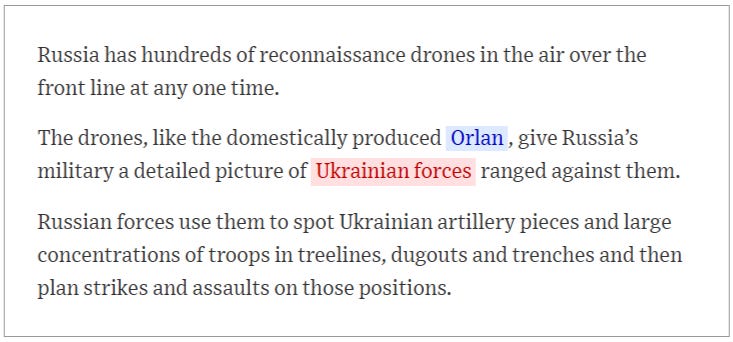
他們首先陳述了許多顯而易見的觀點——俄羅斯在前線隨時都有數百架偵察無人機,他們用這些無人機從蘇-34 等飛機上對烏克蘭陣地進行精確轟炸:
最近曝光的一張蘇-34 戰機飛行高度為 11,070 米,約合 36,000 英尺,前方是紮波羅熱市的夜景。指定的機翼掛架 3、11、12 和 4 裝載有 Fab-500 炸彈:
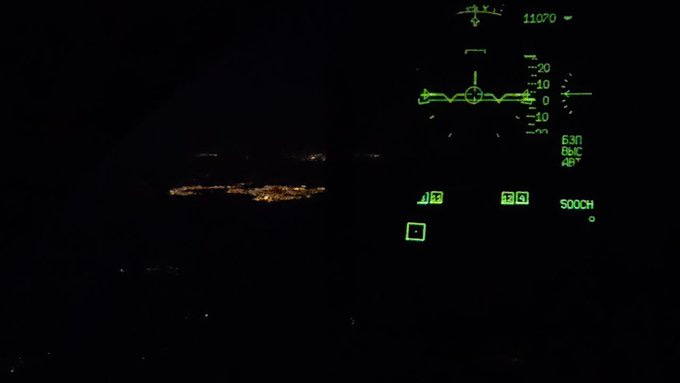
有趣的是,飛機的飛行方向正好位於城市的正南方,而與城市的距離最多只有 50-70 公里。這意味著烏克蘭遠程防空力量受到嚴重削弱,使得這些飛機能夠以接近烏克蘭主要人口中心的最大高度飛行。回想一下,就在一年前,據報道,在亞速海附近飛行更遠的 A-50 預警機面臨 200-300 多公里 AD 飛彈的威脅。
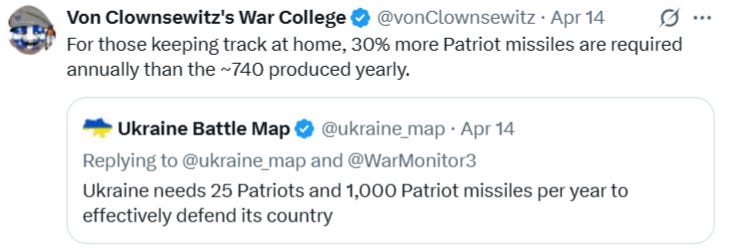
一些估計顯示烏克蘭嚴重短缺:
在無人機方面,俄羅斯一直在不斷擴大其偵察無人機隊。這是在斯維爾德洛夫斯克地區進行的電子戰無人機原型機的試飛,該無人機裝有天線,可以抑制敵方信號——請注意無人機飛過時,觀察監視器是如何關閉或進入靜態的:
這種無人機可用於壓制特定戰線上的敵方 FPV 操作員。
同時,一支俄羅斯團隊測試了首次遠端 FPV 操作,其中坐在莫斯科的操作員能夠控制康斯坦丁諾夫卡的一架 FPV 無人機:
莫斯科操控的 FPV 無人機首次襲擊烏克蘭武裝部隊位於恰索夫亞爾的設施
這次襲擊由使用新型「Orbita」控制系統的FPV無人機「Ovod」實施。
西班牙旅的無人機機組人員準備讓無人機起飛。
該無人機由位於莫斯科的一名無人機操作員控制。
無人機飛行超過11公里並成功擊中目標。
「Orbita」將允許無人機透過從世界任何地方發出命令來實施襲擊。
/RIAN/
誠然,這對在拉斯維加斯舒適地執行中東掠食者殺戮任務的美國操作員來說並不是什麼新鮮事,但對於 FPV 無人機來說,這是一個新的發展,可以允許遠端飛行員的分佈,以緩解特定前線操作員的短缺,更不用說讓操作員遠離危險了。
《華爾街日報》的文章繼續解釋說,俄羅斯人基本上讓體型小、速度快的摩托車騎士扮演雙重角色。他們不僅採用我經常描述的那種涓涓細流的“滴灌”式插入方法,快速穿越開闊的敵方領土,在佔領的陣地上“聚集”,而且他們還同時利用“火力偵察”來引出烏克蘭的陣地:
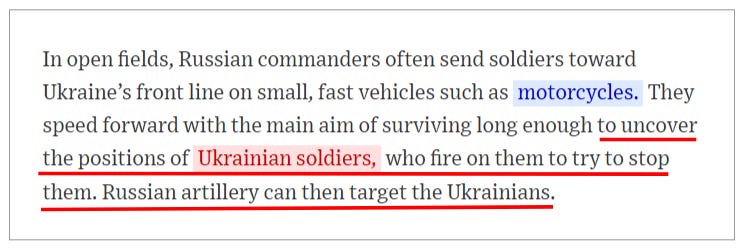
回想一下,文章一開始就指出:
俄羅斯的戰爭方式是依靠無人機發現目標,並依靠炸彈和大砲的威力為步兵開闢一條奪取土地的道路。攻擊的每個元素都相互支持,同時發生或分波發生。這可能會產生滾雪球效應,迫使烏克蘭人撤退。
他們承認,這是經過深思熟慮的統一戰略,通常由砲兵高度協調,向摩托車手透過火力偵察攻擊發現的「暴露」部隊開火。隨後,俄羅斯砲兵和無人機小組壓制了敵人的火力點,使摩托車騎士能夠迅速佔領陣地。
烏克蘭一直聲稱,這些俄羅斯騎兵是可消耗的部隊,大多數情況下一到達就會死亡,這一說法已在數十段視頻中得到“證明”,並在《華爾街日報》的文章中有所暗示。影片顯示,許多全地形車和摩托車在部隊抵達後被毀壞,證實了這一說法。
事實是,這些廉價的自行車實際上是作為戰場消耗品使用的——也就是說,它們預計不會存活下來並且經常被摧毀,但部隊在成功站穩陣地後就不再需要它們了。烏克蘭無人機小組喜歡擊落這些被丟棄的自行車,然後聲稱“傷亡慘重”,但實際上他們擊落的只是已經被丟棄的廉價、消耗性的價格為 1,000 美元的中國電動自行車。在許多情況下,無人機和軍械組合本身的成本比二手捐贈的自行車還要高。當然,很多情況下事情確實會出問題──畢竟這是戰爭:
下一個:
在城鎮中,步兵發動了無情的攻擊。他們通常三人一組向前衝刺,在烏克蘭防禦者炮火下的建築物之間奔跑,而烏克蘭防禦者則是迫擊砲和爆炸性無人機的目標。俄羅斯倖存者躲在一棟建築物裡等待增援。當聚集了足夠多的人後,他們再次出發。
《華爾街日報》展示了一支鬆散的(藍色)俄羅斯部隊在建築物之間衝刺,然後清除(紅色)烏克蘭防御者:
至少這次他們正確地展示了傷亡人數的差距。
但有趣的是我在開場白的第二部分中提到的——支持 UA 的評論界開始慢慢承認俄羅斯不斷發展的策略的成功。
其中最精彩的是 Julian Roepcke 本週的貼文:
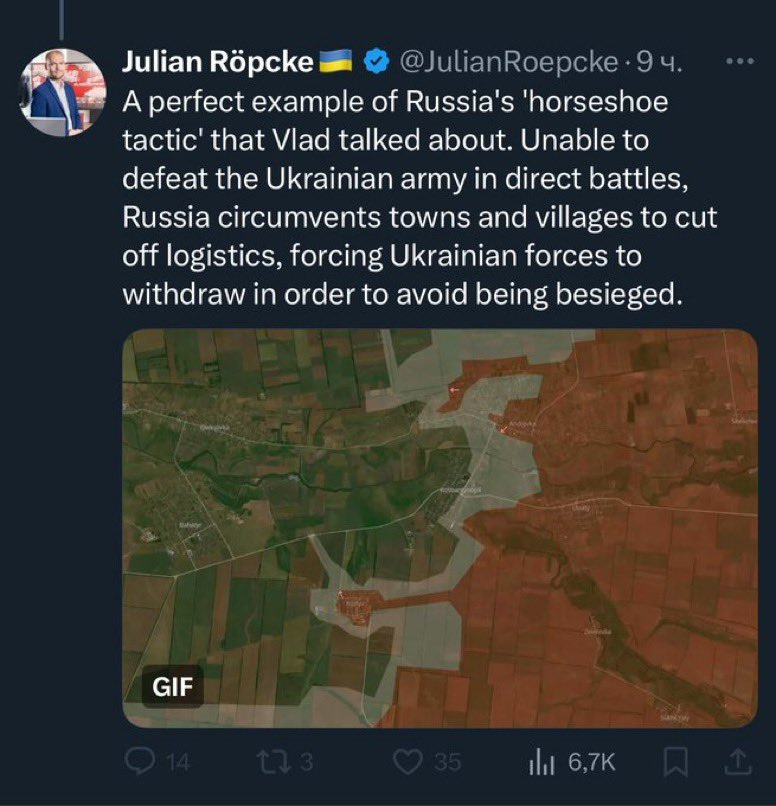
他所包含的動畫:
這篇貼文招致了許多嘲笑,因為它明顯抱怨俄羅斯智勝烏克蘭在某種程度上被認為是一種「欺騙」。其他人則恰當地指出了其中的虛偽:當俄羅斯人迎面衝過來時,這被稱為血腥的“肉體襲擊”;當他們避免正面攻擊並通過包圍戰勝敵人時,這被稱為懦弱,俄羅斯人被指責“無法在直接戰鬥中擊敗烏克蘭軍隊”。
但透過烏克蘭的分析,進一步補充了目前俄羅斯策略的細節。請仔細閱讀下文,了解俄羅斯目前正在採用的“改變策略”,這澄清了我們最近看到的許多影片:
烏克蘭頻道現在承認俄羅斯的設備並不短缺。
烏克蘭郵政:
敵人短暫停頓後,再次對裝甲部隊發動大規模攻擊。
昨天,諾沃帕利夫卡方向已經有20多個裝甲部隊。
我們必須承認,他們的設備就夠了。
他們只是改變了策略,這已經是很久以前的事了。
他們更喜歡使用小型步兵小組滲透到我們的隊伍中,並在等待新部隊的同時進行週邊防禦。
他們節省設備並儘量減少使用。
當他們需要「消滅」我們在某些地區嚴密的防禦時,裝甲就會發揮作用。
這就像 2023-24 年在馬林卡或阿夫迪夫卡附近一樣,當時佔領者可以同時使用 50 多輛裝甲車。
並且它給出了結果,儘管從資源投入與進步的比例來看,它完全是負數。
現在他們可以混合使用步兵群和裝甲部隊進行大規模攻擊。而且距離「截止日期」越近,申請範圍就越廣。
綜合以上所有信息,我們從《華爾街日報》獲悉,俄羅斯小隊在進入被佔領的陣地時進行了火力偵察。與此同時,俄羅斯砲兵和無人機狙擊手正在壓制和摧毀在向俄羅斯摩托車隊射擊時暴露自己的敵方火力小組。
這個過程重複多次,直到有足夠多的獨立小部隊進入前線陣地,與直接面對的敵方防禦力量形成足夠大的力量差距。在此期間,俄羅斯的砲火、無人機和 Fab-500 炸彈空中轟炸持續打擊和削弱烏克蘭的防禦。
當這種情況發生時——正如上文所述——俄羅斯將發射更強大的裝甲拳頭來摧毀防禦並永久加強陣地。
我們還有另一段來自前LPR第2軍第4旅的視頻,近距離展示了其中一些戰術:
戰場無人機拍攝的畫面顯示,來自第四獨立摩托化步兵旅的俄羅斯裝甲突擊組成功摧毀了烏克蘭陣地,隨後烏克蘭支援坦克前來保衛該陣地,但被全殲。
您會注意到,這些前進部隊通常由三輛坦克組成的裝甲排,或一輛裝有重型掃雷滾輪的鉛坦克和兩輛步兵戰車組成。你會注意到他們遭受了無人機襲擊,但在煙霧掩護下卻毫髮無傷地逃脫了。
Zvezda 的一份新報告顯示,俄羅斯已將其大量裝甲修復基礎設施直接轉移到前線,以便持續修復那些無疑被 Oryx 等標記為「摧毀」的部隊:
報告標題為:“以前,嚴重的損壞需要將設備送至製造商。現在,車間可以直接在 SVO 區域進行重大維修。”
俄羅斯軍隊組織了一家野戰裝甲修理廠,擁有專門的單位修理車間,是一套自給自足的裝甲車輛和裝備修復系統,正如 GABTU 代表在影片中所說。據記者了解,目前他們正在修復一輛在巴赫穆特受損的T-90M坦克。鏡頭也展示了 BMP-3 和汽車設備的維修情況。
但讓我們簡單談談上述內容的另一面。並非所有的襲擊都像這次一樣順利。就在昨天,烏克蘭聲稱俄羅斯發動了今年最大規模的襲擊之一,動用了 20 多輛裝甲車和 40 多輛摩托車,採用了本文前面概述的策略:
烏克蘭第 31 機械化旅昨天拍攝的同一次襲擊的影片。
Deepstate_UA
他們出動至少 20 輛裝甲車和 41 輛摩托車(其中包括一個用作牽制的摩托車隊)向普里維倫和諾沃西爾卡方向發動攻擊。
目前還不清楚具體是哪些俄羅斯部隊參與了這次襲擊,但襲擊發生在第 60 和第 57 摩托化步兵旅的管轄範圍內,這兩個旅都隸屬於俄羅斯第五合成集團軍,該集團軍總部位於濱海邊疆區烏蘇裡斯克。烏克蘭隊的陣容包括第 31 機械化旅和國民警衛隊「第 17 突擊旅」。
烏克蘭消息人士稱,這是一次重大攻擊,由某位著名的俄羅斯將軍親自監督或領導。他們聲稱這次襲擊是一場災難,並發布了另一段「快速拼接」的多起襲擊影片作為證據。至少,你可以看到俄羅斯已經恢復了大規模的攻擊,正如許多烏克蘭人宣稱大規模進攻的季節已經到來:
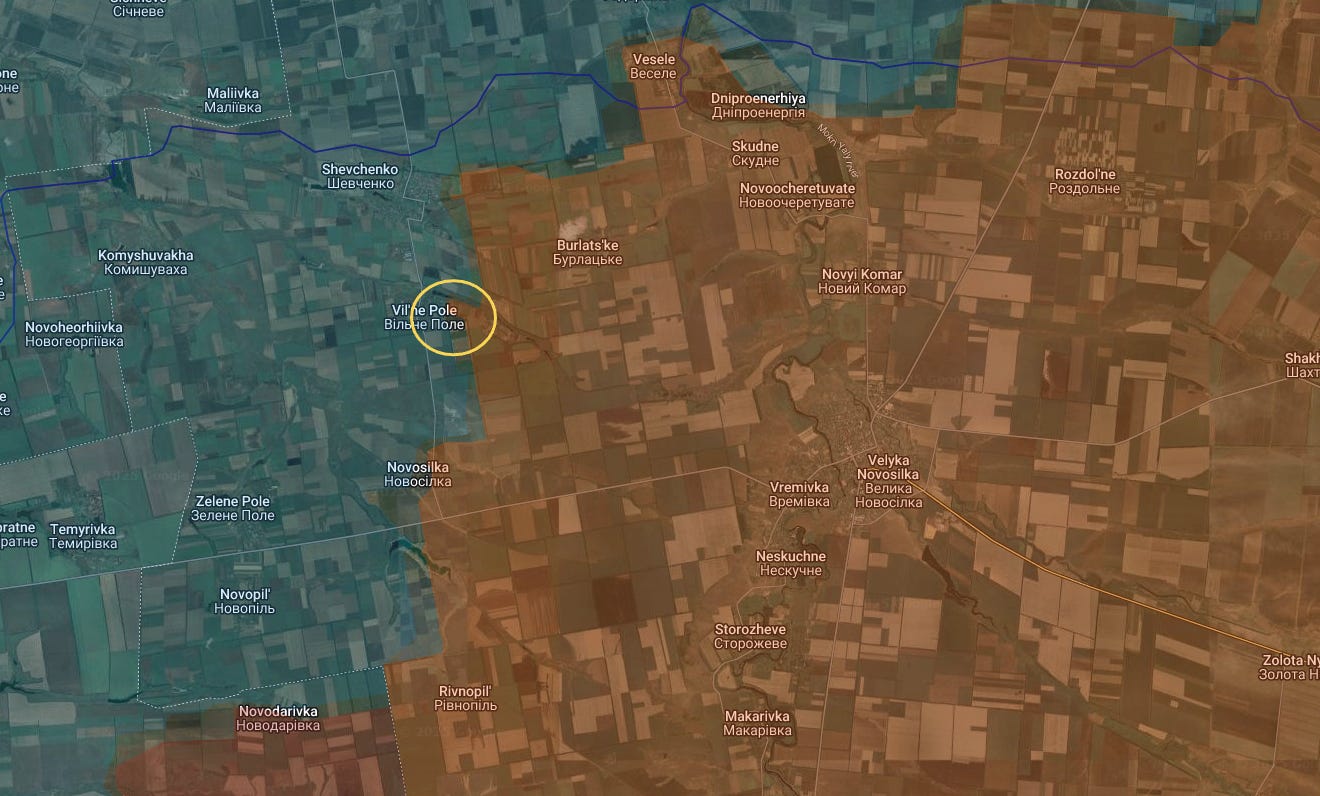
它大致位於以下地理位置:47.841817, 36.73488
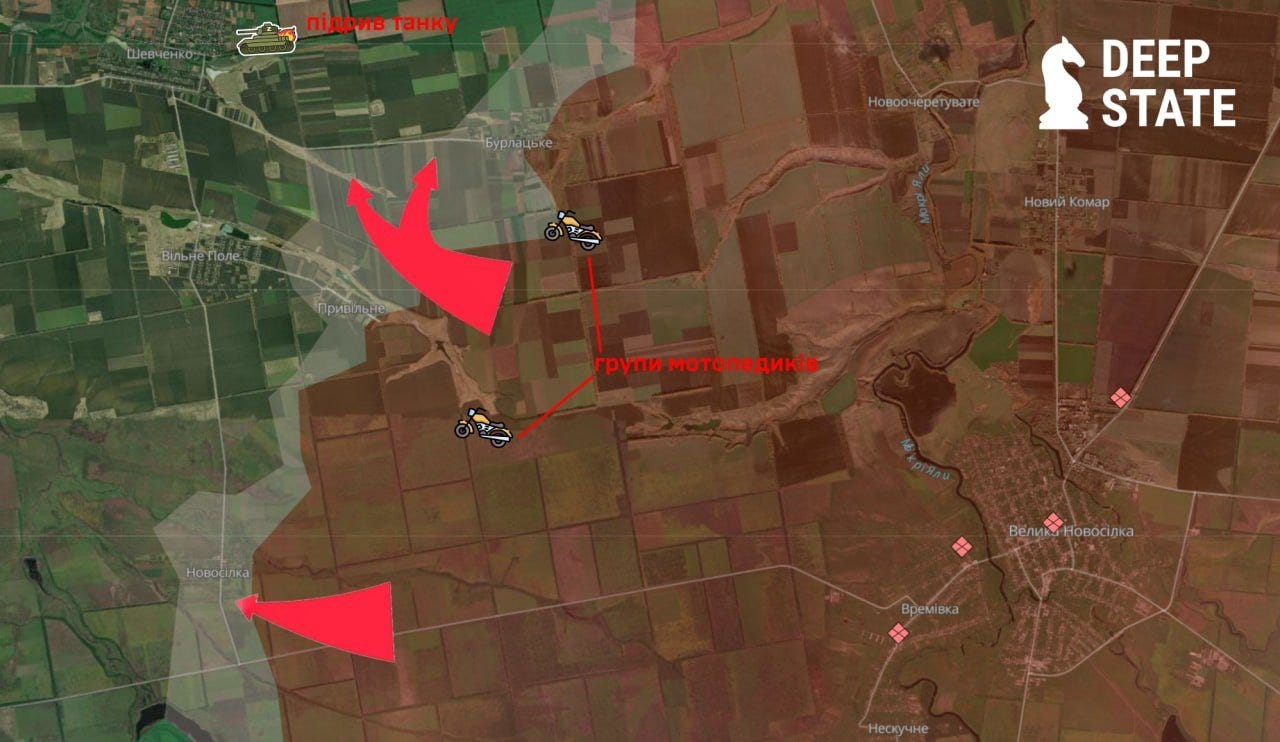
為了更好地了解,請參見這裡:
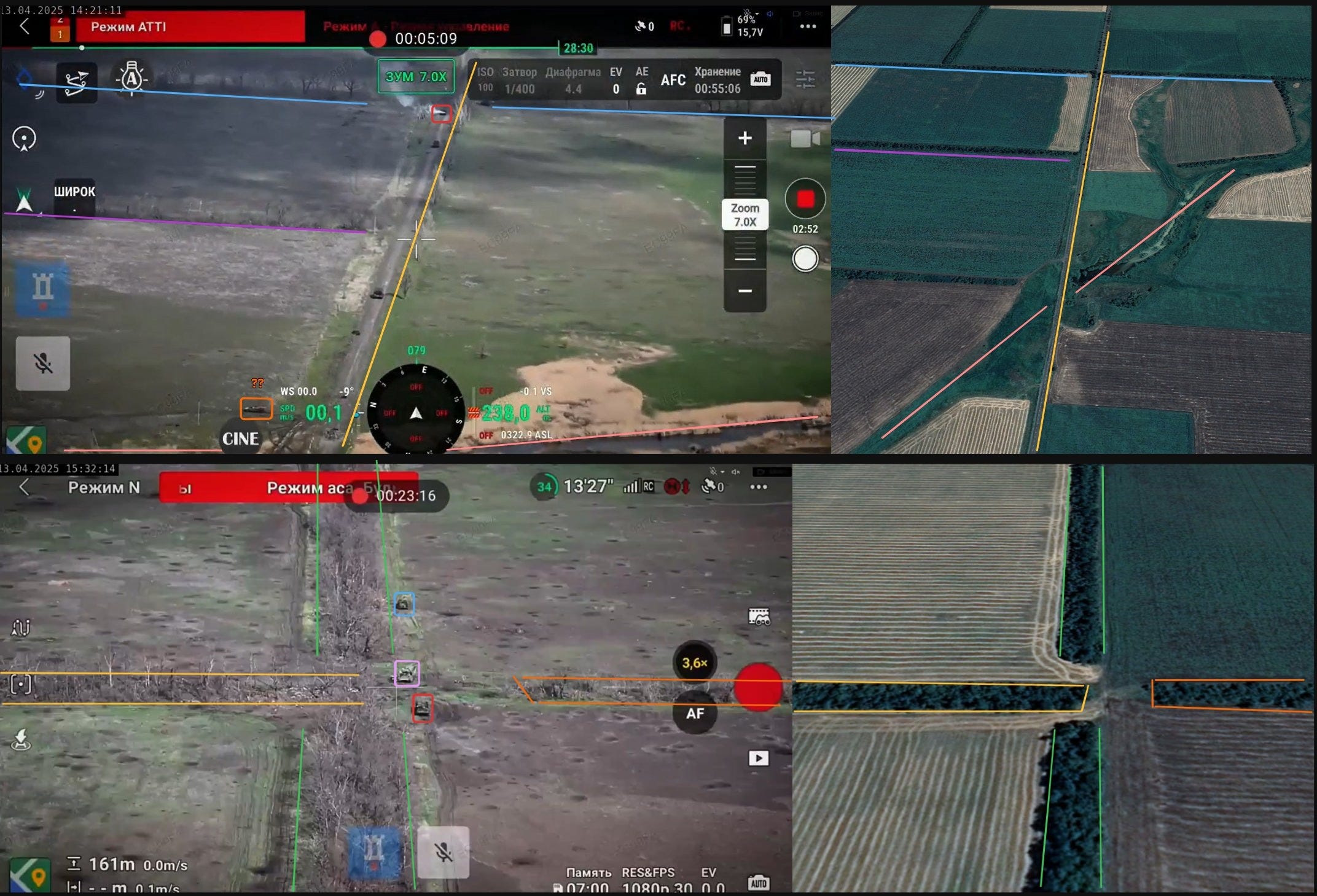
影片顯示,在據稱的 20 多輛裝甲車中,可能有 2-3 輛被徹底摧毀,拼接鏡頭從不同角度展示了同一場「壯觀」的爆炸。似乎有幾名摩托車騎士被撞,但相對於聲稱的 40 多名騎士而言,這只是很小的一部分。少數被毀壞的車輛可能會被先前展示過的相同前線維修基地回收並重新改裝。
事實上,一個更誠實的烏克蘭帳戶承認的損失相對較低:
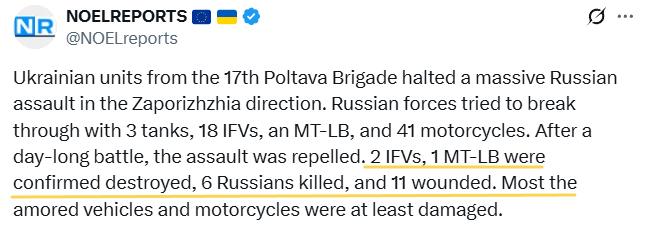
在聲稱的總計超過 21 輛裝甲運兵車中,只有 3 輛被摧毀,並且在數百名參戰士兵中,只有 6 人陣亡,從各方面來看,損失都非常低。它是否真的被「擊退」了,我們還要拭目以待,因為一些鏡頭確實顯示俄羅斯士兵下馬跳入被佔領的登陸點,然後被集束炸彈掃射到,我們可以假設由於隨後的視頻跳切,他們沒有看到這些炸彈。
儘管如此,俄羅斯社會中也有分析人士認為,俄羅斯的「千刀萬剮」戰略並不一定能被視為解決持續存在的真正前線問題的靈丹妙藥:
埋伏的語言學家寫道:「千刀萬剮的策略」 。基於敵人的消耗策略,它為報告提供了極大的便利,並具有巨大的媒體潛力。這種策略可以讓你營造出大規模進攻的假象,同時自信地保留戰略主動權。
另一方面,它可以掩蓋一系列問題:物質支援不足(「偷懶」),缺乏優秀的專家/人員,無視 BUSV 在組織和確保戰鬥行動的基本原則方面的規範,新突擊步兵訓練薄弱。
缺乏常規戰術勝利的情況很容易被「束縛和碾壓敵軍」的報導所掩蓋。簡化的研磨概念,加上虛假報告,使得指揮官可以惡意篡改損失數字,使其超出範圍。
上述情況在許多方面都是正確的,俄羅斯軍隊仍然存在許多弱點和不足,今天早些時候,又一名前州長被捕,這次是庫爾斯克地區的阿列克謝·斯米爾諾夫,因在修建庫爾斯克防禦工事期間大量挪用軍費而被捕,這凸顯了俄羅斯軍隊的弱點和不足。俄羅斯採取的策略是必要的,而不是奢侈的或選擇的。但它仍然是明智的,並利用了《孫子兵法》的邏輯,以俄羅斯最大的優勢打擊對手最大的弱點。
從上圖可以看到,俄羅斯對韋利卡諾沃西爾卡西北部的大規模攻擊似乎正在重新開始更大規模的攻勢。我們已經好幾個月沒有見過類似阿夫德耶夫卡時代的裝甲列車了。親烏克蘭的「專家」如德高望重的羅普克 (Roepcke) 也同意這一點:
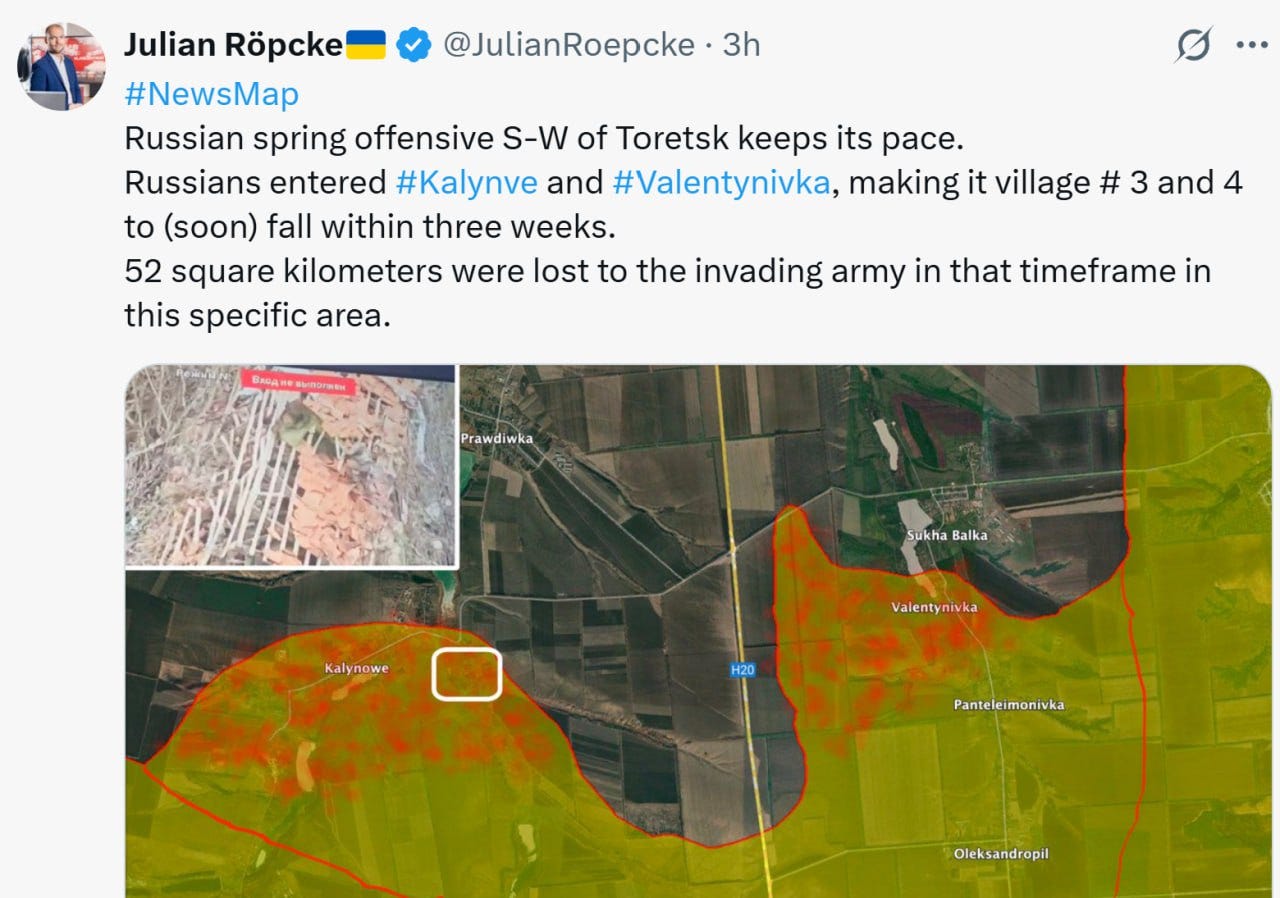
羅普克繼續宣稱攻勢早已開始:
這些跡像已經出現了幾週,但現在可以肯定地說:俄羅斯入侵軍隊在烏克蘭南部和東部的春季攻勢已經開始。
繼俄羅斯於 12 月和 1 月發動猛烈攻勢(攻占庫拉霍沃,幾週後又攻占新西爾卡老城)之後,俄羅斯被迫重組軍隊,更換數百輛被摧毀的主戰坦克 (MBT) 和步兵戰車 (IFV),並恢復數千名士兵的傷亡。
整個二月和三月,低強度的襲擊和小幅推進仍在繼續,但規模仍然有限。在此期間,烏克蘭甚至成功奪回了波克羅夫斯克附近的五個村莊。
現在,新一波裝甲車(通常被用作“單程運輸工具”)和步兵(正確地稱為“肉”)已經抵達前線。
俄羅斯春季攻勢實際上始於三月下旬,但在過去兩週才取得顯著進展。
他繼續提到昨天發生的大規模 Velyka Novosilka 襲擊事件——請閱讀下面加粗的內容:
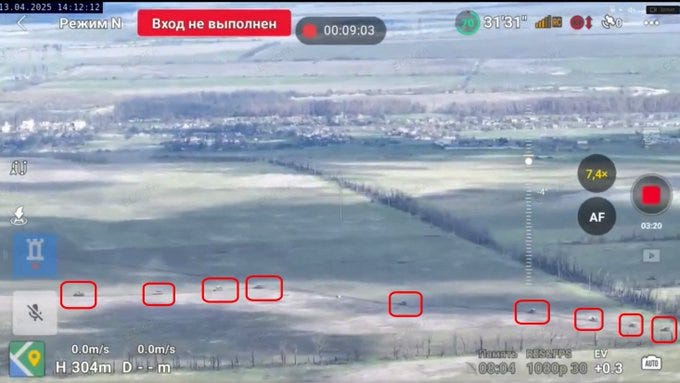
迄今為止最大規模的襲擊發生在昨天,襲擊始於新西爾卡大區,並向第聶伯羅和扎波羅熱州邊界推進。據烏克蘭軍方稱,這次襲擊涉及 3 輛主戰坦克、18 輛步兵戰車、1 輛 MT-LB 和 41 輛摩托車(下圖)。
烏克蘭守軍兵力減弱,僅摧毀了三輛裝甲車和少量摩托車;其餘部隊成功突破至維爾紐斯地區。
同時,我們目睹了波克羅夫斯克和安德烈夫卡之間、托列茨克南部和西部以及恰西夫亞爾、特爾內和庫皮揚斯克週邊地區——基本上整個前線——的機械化攻擊不斷增加。
這不僅顯示大規模機械化和步兵攻擊活動重新抬頭,也顯示俄羅斯在1月至3月期間獲得了大量增援。
此外,我們還看到俄羅斯光學線導神風無人機的廣泛部署,該無人機在庫爾斯克進行初步測試後,最近進入了大量生產。
如果俄羅斯能夠每天向前線運送數百架甚至數千架無人機,而烏克蘭仍然無法有效對抗它們,那麼這可能會為俄羅斯在受影響地區的進攻提供進一步的動力。
總之,俄羅斯正在利用美國暫停向烏克蘭提供新武器(很可能是無限期的)、川普時代談判努力造成的外交僵局以及歐洲國家持續不願向烏克蘭提供其急需的武器以阻止其進攻。
這些因素加在一起,可能會導致新的突破,並在未來幾個月內導致更多的村莊和城鎮被入侵部隊佔領。
目前尚不清楚的是,烏克蘭有多少預備旅可以部署以擊退俄羅斯軍隊,就像去年 10 月至今在波克羅夫斯克附近成功做到的那樣。
我們將拭目以待,看看俄羅斯新一輪機械化進攻將持續多久。從歷史上看,這些攻勢往往會在大約兩到六個月後結束,此時俄羅斯需要一段時間的休息來補充其前線武器庫。
有趣的是,他隨後對一位批評家進行了反駁——請再次注意突出顯示的內容:
只想說一句:有趣的是,一些評論員現在只關註一個細節——新西爾卡大區西北部的襲擊——以抹黑整個分析。
在我發布此消息時,已確認21輛俄羅斯裝甲車中有3輛被摧毀。此後,這個數字可能會增加。
但無論是 3 人、7 人還是 15 人(部分基於已證實的證據,部分基於「相信我,兄弟」的消息來源),都沒有改變主要觀點:在經歷了兩個月以步兵為主、使用拉達、布坎卡和偶爾的 2-3 輛 BMP 進行的攻擊之後,俄羅斯再次展示了其發動大規模機械化攻擊的能力。
歷史表明,無論這20多輛車輛中有多少輛在先前的襲擊中被擊中或摧毀,俄軍仍然成功地在各自的目標區域部署了一些部隊,並擴大了控制區。
這並不是悲觀主義或「毀滅」——而是對過去兩年來前線如何逐漸向西移動的冷靜評估。
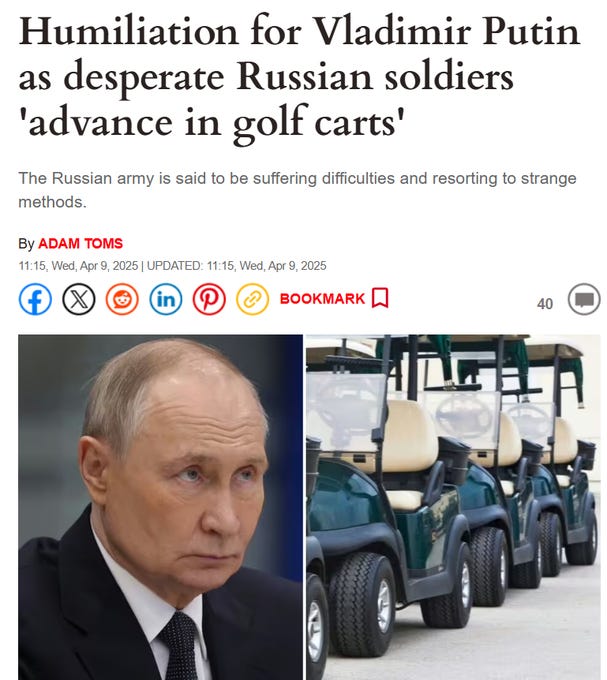
好吧,至少在某種程度上,他已經認清了現實,值得稱讚。儘管大部分西方國家仍然堅持這樣的粗俗宣傳:
更不用說最近又重新出現了這個流行的古老預測:
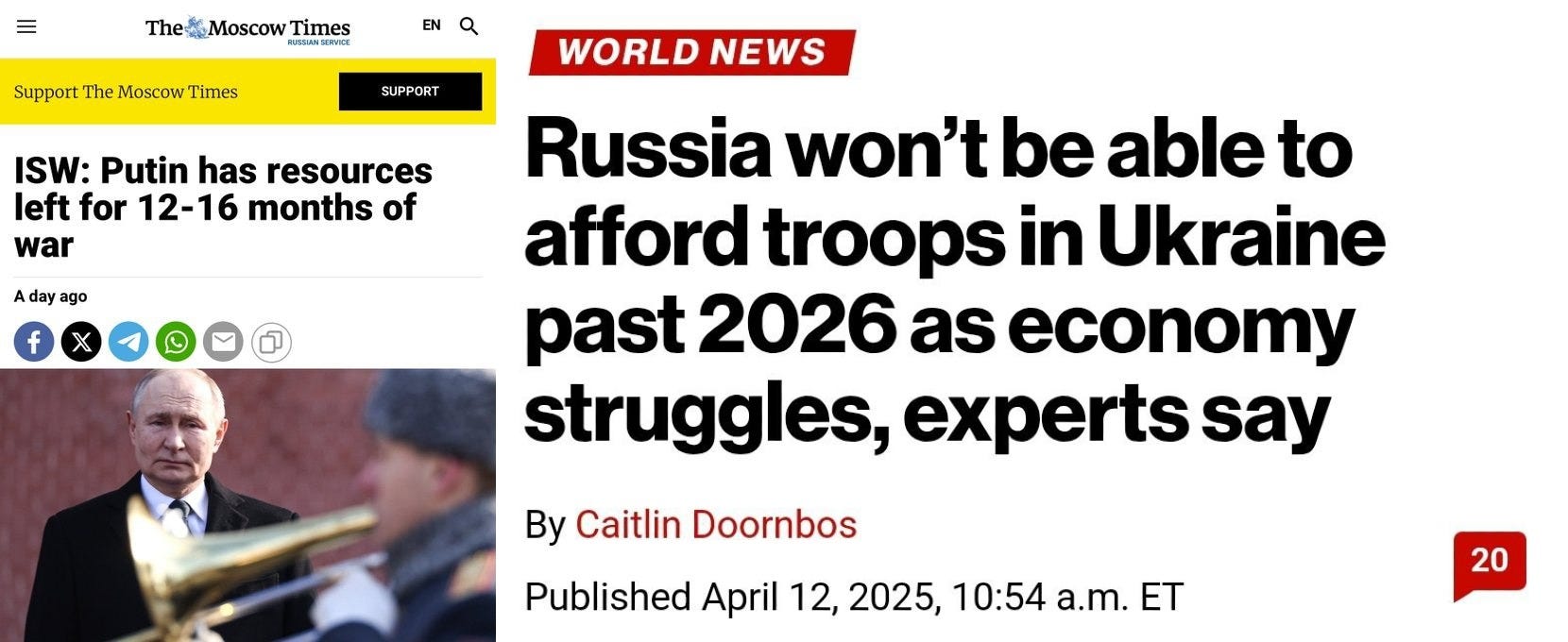
上個月,《福布斯》雜誌撰文報道了俄羅斯無人機戰術的“革命”,這場革命決定了 AFU 在庫爾斯克方向的命運:

他們寫道:
軍事部落客俄羅斯工程師稱,俄羅斯在庫爾斯克的突然勝利是透過集中無人機火力,並採用烏克蘭先前完善的戰術實現的。
烏克蘭一度佔領了俄羅斯約 500 平方英里的領土,但經過數月的僵局,俄羅斯在短短幾天內就奪回了幾乎所有領土。根據《俄羅斯工程師》報道,這涉及無人機戰術的“革命”,目標是烏克蘭的補給線。
《俄羅斯工程師》宣稱:“這次革命讓我們可以預期在前線的其他地區將重複類似的情況。”
這場「革命」主要體現在無人機操作中品質優先於數量:
“這場革命的實現得益於我們的無人機從數量到質量的轉變,以及所有其他支持力量和手段。”
可以說,俄軍已經掌握了在現代條件下以現代手段『孤立戰場』的戰術技巧。在無人機的幫助下,烏克蘭軍隊的補給被切斷,他們別無選擇,只能撤退。
具體來說,他描述了庫爾斯克的俄羅斯軍隊如何集中其最有能力的配備光纖無人機的無人機操作員,並利用它們來摧毀烏克蘭的後勤支持,而不是攻擊前線部隊。透過襲擊向前線運送食物、燃料和彈藥的車輛,並阻止部隊輪調和傷員撤離,他們孤立了前線部隊。
文章指出,作為回應,烏克蘭在其補給路線上大規模建造“無人機網路隧道”,正如我最近在幾個影片中所展示的那樣。但今天我們得到了一段俄羅斯視頻,顯示俄羅斯無人機操作員巧妙地從底部繞過網,成功擊中了烏克蘭車輛:
哎呀,這不應該發生!
作為關於戰術轉變的最後一點說明,對一名俄羅斯士兵的最新採訪強調了俄羅斯方面在這場戰爭中發生的真正的「軍事革命」。它直接證實了我長期以來一直在寫的觀點:與西方粗俗模仿俄羅斯軍隊某種「蘇聯自上而下」的結構相反,俄羅斯實際上正在轉變為一支自下而上的力量,超越任何北約同等力量。將軍們現在承認,前線部隊比他們更了解不斷變化的技術潮流,並允許他們從下層領導,為他們提供即興發揮的空間,如果成功,則會在整個軍隊中進行調整和推廣:
烏克蘭衝突使俄羅斯軍隊變得更加民主。
戰前,俄羅斯軍隊是個僵化而保守的機構。但在過去三年中,大量新想法、新技術和專家湧入。
這也延伸到前線戰術,下級指揮官被賦予充分的自由來開展行動並實現他們認為合適的目標,而上級總參謀部不會對他們進行微觀管理,而只是監督更廣泛的作戰情況並促進後勤需求。這種情況已經多次出現,最近一次是在庫爾斯克著名的管道行動“Potok”中,該行動完全由當地地面指揮官構想、設計和執行,沒有受到“中央指揮部”的任何干預。

最後幾個相關的有趣的事項:
一段影片顯示了俄羅斯對托列茨克烏克蘭陣地的打擊強度,該影片由一架 FPV 無人機拍攝:
地理定位鏡頭顯示,俄羅斯光纖 FVP 無人機現已飛入烏克蘭控制的康斯坦丁諾夫卡 10 公里深處,攻擊目標:
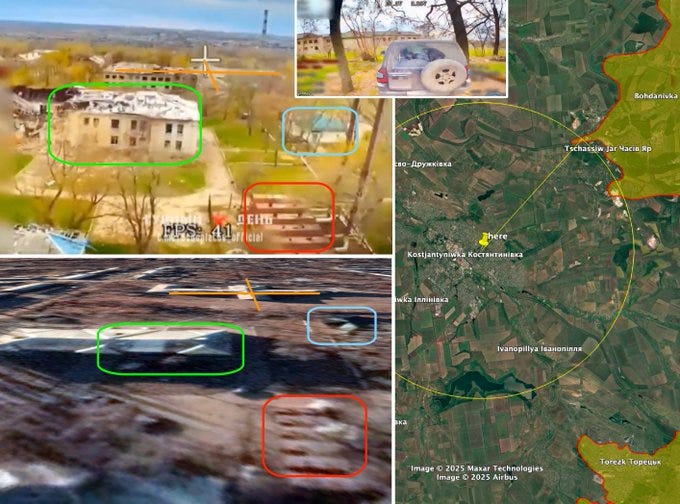
俄羅斯有史以來第一次使用兩架 FiberWire 導引的神風無人機襲擊了#Kostyantynivka市中心的一輛烏克蘭軍隊皮卡。這些無人機很可能是在被佔領的#ChasivYar發射的,飛行距離超過 10 公里才擊中目標。
—
俄羅斯軍隊正在製造專門的神風無人機,將 TM-62 地雷投放到烏克蘭陣地:
第一近衛坦克集團軍發射攜帶 TM-62 地雷的無人機
以及為同一目的而大規模生產地面無人機:
裝備有水面神風無人機的戰鬥工兵摧毀了 AFU 在 Kharkov 州的一個據點。 在偵察過程中發現了敵人的據點,阻止了俄羅斯突擊分隊的前進。
神風特攻隊的無人機駛入敵人的防空壕,並在那裡引爆了一枚 TM-62 反坦克地雷。 因此,AFU 的人力被消滅。
特別感謝閱讀這篇付費文章的付費訂閱者——他們是本部落格健康、穩定運作的核心貢獻者。
對於那些忍不住要再次貪婪地向他們所喜愛的謙遜作家施捨小費的人來說,小費罐仍然是一種時代錯誤,是一種過時且無恥的雙重收費方式。


Growing Focus on Russian Tactical Evolutions Bringing Renewed Battlefield Success on the Eve of Offensive Season
The following is a hefty ~4,000 word premium article on the shifting frontline tactics of the Russian Armed Forces. It features a breakdown of a new WSJ article on the topic, as well as detailed anatomies of recent assaults, and an interview with a Russian soldier culminating in the idea of a ‘revolution in military affairs’ taking place in Russia—featuring the ‘democratization’ of the armed forces—in spite of ongoing technical and logistical struggles.
The Wall Street Journal published a new guide to Russia’s increasingly successful battle tactics. It comes at a time when Western press and its pro-Ukrainian lackeys have quietly begun admitting to the various successes and evolutionary tactical progressions that Russian forces have been achieving.
Let’s start with the WSJ piece:
Brief summary from a Russian source:
Americans think the Russian army is not fighting like gentlemen.
WSJ writes that the Russian military is "blazing a trail in Ukraine, combining the brute force of the Red Army with modern technology."
The Russian way of warfare, according to the newspaper, is based on drones that detect targets and "the power of bombs and artillery that pave the way for infantry to seize territory."
"Each element of the attack supports the others, happening simultaneously or in waves. This can create a snowball effect, forcing the Ukrainians to retreat," the article says.
Hold on to that first bolded line, it will come into play later.
Firstly, as a statement of methodology WSJ claims to have “[spoken] with Ukrainian and Russian soldiers as well as military analysts to form a picture of how it works.”
They begin by stating a lot of obvious points—Russia has hundreds of recon drones all over the front at any given time, and they use them to pinpoint massive bombing strikes on Ukrainian positions from Su-34s and the like:
A recent photo surfaced showing an Su-34 flying at 11,070 meters, or ~36,000 ft, with the nighttime cityscape of Zaporozhye city ahead of it. The designated wing pylons 3, 11, 12, and 4 are loaded with Fab-500 bombs:
What makes this interesting is the distance to the city appears perhaps 50-70km at most, with the plane’s orientation as directly south of it. It implies Ukrainian long range air defense is attrited to such an extent as to allow these planes to fly at max altitude that close to a major Ukrainian population center. Recall it was only a year ago that A-50 AWACS flying much farther away near the Azov Sea were reportedly at threat of 200-300+ kilometer AD missiles.
Some estimates indicate Ukraine is woefully short:
On the drone front, Russia has been increasingly expanding its recon drone fleet. Here’s a test flight in the Sverdlovsk region of a prototype EW drone with antennas attached, that can suppress enemy signals—note how the viewing monitors turn off or go to static as the drone flies over:
Such drones can be used to suppress enemy FPV operators across a given front.
At the same time, a Russian team tested the first long range FPV operation wherein an operator sitting in Moscow was able to control an FPV drone in Konstantinovka:
For the first time, an FPV drone controlled from Moscow hits a Ukrainian Armed Forces facility in Chasov Yar
The strike was carried out by the FPV drone "Ovod" using the new control system "Orbita".
The UAV crew from the Espanyola brigade prepared the drone for takeoff.
The drone was controlled by a UAV operator located in Moscow.
The drone flew more than 11 km and successfully hit the target.
"Orbita" will allow drone strikes to be carried out by issuing commands from anywhere in the world.
/RIAN/
Granted, this is nothing new to American operators flying MidEast Predator kill missions from the comfort of Las Vegas, but for FPV drones this is a new development that could allow the distribution of remote pilots to alleviate operator droughts on given fronts, not to mention take operators out of harm’s way.
The WSJ article goes on to explain that Russians essentially use small, fast motorcycle riders in a dual role. Not only are they carrying out the trickling ‘drip-feed’ method of insertion I’ve often described here by quickly speeding across open enemy territory to ‘accumulate’ in a captured position, but they are simultaneously utilizing ‘reconnaissance-by-fire’ to draw out Ukrainian positions:
Recall that in the very opening, the article states:
The Russian way of war relies on drones to spot targets and the power of its bombs and artillery to blast a path for infantry to seize ground. Each element of an attack supports the others, happening simultaneously or in waves. This can create a snowball effect, forcing Ukrainians to retreat.
They admit that this is a deliberate unified strategy, which is usually highly coordinated between the artillery set to fire on the ‘exposed’ forces that the motorcycle riders have outed via their recon-by-fire assault. Russian artillery and drone teams then suppress the enemy fire points, allowing the motorcycle riders to quickly entrench in the captured position.
One of the enduring Ukrainian claims, ‘demonstrated’ in dozens of videos, and hinted at in the WSJ article, is that these Russian riders are some kind of expendable troops which mostly die as soon as they arrive. This claim is supported by videos showing many of the ATVs and motorbikes being destroyed after the arrival.
The truth is, these cheap bikes are in fact used as battlefield consumables—that is, they’re not expected to survive and often are destroyed, but the troops no longer need them after successfully entrenching themselves in the position. Ukrainian drone teams love to pick off these discarded bikes then claim “massive casualties” when in reality they’re only hitting cheap, expendable $1,000 Chinese e-bikes that have already been discarded. In many cases the drone and ordnance combo itself costs more than the used donated bikes. Of course, in many cases things do go sideways—it is war, after all:
Next:
In towns, infantry stage relentless assaults. Often sent forward in threes, they sprint between buildings under fire from Ukrainian defenders, who are targeted by mortars and explosive drones. The Russian survivors hunker down in a building and wait for reinforcements. When enough have gathered, they set out again.
WSJ provides this demonstration of a loose (blue) Russian unit sprinting in between buildings then clearing out the (red) Ukrainian defenders:
At least for once they properly showcase the casualty disparity.
But where it gets interesting is what I alluded to in the second part of my opening statement—that the pro-UA commentariat is beginning to slowly acknowledge the success of Russia’s evolving tactics.
The highlight of this was Julian Roepcke’s post this week:
The animation he included:
The post drew much mockery for the obvious complaint that Russia outsmarting Ukraine is somehow considered a form of ‘cheating’. Others aptly noted the hypocrisy: when Russians storm head-on, it’s called a bloody “meat assault”; when they avoid frontal attacks and outwit the enemy via encirclement, it’s called cowardice and Russians are accused of being “unable to defeat the Ukrainian army in direct battles”.
But a further filling in of the details of current Russian tactics came by way of a Ukrainian analysis. Read carefully below about the ‘changed tactics’ Russia is now employing, which clarifies many of the videos we’ve recently been witness to:
Ukrainian channel now admit that Russia is not running out of equipment.
Ukrainian post:
The enemy, after a short pause, resumed massive attacks on armor.
Yesterday, there were already more than 20 units of armor in the Novopalivka direction.
They have enough equipment, we must admit it.
They simply changed their tactics, which is a long time ago.
They prefer small infantry groups that infiltrate our ranks and conduct a perimeter defense while waiting for fresh groups.
They save equipment and use it minimally.
When they need to "finish off" our defenses, which are tightly covered, in some area, armor comes into play.
It's like it was in Marinka or near Avdiivka in 2023-24, when the occupier could use 50+ units of armored vehicles at a time.
And it gave its results, although in terms of the ratio of resources spent to advancement it was completely negative.
Now they can mix massive attacks by infantry groups with armor. And the closer it is to their "deadlines", the wider the application will be.
Putting all of it together, we get from WSJ that Russian small unit teams conduct recon-by-fire during their entrenchment run into captured positions. All the while, Russian artillery and drone snipers are suppressing and destroying the enemy fire teams which exposed themselves while firing on the Russian motorbike squads.
This is repeated several times until enough separate small units have lodged themselves into the forward position to accumulate a large enough force disparity against the prevailing enemy defenses directly opposing them. During this time, Russian artillery, drone, and aerial bombardment by way of Fab-500 bombs continues pummelling and weakening the Ukrainian defenses.
When this happens—as per the above write up—Russia launches a much larger armored fist to finish off the defenses and reinforce the position permanently.
We have another video from the 4th Brigade of the former 2nd Army Corps of the LPR which shows some of these tactics up close:
Battlefield drone footage of a Russian armored assault group from the 4th separate motorized rifle brigade successfully smashing a Ukrainian position before a Ukrop support tank comes out to defend the said position but gets annihilated.
You’ll note these advances often consist of a kind of armored platoon consisting of three tanks, or a lead tank with heavy mine roller and two IFVs. You’ll note they suffer drone strikes yet manage to escape unharmed, using smoke cover.
A new Zvezda report shows how Russia has moved a lot of its armor repair infrastructure directly to the front, allowing the constant ongoing restoration of units undoubtedly marked as “destroyed” by Oryx and the like:
The report titled: "Previously, serious damage required sending equipment to the manufacturer. Now workshops can perform major repairs directly in the SVO zone."
Russian forces organized a field armored repair plant with a specialized unit repair shop, a self-sufficient system for restoring armored vehicles and equipment, as stated by a GABTU representative in the footage. According to the journalist, they are currently repairing a T-90M damaged in Bakhmut. The footage also shows repairs of BMP-3s and automotive equipment.
But let’s briefly touch on the flip side of the above. Not all assaults go as smoothly as that one. Just yesterday, Ukraine claims Russia launched one of the largest assaults of the year, utilizing upwards of 20 armored vehicles and 40+ motorcycles, employing strategies outlined earlier in this article:
Video from Ukraine's 31st Mechanized Brigade of that same assault from yesterday.
Deepstate_UA
They assaulted towards Pryvil'ne and Novosilka with at least 20 armored vehicles and 41 motorcycles, including a motorcycle group used as a diversion.
It’s unclear precisely which Russian units were involved, but it was in the area of responsibility of the 60th and 57th Motorized Rifle Brigades, both of the 5th Combined Arms Army out of the Far East Military District headquartered in Ussuriysk, Primorsky Krai. The Ukrainian side featured the 31st Mechanized Brigade and National Guard ‘17th Raid Brigade’.
Ukrainian sources claim it was a significant assault, which some prominent Russian general came to personally oversee or lead. They claim the assault was a disaster, releasing another ‘rapid-spliced’ video of various hits as proof. At the minimum, you can see the large-scale nature of assaults Russia has resumed, as many Ukrainian voices proclaim the season of major offensives is upon us:
It came roughly at this geolocation point: 47.841817, 36.73488
Which is about here, for a better view:
Out of the claimed 20+ armored vehicles, the video shows maybe 2-3 definitively destroyed, with spliced footage showing the same ‘spectacular’ explosion from different angles. Several motorcycle riders appear to be hit, but out of the claimed 40+ it’s a tiny fraction. The few destroyed vehicles will likely be recovered and refit by the same frontline repair bases showcased earlier.
In fact, a more honest Ukrainian account admitted to the relatively low losses:
Only 3 APCs destroyed out of a claimed 21+ total and 6 killed from potentially a couple hundred involved troops equates to very low losses, all things considered. Whether it was actually “repelled” we’ll have to wait and see, given that some of the footage does show Russian dismounts jumping out into the captured landings before being raked by cluster munitions which we can assume missed due to the subsequent jump-cut of the video.
That said, there are analysts within the Russian community with valid points that Russia’s ‘thousand cuts’ strategy should not necessarily be viewed as some silver-bullet answer to the real frontline problems that continue to persist:
"The tactics of a thousand cuts," writes the Philologist in ambush. Based on the strategy of attrition of the enemy, it has become extremely convenient for reports and has a great media potential. This tactic allows you to create the appearance of a broad offensive with a confident retention of the strategic initiative.
On the other hand, it allows you to hide a whole range of problems: insufficient material support ("loaf" for the assault), lack of good specialists/personnel, disregard for the norms of the BUSV in terms of the basic principles of organizing and ensuring combat operations, weak training of fresh assault infantry.
The lack of regular tactical successes can be conveniently overlaid with reports about the "shackling and grinding of enemy forces". The streamlined concept of grinding, combined with false reports, allows commanders to viciously juggle the loss figures, putting them out of brackets.
The above is true to many extents, the Russian Army still suffers from lots of weaknesses and shortages, underscored earlier in the day by the arrest of another ex-governor, this time Alexey Smirnov of Kursk region, for massive embezzlement of military funds during the construction of Kursk fortifications. The Russian strategy employed is one of necessity rather than luxury or choice. But it is sensible nonetheless, and uses ‘Art of War’ logic to leverage Russia’s greatest strengths at the point of the opponent’s greatest weakness.
As can be seen by the large-scale assault northwest of Velyka Novosilka seen above, Russia appears to be restarting bigger offensives. We haven’t seen such an armor train akin to the Avdeevka days in many months. Pro-Ukrainian “experts” like the venerable Roepcke agree:
Roepcke goes on to proclaim the offensives have long started:
The signs have been visible for a couple of weeks, but now it can be said with certainty: The Russian invasion army's spring offensive in southern and eastern Ukraine has begun.
Following heavy Russian offensives in December and January – which led to the capture of Kurakhove and, a few weeks later, Velyka Novosilka – Russia was forced to regroup, replace hundreds of destroyed main battle tanks (MBTs) and infantry fighting vehicles (IFVs), and recover from the loss of several thousand soldiers, both killed and wounded.
Low-intensity attacks and minor advances continued throughout February and March, but they remained limited in scale. During this period, Ukraine even managed to recapture up to five villages near Pokrovsk.
Now, new waves of armored vehicles – often used as "one-way transports" – and infantry, correctly referred to as "meat," have arrived at the front lines.
The Russian spring offensive factually began in late March but has only gained significant momentum over the past two weeks.
He goes on to mention the very same large-scale Velyka Novosilka assault from yesterday—read the bolded below:
The largest assault so far occurred yesterday, originating from Velyka Novosilka area and pushing toward the oblast borders of Dnipro and Zaporizhzhia. According to the Ukrainian military, the assault involved 3 MBTs, 18 IFVs, 1 MT-LB, and 41 motorcycles (image below).
Only three armored vehicles and a handful of motorcycles were destroyed by thinned-out Ukrainian defenders; the rest managed to break through to Vilne Pole area.
Simultaneously, we are witnessing increased mechanized assaults between Pokrovsk and Andriivka, south and west of Toretsk, and in the areas around Chasiv Yar, Terny, and Kupyansk – essentially, across the entire front line.
This not only points to a resurgence in large-scale mechanized and infantry assaults, but also indicates that Russia has received significant reinforcements between January and March.
Additionally, we are seeing the widespread deployment of Russian optical wire-guided kamikaze drones, which recently entered mass production following initial tests in Kursk.
If Russia can deliver hundreds – or even thousands – of these drones to the front daily, and if Ukraine remains unable to counter them effectively, it could provide further momentum to Russian offensives in affected sectors.
In conclusion, Russia is exploiting the (most likely indefinite) pause in new U.S. arms deliveries to Ukraine, the diplomatic deadlock caused by the largely performative Trump-era negotiation efforts, and the continued reluctance of European nations to supply Ukraine with the weapons it urgently needs to halt the offensive.
Together, these factors could result in fresh breakthroughs and the loss of additional villages and towns to the invading forces in the coming months.
What remains unclear is how many brigades Ukraine is holding in reserve and can still deploy to push back the Russians, as they successfully did around Pokrovsk from October last year until now.
We’ll have to wait and see how long the new wave of Russian mechanized assaults lasts. Historically, these offensives tend to burn out after about two to six months, at which point Russia requires a period of rest to replenish its front-line arsenals.
Interestingly, he followed up with this rebuttal to one critic—again pay attention to the highlighted:
Just one remark: it's interesting that some commentators now focus on a single detail – the attack northwest of Velyka Novosilka – to discredit the entire analysis.
At the time I posted it, three of the 21 Russian armored vehicles had been visually confirmed destroyed. That number may have increased since.
But whether it's 3, 7, or 15 – based partly on verified evidence, partly on "trust me, bro" sources – doesn’t change the main point: Russia has once again demonstrated its capability to launch large-scale mechanized assaults, after two months of predominantly infantry-led attacks using Ladas, Buchankas, and the occasional 2–3 BMPs.
History has shown that regardless of how many of those 20+ vehicles were hit or destroyed in earlier assaults, Russian forces still managed to land some troops in the respective target areas and expanded their zone of control.
This isn’t about pessimism or "dooming" – it's a sober assessment of how the front has gradually moved westward over the past two years.
Well, kudos to him for wising up to reality—at least to some extent. Though much of the West continues to cling to crude propaganda like this:
That’s not to mention this fashionable old prediction has recently resurfaced:
Last month Forbes wrote about a ‘revolution’ in Russian drone tactics which was responsible for sealing the AFU’s fate in the Kursk direction:
They write:
Russia’s sudden success in Kursk was achieved by the concentration of drone firepower, and the adoption of tactics previously perfected by Ukraine, according to the military blogger Russian Engineer.
At one point Ukraine held around 500 square miles of Russian territory, but after months of stalemate the Russians took almost all of it back in just a few days. According to Russian Engineer this involved a ‘revolution’ in drone tactics which targeted Ukrainian supply lines.
“This revolution allows us to expect a repetition of similar situations now in other parts of the front," Russian Engineer declares.
The ‘revolution’ was primarily one of prioritizing quality over quantity in drone operations:
“This revolution was achieved due to the transition from quantity to quality of our drones, and all other supporting forces and means.”
“It can be said that the Russian army has mastered a tactical technique of ‘isolating the battlefield’ by modern means in modern conditions. With the help of drones, the supply of the Ukrainian Forces was cut off, and they had no options but to retreat."
Specifically, he describes how Russian forces in Kursk concentrated their most capable drone operators equipped with fiber-optic drones and used them not to strike front line units but to destroy Ukraine’s logistics support. By attacking vehicles bringing food, fuel and ammunition to the front line, and preventing troop rotation and the evacuation of the injured, they isolated frontline forces.
The article notes that in response, Ukraine has been massively building ‘drone net tunnels’ over their supply routes, as I’ve shown in several videos recently. But today we got one Russian video showing Russian drone operators deftly bypassing the netting from the bottom to successfully strike Ukrainian vehicles:
Oops, that wasn’t supposed to happen!
As a last note on shifting tactics, a new interview with a Russian soldier highlights the true ‘revolution in military affairs’ taking place on the Russian side over the course of this war. It directly corroborates what I’ve been writing about here for a long time: that, contrary to crude Western parodies about some kind of ‘Soviet top-down’ structure in the Russian military, Russia is in fact transforming into a bottom-up force beyond any NATO equivalent. Generals now acknowledge that the frontline troops know more than them about the shifting technological winds, and allow them to lead from below, giving them room for improvisation, which if successful, is then adapted and scaled upward across the entire army:
Ukraine conflict has made the Russian military FAR MORE DEMOCRATIC.
Before the war, Russian military was a rigid and conservative institution. But over the past three years, there’s been a massive influx of new ideas, technologies, and specialists.
This extends to frontline tactics as well, where lower echelon commanders are given full freedom to conduct operations and achieve objectives as they see fit, with the general staff above not micro-managing them but rather merely overseeing the wider operational picture, and facilitating the logistical imperatives. This has been seen time and time again, most recently during the famous pipeline operation ‘Potok’ in Kursk, envisioned, designed, and carried out entirely by local on the ground commanders without any interference from ‘central command’.
As a last couple related items of interest:
A video has appeared showing the intensity of Russian strikes on Ukrainian positions in Toretsk, filmed from an FPV drone on the hunt:
And geolocated footage showing that Russian fiber-optic FVP drones are now flying a massive 10km deep into Ukrainian-held Konstantinovka to strike targets:
For the first time ever, Russia used two FiberWire-guided kamikaze drones to hit a Ukrainian army pickup vehicle in central #Kostyantynivka. The drones were likely launched in occupied #ChasivYar and traveled more than 10 km to hit their target.
—
Russian forces are building ad hoc kamikaze drones to slam TM-62 mines into Ukrainian positions:
1st Guards Tank Army launches drones with TM-62 mines
As well as mass producing ground drones for the same purpose:
Combat engineers equipped with a surface kamikaze drone ruined a stronghold of the AFU in Kharkov region. A hostile stronghold halting advance of Russian assault detachments was detected during reconnaissance.
The Kamikaze drone rolled into the dugout of the enemy and detonated there a TM-62 anti-tank mine. Thus, AFU manpower was eliminated.
Special thanks to you paid subscribers who are reading this paywalled Premium article—the core contributing mem keeping this blog in healthy, steadfast operation.
The Tip Jar remains as an anachronism, an archaic and shameless bit of double-dipping, for those who just can’t help lavishing their favored humble authors with a second greedy helping of largesse.

再次感謝您的工作,Simplicius。您對這場衝突提供了目前最深入的研究和最客觀的分析。你應該被要求閱讀很多地方的資料,從陸軍戰爭學院開始。
北約將會後悔自己不必要地強化和重建俄羅斯軍隊。