武士道:胡說八道
武士道:胡說八道
2018 年 4 月 30 日12:51 訂閱
Bushido: Way of Total Bullshit
「武士道這個詞喚起了日本神聖武士階級的幽靈。這個階級如此熱衷於維護榮譽,他們寧願在儀式性自殺中剖腹自盡,也不願過著恥辱的生活。在《最後的武士》中,武士道與內森·阿爾格倫的靈魂融為一體,治愈飽受酗酒、戰爭創傷和自我厭惡困擾的美國人,這是多麼強大的良藥啊,重獲新生、淨化的阿爾格倫背棄了他的雇主,加入了致力於捍衛武士道的反叛武士,這是他們的忠誠、仁慈和禮儀的尊嚴榮譽準則。 (Nathan Algren)的虛構角色加入了真實的薩摩叛亂之後,以及武士被驅逐多年之後,武士道這個詞才被人們所認識。 武士很可能從未說過這個詞。
由josher71發布 (共 26 則評論) 27 位用戶將此標記為最愛
由josher71發布 (共 26 則評論) 27 位用戶將此標記為最愛
這是一次令人愉快的揭穿(儘管篇幅過長、重複且寫得很糟糕:「像所有人類一樣,武士的道德因人而異」);一個樣本:
由languagehat於 2018 年 4 月 30 日下午1:33發布 [ 5 個收藏]
那麼所謂武士之魂的劍呢?查爾斯·沙拉姆(Charles Sharam) 解釋說:「在[德川時代]之前,武士實際上是弓箭手,他們精通弓箭,必要時偶爾會使用其他武器。在他們的歷史的大部分時間裡,劍並不是一種武器。但是,儘管我確信總體主旨是正確的(武士道是新渡部稻造砲制的胡扯發明,並被後來的政府濫用),但它似乎相當業餘,我想知道有多少細節能夠經受住學術審查。
由languagehat於 2018 年 4 月 30 日下午1:33發布 [ 5 個收藏]
這篇文章聲稱反對這本書,因為它缺乏研究,但隨後錯過了一些非常明顯的觀點,並表明作者本身並不像他們希望的那樣知識淵博。例如:
發布者corb於2018 年 4 月 30 日下午 1:36 [ 40 個收藏]
在現代媒體中,槍被描述為劍的對立面,代表著對「武士價值觀」的放棄。響亮的外國武器體現了一種響亮、骯髒(字面意思是火藥和煙霧)、不光彩的遠距離殺戮方式。但武士最初選擇的武器──射箭呢?雖然弓很優雅,但它可以發射彈丸並從遠處殺死——就像火器一樣。射箭不應該像槍一樣被視為不光彩的嗎?統治武士階級對火器至少有一定程度的關注,並不是因為它們可以遠距離殺戮,而是因為不熟練的農民只需很少的訓練就能相當有效地使用它們。使用射箭——尤其是在馬背上射箭——現在和過去都是一項令人難以置信的專業技能,需要多年的訓練才能發揮最低限度的效果。當你獲得熟練的專業培訓時,你至少也吸收了一些思想培訓,並且不太可能破壞系統。因此,槍支是一種潛在的階級危險,就像在西方一樣。
發布者corb於2018 年 4 月 30 日下午 1:36 [ 40 個收藏]
無論如何,我總是想知道學習「武士道」到底有什麼意義。如果您想了解幾個世代之前絕大多數日本人的生活和想法,《楢山之歌》會告訴您您需要知道的一切。
由JamesBay發佈於 2018 年 4 月 30 日下午1:39 [ 3 個收藏夾]
由JamesBay發佈於 2018 年 4 月 30 日下午1:39 [ 3 個收藏夾]
劍從來都不是歐洲中世紀戰場上的主要武器——毫不奇怪在日本也不是。它們一直都是隨身武器;當你的主要、更有效的武器被損壞或遺失時你抽出的武器。歐洲的騎士在馬背上揮舞長矛,或步行手持長柄武器。普通部隊會裝備弓箭、長矛或其他具有攻擊範圍的近戰武器——比劍有用得多。
隨著手持火藥武器的出現,劍確實成為某些騎兵的主要武器,但這只是在長矛的使用被大規模的火槍步兵編隊取代之後。關於劍的浪漫化觀念扭曲了公眾對其使用的概念,並誇大了其在戰爭中的重要性。
在當代戰爭中,更傾向於將劍視為手槍。現代軍隊並不認為手槍是主要武器系統——如果你的真正武器失效了,它可以作為備用武器。
雖然我確信整體主旨是正確的,
但我看到你在那裡做了什麼。
由dazed_one於2018 年 4 月 30 日下午 2:03發行 [ 16 個收藏]
隨著手持火藥武器的出現,劍確實成為某些騎兵的主要武器,但這只是在長矛的使用被大規模的火槍步兵編隊取代之後。關於劍的浪漫化觀念扭曲了公眾對其使用的概念,並誇大了其在戰爭中的重要性。
在當代戰爭中,更傾向於將劍視為手槍。現代軍隊並不認為手槍是主要武器系統——如果你的真正武器失效了,它可以作為備用武器。
雖然我確信整體主旨是正確的,
但我看到你在那裡做了什麼。
由dazed_one於2018 年 4 月 30 日下午 2:03發行 [ 16 個收藏]
武士家庭賴以生存的米津貼被微薄的現金津貼取代。許多前武士不得不面對尋找工作的屈辱。 ……這些變化促使一些武士採取了行動。 「逐漸取消他們的津貼和特殊地位……產生了一大群心懷不滿的士族(武士),其中一些人聚集在西鄉隆森周圍,煽動叛亂。”啟發性稍差一些。
由clawsoon於2018 年 4 月 30 日下午 2:03發表 [ 3 個收藏]
科布:說得好,馬背上的射箭確實如此——不過,其他形式的射箭在引入時非常不穩定,並且確實存在這種「階級威脅」。例如克雷西戰役,大量弓箭手使用威爾斯長弓,造成騎兵重大傷亡。 (這無疑是一個幼稚的分析;法國人也嚴重濫用了他們的僱傭軍,基本上無休無止地犧牲了他們。但這似乎確實導致了戰爭剩餘時間的戰術改變。)隊形和齊射,對每個弓箭手的技術要求都很低。突然間,一支手無寸鐵的農民軍隊變得更具威脅性。
由於長弓和複合弓——我相信它們起源於中東——幾乎可以肯定早在歐洲殖民者到來之前就已經穿過亞洲,因此,火器出現之前的日本戰爭已經在戰術上考慮到了它們。
不過,為什麼弓道和其他形式的健行射箭對武士階級的威脅不像威爾斯長弓對大陸騎士的威脅那麼大,這一點很有趣。
發布者Kadin2048於 2018 年 4 月 30 日下午 2:14 [ 6個收藏]
由於長弓和複合弓——我相信它們起源於中東——幾乎可以肯定早在歐洲殖民者到來之前就已經穿過亞洲,因此,火器出現之前的日本戰爭已經在戰術上考慮到了它們。
不過,為什麼弓道和其他形式的健行射箭對武士階級的威脅不像威爾斯長弓對大陸騎士的威脅那麼大,這一點很有趣。
發布者Kadin2048於 2018 年 4 月 30 日下午 2:14 [ 6個收藏]
不過,為什麼弓道和其他形式的健行射箭對武士階級的威脅不像威爾斯長弓對大陸騎士的威脅那麼大,這一點很有趣。
我的專業知識終於有用了。(另外,我剛剛讀到克雷西戰役,你活在我的腦海裡嗎,檢查是/否)
所以即使是那些大規模的編隊齊射也需要一定的技巧和練習——當時用於戰爭的長弓是巨大的野獸,拉力高達 185 磅 - 即使對於今天熟練的弓箭手來說這也很難。人們發現長弓弓箭手的骨骼有顯著的手臂差異。
為什麼這成為一種階級威脅,首先是因為在那之前,英格蘭和威爾斯的農民中已經存在著一種使用弓的文化——這給了他們一種獲得專業知識的方式,而不必接受隨之而來的灌輸,因為他們是向父親、朋友和城鎮裡的人學習,而不是向統治階級學習。但愛德華三世尤其在 1363 年擔心,哦,不,弓會因為現在農民喜歡足球而消亡,所以他正式開始推廣射箭遊戲,這樣他就可以為他的戰爭磨床提供更多肉,你會看到很多其他皇室成員多年來對射箭運動的支持,因為儘管它會破壞穩定,但它確實是英格蘭一段時間以來的主要目標之一。
我對中世紀的日本不太熟悉,所以我不確定農民中是否有任何類似的文化註釋或鼓勵射箭——我可以猜測,但僅此而已。
發布者corb於2018 年 4 月 30 日下午 2:49 [ 23 個收藏]
我的專業知識終於有用了。(另外,我剛剛讀到克雷西戰役,你活在我的腦海裡嗎,檢查是/否)
所以即使是那些大規模的編隊齊射也需要一定的技巧和練習——當時用於戰爭的長弓是巨大的野獸,拉力高達 185 磅 - 即使對於今天熟練的弓箭手來說這也很難。人們發現長弓弓箭手的骨骼有顯著的手臂差異。
為什麼這成為一種階級威脅,首先是因為在那之前,英格蘭和威爾斯的農民中已經存在著一種使用弓的文化——這給了他們一種獲得專業知識的方式,而不必接受隨之而來的灌輸,因為他們是向父親、朋友和城鎮裡的人學習,而不是向統治階級學習。但愛德華三世尤其在 1363 年擔心,哦,不,弓會因為現在農民喜歡足球而消亡,所以他正式開始推廣射箭遊戲,這樣他就可以為他的戰爭磨床提供更多肉,你會看到很多其他皇室成員多年來對射箭運動的支持,因為儘管它會破壞穩定,但它確實是英格蘭一段時間以來的主要目標之一。
我對中世紀的日本不太熟悉,所以我不確定農民中是否有任何類似的文化註釋或鼓勵射箭——我可以猜測,但僅此而已。
發布者corb於2018 年 4 月 30 日下午 2:49 [ 23 個收藏]
因此,在新渡戶,我們有一個出生在歷史時代末期的人,在福音派基督教教育下長大,然後寫了一本關於那個從未真正存在過的時代的迷人版本的書。這個想法像野火一樣蔓延開來,儘管這個人的意圖是和平的,但它最終為法西斯精神的勝利提供了流行的基礎。
我明白事情的發展方向,我真的很想跳到歷史的一部分,美國是國家中的改革者,並且非常非常認真地對待軍事行動。
埃琳娜伯爵夫人於 2018 年 4 月 30 日下午2:53發布 [ 14 個收藏]
我明白事情的發展方向,我真的很想跳到歷史的一部分,美國是國家中的改革者,並且非常非常認真地對待軍事行動。
埃琳娜伯爵夫人於 2018 年 4 月 30 日下午2:53發布 [ 14 個收藏]
那麼,為什麼威爾斯和英格蘭的弓箭手不向威爾斯和英國貴族發動攻擊呢?弓箭手農民的處境是否因為他們更具威脅性而變得更好?
因為長弓無法真正擊穿精良的板甲。你可以殺死一匹馬,或者你可能會幸運地從面罩上的縫隙中射中,但是,即使下馬,貴族(尤其是經常下馬作戰的英國人)正在玩一種與普通步兵完全不同的戰爭遊戲。騎士們一生中大部分時間都在訓練殺人,並且買得起合適的裝備。中世紀後期確實出現了專業的、非貴族的士兵,但普通的步兵暴徒由義務兵和徵召兵、農奴和沒有經過真正訓練的農民組成——與全副武裝和訓練有素的貴族無法真正匹敵。
長弓兵擅長殺死馬匹和其他裝甲較差的目標。透過殺死騎兵的坐騎來摧毀騎兵的機動性,使得一位優秀的將軍能夠透過使用長弓作為區域拒止武器來控制戰線,正如阿金庫爾所展示的那樣,但他並沒有(因為它們不能)用來控制戰線。
由dazed_one於 2018 年 4 月 30 日晚上7:07發布 [ 7 個收藏]
因為長弓無法真正擊穿精良的板甲。你可以殺死一匹馬,或者你可能會幸運地從面罩上的縫隙中射中,但是,即使下馬,貴族(尤其是經常下馬作戰的英國人)正在玩一種與普通步兵完全不同的戰爭遊戲。騎士們一生中大部分時間都在訓練殺人,並且買得起合適的裝備。中世紀後期確實出現了專業的、非貴族的士兵,但普通的步兵暴徒由義務兵和徵召兵、農奴和沒有經過真正訓練的農民組成——與全副武裝和訓練有素的貴族無法真正匹敵。
長弓兵擅長殺死馬匹和其他裝甲較差的目標。透過殺死騎兵的坐騎來摧毀騎兵的機動性,使得一位優秀的將軍能夠透過使用長弓作為區域拒止武器來控制戰線,正如阿金庫爾所展示的那樣,但他並沒有(因為它們不能)用來控制戰線。
由dazed_one於 2018 年 4 月 30 日晚上7:07發布 [ 7 個收藏]
我不是專家,但從我讀到的內容來看,把長弓兵視為普通農民的想法是錯誤的。他們是從小接受訓練的精英戰士,需要體格高大、強壯、吃得飽。他們至少也是半職業球員,而不是封建徵兵。愛德華一世和他的孫子愛德華三世之間的軍隊規模變得更小,因為他改用了這支更高品質的軍隊。我讀過的一位歷史學家甚至認為,長弓手通常是騎馬的(當然不是在戰鬥中,但他們的地位遠高於農民步兵。)所以,並不是農民沒有反抗,因為長弓使他們的生活變得更好,但農民更好的是成為長弓手。
我很抱歉繼續長弓脫軌。 OP 確實很有趣,即使它可以更嚴格。我沒什麼要補充的,除了它在某些方面與原教旨主義相似:一種現代發明,其吸引力建立在虛構的傳統之上。
發佈者:mark k於 2018 年 4 月 30 日晚上10:05 [ 4 個收藏]
我很抱歉繼續長弓脫軌。 OP 確實很有趣,即使它可以更嚴格。我沒什麼要補充的,除了它在某些方面與原教旨主義相似:一種現代發明,其吸引力建立在虛構的傳統之上。
發佈者:mark k於 2018 年 4 月 30 日晚上10:05 [ 4 個收藏]
languagehat:雖然我確信總體主旨是正確的(武士道是由新渡部稻造砲制的胡扯發明,並被後來的政府濫用),但它看起來相當業餘,我想知道有多少細節能夠經受住學術審查。
這是因為 Tofugu 是一個提供一般文化文章的網站,也試圖推銷他們的日語學習輔助工具,但在這種情況下,它通常是正確的。你想要的是奧列格·貝內施(Oleg Benesch)的書《發明武士之道:現代日本的民族主義、國際主義和武士道》。
就此而言,大滿貫惠美子 (Emiko Ohnuki-Tierney) 的《神風特攻隊、櫻花和民族主義:日本歷史中美學的軍事化》中有一段有趣的旁白,講述了赤穗47 名浪人的故事被用作軍國主義宣傳的內容:顯然,真正的浪人並沒有甚至不太喜歡淺野勳爵,但他們覺得自己受到了不公正的懲罰,而不是基於大正/昭和時代描繪中所推崇的榮譽準則或帝國忠誠來復仇。當談到神風特攻隊本身時,這本書有點枯燥,因為他們給人的印像是令人難以忍受的過度思考的青少年,讀了太多德國哲學家的書,但關於櫻桃樹作為春天生育力的標誌和浪人的部分非常棒。
sukeban於 2018 年 4 月 30 日晚上11:24發表 [ 8 個收藏]
這是因為 Tofugu 是一個提供一般文化文章的網站,也試圖推銷他們的日語學習輔助工具,但在這種情況下,它通常是正確的。你想要的是奧列格·貝內施(Oleg Benesch)的書《發明武士之道:現代日本的民族主義、國際主義和武士道》。
就此而言,大滿貫惠美子 (Emiko Ohnuki-Tierney) 的《神風特攻隊、櫻花和民族主義:日本歷史中美學的軍事化》中有一段有趣的旁白,講述了赤穗47 名浪人的故事被用作軍國主義宣傳的內容:顯然,真正的浪人並沒有甚至不太喜歡淺野勳爵,但他們覺得自己受到了不公正的懲罰,而不是基於大正/昭和時代描繪中所推崇的榮譽準則或帝國忠誠來復仇。當談到神風特攻隊本身時,這本書有點枯燥,因為他們給人的印像是令人難以忍受的過度思考的青少年,讀了太多德國哲學家的書,但關於櫻桃樹作為春天生育力的標誌和浪人的部分非常棒。
sukeban於 2018 年 4 月 30 日晚上11:24發表 [ 8 個收藏]
在阿金庫爾戰役中,英國長弓手騎馬上陣,但下馬作戰,他們不是義務兵,而是職業軍人——他們被稱為自耕農,他們的軍事工作賦予了他們地位。他們的薪水與輕騎兵相同(每天 6 便士),遠高於徵召矛兵每天 2 便士和步兵弓箭手(本質上是帶有小型自弓的農民)每天 3 便士。
為了完整起見:騎兵中士每天領取 1 先令(12 便士),而騎士每天領取 2 到 4 先令。
來源。
/脫軌
由dazed_one於 2018 年 4 月 30 日晚上11:29發行 [ 6 個收藏]
為了完整起見:騎兵中士每天領取 1 先令(12 便士),而騎士每天領取 2 到 4 先令。
來源。
/脫軌
由dazed_one於 2018 年 4 月 30 日晚上11:29發行 [ 6 個收藏]
另外,我想補充一點,在薩摩叛亂期間,雙方都使用了火器,因為西鄉(這裡穿著西方制服的傢伙)不是白痴。帝國軍隊只是擁有更多更好的槍枝。
就此而言,在戰國時代末期,日本是世界上最大的火繩生產國。它們在像長筱這樣的戰鬥中被大量使用。後來,種子島火繩槍仍然儲存在城堡的軍械庫中,只是因為沒有發生大起義而沒有被使用。到隔離期結束時,幕府和帝國的支持者(全部來自武士階級)都意識到與西方的軍事技術差距,並開始盡快縮小這一差距。
sukeban於 2018 年 4 月 30 日晚上11:39發表 [ 4 個收藏]
就此而言,在戰國時代末期,日本是世界上最大的火繩生產國。它們在像長筱這樣的戰鬥中被大量使用。後來,種子島火繩槍仍然儲存在城堡的軍械庫中,只是因為沒有發生大起義而沒有被使用。到隔離期結束時,幕府和帝國的支持者(全部來自武士階級)都意識到與西方的軍事技術差距,並開始盡快縮小這一差距。
sukeban於 2018 年 4 月 30 日晚上11:39發表 [ 4 個收藏]
提示:那麼為什麼威爾斯和英格蘭的弓箭手不攻擊威爾斯和英國的貴族呢?
在火藥時代,你可以問同樣的問題x10,當時指揮官甚至不穿盔甲。
我對你所詢問的具體情況的猜測:除了上面dazed_one提到的更高的基本工資之外,英國和威爾士弓箭手的一個主要潛在收入來源是前往大陸,贏得一些戰鬥,掠奪或捕獲貴族為了贖金。弓箭手沒有錢自己辦這些探險活動。他們的貴族做到了。
勞工階級為什麼不推翻他們的資本主義主人呢?類似的問題,類似的答案。
發布者:clawsoon於 2018 年 5 月 1 日凌晨4:13 [ 4 個收藏]
在火藥時代,你可以問同樣的問題x10,當時指揮官甚至不穿盔甲。
我對你所詢問的具體情況的猜測:除了上面dazed_one提到的更高的基本工資之外,英國和威爾士弓箭手的一個主要潛在收入來源是前往大陸,贏得一些戰鬥,掠奪或捕獲貴族為了贖金。弓箭手沒有錢自己辦這些探險活動。他們的貴族做到了。
勞工階級為什麼不推翻他們的資本主義主人呢?類似的問題,類似的答案。
發布者:clawsoon於 2018 年 5 月 1 日凌晨4:13 [ 4 個收藏]
(……不僅僅是金錢:遠距離通訊、與盟友的協調以及宣傳,所有這些都是貴族擁有而士兵沒有的優勢。當貴族控制崩潰時,就像在法國部分地區所發生的那樣百年戰爭期間,巡撫們變得流氓,包括一些「包含大量步兵,特別是英國長弓兵」的樂隊。
發布者:clawsoon 於 2018 年 5 月 1 日上午6:30
發布者:clawsoon 於 2018 年 5 月 1 日上午6:30
> 但是...呃...回到日本。
是的,雖然我和下一個人一樣對阿金庫爾感興趣,但這篇文章是歐洲中心霸權的典型例子。
由languagehat於 2018 年 5 月 1 日上午6:40發布 [ 4 個收藏]
是的,雖然我和下一個人一樣對阿金庫爾感興趣,但這篇文章是歐洲中心霸權的典型例子。
由languagehat於 2018 年 5 月 1 日上午6:40發布 [ 4 個收藏]
文章中的一些花絮:
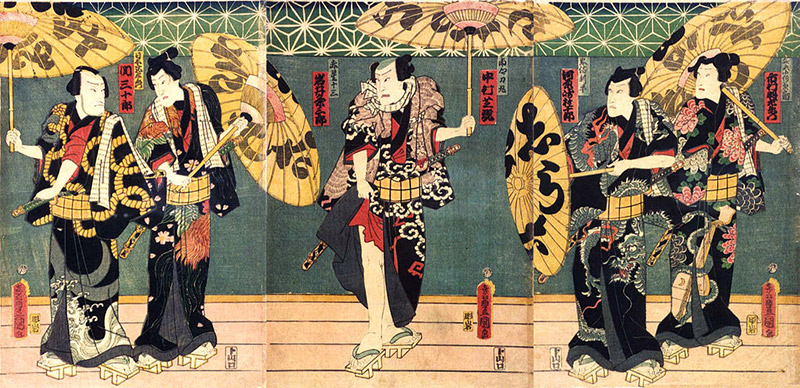
順便說一句,本文中的一些浮世繪插圖從恰到好處(如幾張忠臣 藏插圖)到了狡猾。國定的這幅作品描繪了歌舞伎劇中五個盜賊聚集的著名場景(視頻)。宮本武藏的這一首也出自歌舞伎。他們不如選擇那些展示武藏與天狗或隨機怪物戰鬥的內容。
sukeban發表於2018 年 5 月 1 日12:31 [ 4 個收藏]
對新渡戶來說幸運的是,榮譽是情人眼裡出西施,這是可以解釋的概念。例如,新渡戶將《47浪人物語》視為忠誠的終極例子,但其他人卻將其解讀為懦弱的偷襲。山本常友在《葉 隱》中指出了浪人計畫中最大的弱點:
關於淺野君的浪人夜襲,他們沒有在泉岳寺切腹是一個錯誤,因為從他們的主人被擊倒到他們擊倒敵人的時間之間間隔了很長一段時間。如果基拉大人在這段時間內病逝,那就太遺憾了。並不是說自殺式攻擊會起作用,但這就是山本適合你的地方。當然,《葉隱》是一本非常晦澀難懂的書,作者是一位從未見過真正衝突的硬漢爺爺,當它在 1906 年被重新發現時,大正和昭和軍隊「喜歡」了它。
順便說一句,本文中的一些浮世繪插圖從恰到好處(如幾張忠臣 藏插圖)到了狡猾。國定的這幅作品描繪了歌舞伎劇中五個盜賊聚集的著名場景(視頻)。宮本武藏的這一首也出自歌舞伎。他們不如選擇那些展示武藏與天狗或隨機怪物戰鬥的內容。
sukeban發表於2018 年 5 月 1 日12:31 [ 4 個收藏]
(但這篇文章在文章中的標籤非常糟糕。它描繪了忠臣藏的一個場景,其中侍從“Ooboshi”(Ooishi——他們不得不更改名字並將其移至較早的日期以避免審查)在與藝妓一起放蕩自己一家非常有名的餐廳,一力亭,雖然在不同的地點,但仍在京都營業,在餐廳裡敲鼓是他後來打電話攻擊基拉大人的房子的伏筆)。
sukeban於2018 年 5 月 1 日12:40 PM發表 [ 3 個收藏]
sukeban於2018 年 5 月 1 日12:40 PM發表 [ 3 個收藏]
如果有人仍在關注這條線索並擁有知識,這對後來的Sonnō jōi 政治運動有什麼影響,因為他們的宣傳大部分都是基於武士思想/行動和武士道?
由Purposeful Grimace於2018 年 5 月 3 日上午 11:43發布 [ 2 個收藏]
由Purposeful Grimace於2018 年 5 月 3 日上午 11:43發布 [ 2 個收藏]
據我了解,園內極端分子是吉田書院(維基)等人的追隨者,但他們是推動本土主義、日本至上主義世界觀的國 學派的一部分。武士道本身還沒有被發明出來,更不用說被理論化為一種泛日本的精神,而不是像日俄戰爭後日本軍隊那樣的特定社會階層的精神,儘管像山鹿創子這樣的江戶時代學者確實對武士固有的道德至上進行了理論分析。
sukeban於 2018 年 5 月 3 日下午2:16發表 [ 3 個收藏]
sukeban於 2018 年 5 月 3 日下午2:16發表 [ 3 個收藏]
« 以前韓國流行音樂如何成為一種宣傳工具 | 你必須清醒一點,西德尼·波拉克想要…更新 »
該主題已存檔,並禁止新評論
相關貼文
平家螃蟹 - 長著人臉的螃蟹 2017年6月2日“大魔神,請來懲罰我們的虐待者...... 2012年11月24日
盲劍客 2010年2月21日
只有智慧和才華是最低的等級...... 3月2日, 2008
“西格甚麼?” 2006 年 1 月 12 日
Bushido: Way of Total Bullshit
April 30, 2018 12:51 PM Subscribe
"The term bushido calls forth ghosts of Japan's hallowed samurai class. A class so bent on preserving honor, they'd rather slit their own bellies in ritualistic suicide than live a shamed existence. In The Last Samurai, bushido melds with Nathan Algren's soul, curing the troubled American of alcoholism, war trauma, and self-loathing. What powerful medicine! A reinvigorated, purified Algren turns his back on his employers to join rebel samurai bent on defending bushido, their dignified honor-code of loyalty, benevolence, etiquette, and self-control. At least, that's what popular culture would have us believe. In reality the term bushido went unrecognized until the early twentieth century, long after Nathan Algren's fictitious character joined the factual Satsuma Rebellion and years after the ousting of the samurai class. In all likelihood samurai never even uttered the word."
That's an enjoyable debunking (though overlong, repetitious, and badly written: "Like all human beings, samurai morals varied by individual"); a sample:
posted by languagehat at 1:33 PM on April 30, 2018 [5 favorites]
And what of the sword, the so-called soul of the samurai? Charles Sharam explains, "Prior to [the Tokugawa era], the samurai were in fact mounted archers who were highly skilled with the bow and arrow, occasionally using other weapons if necessary. For the greater part of their history, the sword was not an important weapon to the samurai."But although I'm sure the general thrust is correct (bushido is a bullshit invention cooked up by Inazo Nitobe and misused by later governments), it seems pretty amateurish, and I'm wondering how much of the details would survive scholarly scrutiny.
posted by languagehat at 1:33 PM on April 30, 2018 [5 favorites]
This article claims to oppose the book because of its lack of research, but then misses some super obvious points and shows the writer themselves isn’t as knowledgeable as they would like to appear. For example:
posted by corb at 1:36 PM on April 30, 2018 [40 favorites]
Depicted as the antithesis of the sword in modern media, firearms came to represent the abandonment of "samurai values." The loud foreign weapons embodied a loud, dirty (literally due to the gunpowder and smoke), dishonorable way of killing from afar. But what about archery, the samurai's original weapon of choice? Though elegant, bows fired projectiles and killed from afar – just like firearms. Shouldn't archery be viewed as just as dishonorable as guns?The reason firearms were viewed with at least some concern by a ruling warrior class is not because they killed from afar, but because an unskilled peasant was able to use them fairly effectively with minimal training. Using archery - especially from horseback - is and was an incredibly specialized skill that took years of training to be even minimally effective. By the time you acquired that skilled specialized training, you had also absorbed at least some of the ideological training as well and were less likely to disrupt the system. Thus, firearms were a potential class danger, just as they were in the West.
posted by corb at 1:36 PM on April 30, 2018 [40 favorites]
I always wonder what the hell the point of studying 'bushido' is, anyway. If you want to get an idea about how the vast majority of Japanese people lived and thought about living until just a couple of generations ago, Ballad of Narayama tells you all you need to know.
posted by JamesBay at 1:39 PM on April 30, 2018 [3 favorites]
posted by JamesBay at 1:39 PM on April 30, 2018 [3 favorites]
The sword was never a primary weapon on the European medieval battlefield - it's no surprise it wasn't one in Japan, either. They've always been sidearms; weapons you draw when your main, more effective armament was broken or lost. Knights in Europe wielded lances on horseback, or polearms on foot. Common troops would be armed with bows or spears or other melee weapons with reach - much more useful than a sword.
Upon the advent of hand-held gunpowder weapons, the sword did become a primary arm for certain cavalry, but this was only after the use of the pike had been supplanted by massed, musket-armed infantry formations. Romanticized ideas about the sword have skewed the public's concept of its use and inflated its perceived importance in war.
It's more apt to consider the sword as one would a pistol in contemporary warfare; no modern army considers the pistol a primary weapon system - it's there as a backup if your real weapon is rendered ineffective.
although I'm sure the general thrust is correct
I see what you did there.
posted by dazed_one at 2:03 PM on April 30, 2018 [16 favorites]
Upon the advent of hand-held gunpowder weapons, the sword did become a primary arm for certain cavalry, but this was only after the use of the pike had been supplanted by massed, musket-armed infantry formations. Romanticized ideas about the sword have skewed the public's concept of its use and inflated its perceived importance in war.
It's more apt to consider the sword as one would a pistol in contemporary warfare; no modern army considers the pistol a primary weapon system - it's there as a backup if your real weapon is rendered ineffective.
although I'm sure the general thrust is correct
I see what you did there.
posted by dazed_one at 2:03 PM on April 30, 2018 [16 favorites]
The rice allowances on which samurai families had lived were replaced by modest cash stipends. Many former samurai had to face the indignity of looking for work. ... the changes pushed some samurai to take action. "Gradually eliminating their stipends and special status… created a large group of disgruntled shizoku (samurai), a number of whom gathered around Saigo Takamori and instigated rebellion."Slightly less inspiring.
posted by clawsoon at 2:03 PM on April 30, 2018 [3 favorites]
Corb: Good point, and that's definitely true of archery on horseback — other forms of archery were very destabilizing when introduced, though, and do present that sort of "class threat". E.g. the Battle of Crécy, with massed archers using Welsh longbows achieving heavy casualties on mounted knights. (This is admittedly a naive analysis; the French also misused their mercenary forces terribly, essentially sacrificing them to no end whatsoever. But it did seem to lead to a change in tactics for the remainder of the war.) Employed as part of a massed formation and firing volleys, the requirement placed on each individual archer's skill is minimal. Suddenly an army of unarmored peasants becomes much more threatening.
Since longbows and compound bows—which are Middle Eastern in origin, I believe—almost certainly made their way through Asia long prior to the European colonial arrival, it follows that pre-firearm Japanese warfare had already accounted for them in terms of tactics.
Why Kyūdō and other forms of dismounted archery wasn't as threatening to the samurai class as the Welsh longbow was to Continental knights is intriguing, though.
posted by Kadin2048 at 2:14 PM on April 30, 2018 [6 favorites]
Since longbows and compound bows—which are Middle Eastern in origin, I believe—almost certainly made their way through Asia long prior to the European colonial arrival, it follows that pre-firearm Japanese warfare had already accounted for them in terms of tactics.
Why Kyūdō and other forms of dismounted archery wasn't as threatening to the samurai class as the Welsh longbow was to Continental knights is intriguing, though.
posted by Kadin2048 at 2:14 PM on April 30, 2018 [6 favorites]
Why Kyūdō and other forms of dismounted archery wasn't as threatening to the samurai class as the Welsh longbow was to Continental knights is intriguing, though.
AT LAST MY SPECIALIZED KNOWLEDGE IS USEFUL. (Also, I was just reading about the Battle of Crecy, do you live in my head, check y/n)
So even those massive formation-volleys required a measure of skill and practice - the longbow used at the time for war was a massive beast, with an intense draw weight that ran up to 185 pounds - which would be hard for even a skilled archer today. And skeletons of longbow archers have been found to have significant arm differences.
Why this became a class threat is first that there was already a culture of bow use in England and Wales previous to that time among peasants - giving them a way of getting that specialized knowledge without having to absorb the indoctrination along with it, because they were learning from fathers and friends and people in their towns, rather than the ruling class. But also Edward III in particular in 1363 was worried that OH NO THE BOW WILL DIE OUT BECAUSE PEASANTS LIKE FOOTBALL NOW and so he officially started promoting archery games so he could have more meat for his war grinder, and you see a lot of other royal support for archery throughout the years because even though it was destabilizing, it was really one of the main things England had going for it for a while.
I'm not super familiar with medieval Japan, so I'm not sure if there were any similar cultural notes or encouragement of archery among the peasantry - I could make guesses, but that's all they would be.
posted by corb at 2:49 PM on April 30, 2018 [23 favorites]
AT LAST MY SPECIALIZED KNOWLEDGE IS USEFUL. (Also, I was just reading about the Battle of Crecy, do you live in my head, check y/n)
So even those massive formation-volleys required a measure of skill and practice - the longbow used at the time for war was a massive beast, with an intense draw weight that ran up to 185 pounds - which would be hard for even a skilled archer today. And skeletons of longbow archers have been found to have significant arm differences.
Why this became a class threat is first that there was already a culture of bow use in England and Wales previous to that time among peasants - giving them a way of getting that specialized knowledge without having to absorb the indoctrination along with it, because they were learning from fathers and friends and people in their towns, rather than the ruling class. But also Edward III in particular in 1363 was worried that OH NO THE BOW WILL DIE OUT BECAUSE PEASANTS LIKE FOOTBALL NOW and so he officially started promoting archery games so he could have more meat for his war grinder, and you see a lot of other royal support for archery throughout the years because even though it was destabilizing, it was really one of the main things England had going for it for a while.
I'm not super familiar with medieval Japan, so I'm not sure if there were any similar cultural notes or encouragement of archery among the peasantry - I could make guesses, but that's all they would be.
posted by corb at 2:49 PM on April 30, 2018 [23 favorites]
So, in Nitobe, we have a man who was born at the end of a historic age, grows up under evangelical Christian education, then writes a book about a glamorous version of that age that never really existed. The idea catches on like wildfire, and despite the man's peaceable intentions, it eventually goes on to provide the popular underpinning for a fascist ethos that emerges triumphant.
I see where this is going, and I'd really like to skip ahead in history to the part where the US is a reformed character among the nations and takes military action very, very seriously.
posted by Countess Elena at 2:53 PM on April 30, 2018 [14 favorites]
I see where this is going, and I'd really like to skip ahead in history to the part where the US is a reformed character among the nations and takes military action very, very seriously.
posted by Countess Elena at 2:53 PM on April 30, 2018 [14 favorites]
Next you're going to tell us that Newton was not bonked on the head by an apple, no cherry tree and Socrates died of old age.
posted by sammyo at 5:13 PM on April 30, 2018 [2 favorites]
posted by sammyo at 5:13 PM on April 30, 2018 [2 favorites]
So why didn't the archers of Wales and England turn on the Welsh and English aristocracy? Were archer peasantries better off because they were more of a threat?
posted by clew at 5:56 PM on April 30, 2018 [1 favorite]
posted by clew at 5:56 PM on April 30, 2018 [1 favorite]
So why didn't the archers of Wales and England turn on the Welsh and English aristocracy? Were archer peasantries better off because they were more of a threat?
Because a longbow can't really penetrate well made plate armour. You could kill a horse or you might get a lucky shot that goes through a slit in a visor, but, even dismounted, the aristocracy (especially the English, who often fought dismounted) were playing a wholly different game of war than the common infantry. Knights spent a large portion of their lives training to kill people and could afford proper equipment. Professional, non-noble soldiery did appear in the later medieval period, but the average infantry mob was composed of conscripts and levies, serfs and peasants with no real training - no real match for fully armoured and trained aristocracy.
Longbowmen were good at killing horses and other poorly armoured targets. Destroying the mobility of cavalry by killing their mounts enabled a good general to control the battle frontage, as exhibited at Agincourt, through the use of the longbow as an area denial weapon, but weren't (because they couldn't be) used to kill fully armoured knights.
posted by dazed_one at 7:07 PM on April 30, 2018 [7 favorites]
Because a longbow can't really penetrate well made plate armour. You could kill a horse or you might get a lucky shot that goes through a slit in a visor, but, even dismounted, the aristocracy (especially the English, who often fought dismounted) were playing a wholly different game of war than the common infantry. Knights spent a large portion of their lives training to kill people and could afford proper equipment. Professional, non-noble soldiery did appear in the later medieval period, but the average infantry mob was composed of conscripts and levies, serfs and peasants with no real training - no real match for fully armoured and trained aristocracy.
Longbowmen were good at killing horses and other poorly armoured targets. Destroying the mobility of cavalry by killing their mounts enabled a good general to control the battle frontage, as exhibited at Agincourt, through the use of the longbow as an area denial weapon, but weren't (because they couldn't be) used to kill fully armoured knights.
posted by dazed_one at 7:07 PM on April 30, 2018 [7 favorites]
Can I still like Ghost Dog: The Way of the Samurai? (with Hagakure)
What about the Book of Five Rings?
posted by poe at 7:45 PM on April 30, 2018 [3 favorites]
What about the Book of Five Rings?
posted by poe at 7:45 PM on April 30, 2018 [3 favorites]
This is why you surround your longbowmen with pointy sticks.
posted by Artw at 7:48 PM on April 30, 2018 [3 favorites]
posted by Artw at 7:48 PM on April 30, 2018 [3 favorites]
I'm not an expert, but from what I've read the thinking of longbowmen as generic peasants is off. They were elite fighters who trained from childhood and needed to be big, strong, and well fed. They were at least semi-pro, too, not feudal levies. The armies got much smaller between Edward I and his grandson Edward III because he switched to this higher quality force. One historian I read even argues the longbowmen were typically mounted (not during combat of course, but they were way above peasant footmen in status.) So it's not peasants didn't revolt because the longbow made them better off, it's the peasants that were better off became longbowmen.
I'm sorry for continuing the longbow derail. The OP is really interesting even if it could be more rigorous. I have relatively little to add, other than it is similar to fundamentalism in some ways: a modern invention that based its appeal on a made up tradition.
posted by mark k at 10:05 PM on April 30, 2018 [4 favorites]
I'm sorry for continuing the longbow derail. The OP is really interesting even if it could be more rigorous. I have relatively little to add, other than it is similar to fundamentalism in some ways: a modern invention that based its appeal on a made up tradition.
posted by mark k at 10:05 PM on April 30, 2018 [4 favorites]
languagehat: But although I'm sure the general thrust is correct (bushido is a bullshit invention cooked up by Inazo Nitobe and misused by later governments), it seems pretty amateurish, and I'm wondering how much of the details would survive scholarly scrutiny.
That's because Tofugu is a website with general culture articles that also tries to market their Japanese language learning aids, but in this case it's generally correct. What you want is Oleg Benesch's book Inventing the Way of the Samurai: Nationalism, Internationalism, and Bushido in Modern Japan.
For that matter, there's a delicious aside in Emiko Ohnuki-Tierney's Kamikaze, Cherry Blossoms, and Nationalisms: The Militarization of Aesthetics in Japanese History about the instrumentalization of the story of the 47 ronin of Ako as militaristic propaganda: apparently, the real ronin didn't even like Lord Asano that much but they felt they were unjustly punished, rather than basing their vengeance on a code of honor or the imperial loyalty that was pushed in Taisho/Showa era depictions. The book is a bit dry when it comes to the kamikaze themselves because they come across as insufferable overthinking teens who have read too much German philosophers, but the bits about cherry trees as markers of spring fertility and the ronin are awesome.
posted by sukeban at 11:24 PM on April 30, 2018 [8 favorites]
That's because Tofugu is a website with general culture articles that also tries to market their Japanese language learning aids, but in this case it's generally correct. What you want is Oleg Benesch's book Inventing the Way of the Samurai: Nationalism, Internationalism, and Bushido in Modern Japan.
For that matter, there's a delicious aside in Emiko Ohnuki-Tierney's Kamikaze, Cherry Blossoms, and Nationalisms: The Militarization of Aesthetics in Japanese History about the instrumentalization of the story of the 47 ronin of Ako as militaristic propaganda: apparently, the real ronin didn't even like Lord Asano that much but they felt they were unjustly punished, rather than basing their vengeance on a code of honor or the imperial loyalty that was pushed in Taisho/Showa era depictions. The book is a bit dry when it comes to the kamikaze themselves because they come across as insufferable overthinking teens who have read too much German philosophers, but the bits about cherry trees as markers of spring fertility and the ronin are awesome.
posted by sukeban at 11:24 PM on April 30, 2018 [8 favorites]
At the battle of Agincourt, the English longbowmen rode to battle on horseback but dismounted to fight and were not conscripts, but professionals - they were called yeomen and their military employment granted them status. They received the same pay (6 pence per day) as a light horseman, well above the 2 pence per day of a levy spearman and the 3 pence per day of a foot archer (essentially a peasant with a small self bow).
For the sake of completeness: mounted sergeants received 1 shilling per day (12 pence), while knights were paid between 2 and 4 shillings per day.
Source.
/derail
posted by dazed_one at 11:29 PM on April 30, 2018 [6 favorites]
For the sake of completeness: mounted sergeants received 1 shilling per day (12 pence), while knights were paid between 2 and 4 shillings per day.
Source.
/derail
posted by dazed_one at 11:29 PM on April 30, 2018 [6 favorites]
Also, I would like to add that during the Satsuma rebellion, both sides used firearms because Saigo (guy in Western uniform here) wasn't an idiot. The imperial army just had more and better guns.
For that matter, towards the end of the Sengoku era Japan was the biggest producer of matchlocks in the world. They were intensely used in battles like Nagashino. Afterwards, tanegashima matchlocks were still stockpiled in castle armouries, they just weren't used because there were no big uprisings. By the time the isolation period ended, both shogunate and imperial supporters (from the samurai class all of them) realised the military technology gap with the West and set up to close it as fast as they could.
posted by sukeban at 11:39 PM on April 30, 2018 [4 favorites]
For that matter, towards the end of the Sengoku era Japan was the biggest producer of matchlocks in the world. They were intensely used in battles like Nagashino. Afterwards, tanegashima matchlocks were still stockpiled in castle armouries, they just weren't used because there were no big uprisings. By the time the isolation period ended, both shogunate and imperial supporters (from the samurai class all of them) realised the military technology gap with the West and set up to close it as fast as they could.
posted by sukeban at 11:39 PM on April 30, 2018 [4 favorites]
> "Newton was not bonked on the head by an apple, no cherry tree and Socrates died of old age."
... One of these things is not like the others?
posted by kyrademon at 1:04 AM on May 1, 2018 [1 favorite]
... One of these things is not like the others?
posted by kyrademon at 1:04 AM on May 1, 2018 [1 favorite]
clew: So why didn't the archers of Wales and England turn on the Welsh and English aristocracy?
You could ask the same question x10 in the gunpowder age, when commanders didn't even wear armour.
My guess for the specific case you're asking about: In addition to the higher base pay that dazed_one mentions above, a major source of potential income for English and Welsh archers was going to the continent, winning some battles, and plundering or capturing nobles for ransom. Archers didn't have the money to set up those expeditions on their own; their aristocrats did.
Why don't wage earners overthrow their capitalist masters? Similar question, similar answers.
posted by clawsoon at 4:13 AM on May 1, 2018 [4 favorites]
You could ask the same question x10 in the gunpowder age, when commanders didn't even wear armour.
My guess for the specific case you're asking about: In addition to the higher base pay that dazed_one mentions above, a major source of potential income for English and Welsh archers was going to the continent, winning some battles, and plundering or capturing nobles for ransom. Archers didn't have the money to set up those expeditions on their own; their aristocrats did.
Why don't wage earners overthrow their capitalist masters? Similar question, similar answers.
posted by clawsoon at 4:13 AM on May 1, 2018 [4 favorites]
(...and not just money: Long-distance communication, coordination with allies, and propaganda, all of which were advantages that aristocrats had and soldiers didn't. When aristocratic control broke down, as it did in parts of France during the Hundred Years' War, routiers went rogue, including some bands which "contained numbers of infantry, particularly English longbowmen". But... uh... back to Japan.)
posted by clawsoon at 6:30 AM on May 1, 2018
posted by clawsoon at 6:30 AM on May 1, 2018
> But... uh... back to Japan.
Yeah, while I'm as interested in Agincourt as the next person, this thread is a classic example of Eurocentric hegemony.
posted by languagehat at 6:40 AM on May 1, 2018 [4 favorites]
Yeah, while I'm as interested in Agincourt as the next person, this thread is a classic example of Eurocentric hegemony.
posted by languagehat at 6:40 AM on May 1, 2018 [4 favorites]
Some tidbits from the article:
By the way, some of the ukiyo-e illustrations in the article go from the kind of apropos (like the several Chushingura illustrations) to the dodgy. This one by Kunisada depicts a very famous gathering scene (video) of five thieves in a kabuki play. The one of Miyamoto Musashi also comes from kabuki. They might as well have chosen the ones that show Musashi fighting tengu or random monsters.
posted by sukeban at 12:31 PM on May 1, 2018 [4 favorites]
Lucky for Nitobe, honor is in the eye of the beholder, a concept open to interpretation. For example Nitobe cites The 47 Ronin Story as the ultimate example of loyalty, but others interpret it as a cowardly sneak attack.Famously, Yamamoto Tsunetomo pointed out in Hagakure the greatest weakness in the ronins' plan:
Concerning the night assault of Lord Asano's ronin, the fact that they did not commit seppuku at the Sengakuji was an error, for there was a long delay between the time their lord was struck down and the time when they struck down the enemy. If Lord Kira had died of illness within that period, it would have been extremely regrettable.Not that a suicide attack would have worked, but that's Yamamoto for you. Of course, Hagakure was a really obscure book written by a hardass grandpa who never saw actual conflict, and when it was rediscovered in 1906 the Taisho and Showa military *loved* it.
By the way, some of the ukiyo-e illustrations in the article go from the kind of apropos (like the several Chushingura illustrations) to the dodgy. This one by Kunisada depicts a very famous gathering scene (video) of five thieves in a kabuki play. The one of Miyamoto Musashi also comes from kabuki. They might as well have chosen the ones that show Musashi fighting tengu or random monsters.
posted by sukeban at 12:31 PM on May 1, 2018 [4 favorites]
(But this one is very badly labeled in the article. It depicts a scene in Chushingura where the chamberlain "Ooboshi" (Ooishi -- they had to change names and move it to an earlier date to avoid censorship) is debauching himself with geisha in a very famous restaurant, the Ichirikitei, which is still open in Kyoto although in a different location. Ooboshi playing a drum in the restaurant is a foreshadowing of when he later calls to attack lord Kira's house with a drum)
posted by sukeban at 12:40 PM on May 1, 2018 [3 favorites]
posted by sukeban at 12:40 PM on May 1, 2018 [3 favorites]
In case anyone is still following this thread and has knowledge, what affect does this have on the later political movement of Sonnō jōi, since so much of their propaganda was based on samurai thought/action and bushido?
posted by Purposeful Grimace at 11:43 AM on May 3, 2018 [2 favorites]
posted by Purposeful Grimace at 11:43 AM on May 3, 2018 [2 favorites]
As I understand it, sonno joi extremists were followers of people like Yoshida Shoin (wiki) but these were part of the kokugaku school that pushed a nativist, Japanese supremacist worldview. Bushido as such hadn't been invented yet, and even less so theorized as a pan-Japanese ethos rather than the ethos of a particular social class like the Japanese military would do after the Russo-Japanese War, although Edo period scholars like Yamaga Soko did theorize about the inherent moral supremacy of the samurai.
posted by sukeban at 2:16 PM on May 3, 2018 [3 favorites]
posted by sukeban at 2:16 PM on May 3, 2018 [3 favorites]
« Older How K-pop became a propaganda tool | You’ve gotta sober up, Sydney Pollack wants to... Newer »
This thread has been archived and is closed to new comments


posted by Artw at 1:14 PM on April 30, 2018 [5 favorites]