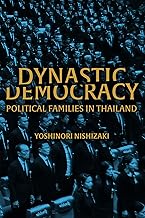
王朝民主:泰國的政治家族。
Dynastic Democracy: Political Families of Thailand
王朝民主:泰國的政治家族。
王朝民主:泰國的政治家族。西崎義德著。威斯康辛州麥迪遜:威斯康辛大學出版社,2022 年。精裝:308 頁。
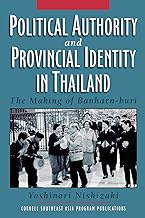
2011年,西崎義德(Yoshinori Nishizaki)出版了開創性的著作《泰國的政治權威和省級身份:Banharn-buri的形成》,為泰國研究領域做出了重大貢獻。該書以 Banharn Silpa-archa 對素攀武里府(也稱為 Banharn-buri)的統治地位作為案例研究,探討了泰國農村政客的崛起。西崎的書在該省七年的民族誌實地考察過程中收集了大量數據,既富有洞察力又引人注目。十年後,他又創作了另一部重要著作,即將成為對現代泰國政治感興趣的人的重要資源:《王朝民主:泰國的政治家族》。
受 Banharn-buri 案例(第 xii--xiii 頁)的啟發,西崎努力闡明「王朝民主」的演變——將其定義為「民主的一種亞型,其中統治精英主要來自政治家族」(第3頁)—泰國自1932 年革命以來一直到2020 年6 月南邦府補選。他透過世襲關係的稜鏡重新詮釋了中國的政治歷史,認為民主派力量與軍事威權主義看似無休無止的鬥爭實際上是「兩種主要類型的精英家庭之間爭奪統治地位的鬥爭,兩者都扼殺了代議制民主:平民政治與 Chakri 王朝有聯繫的家庭和守舊的上層階級家庭」(第 xi 頁)。為了支持他的論點,西崎利用了一系列泰國材料,從火葬捲到國家反腐敗委員會公開的個人資產記錄,以揭示將許多政治人物聯繫在一起的血緣關係。在此過程中,他確定了 700 多個國家層面的政治派係以及與他們相關的議會成員,並經常以圖形方式展示這些派系在政治格局中如何相互交織和普遍存在。調查結果證實了西崎將泰國歸類為王朝民主國家(例如,在 2,000 名以內的當選議員中,41% 來自政治家庭),並證實了他的觀察,即由於議會席位集中在狹小的範圍內,親屬網絡,「民主在形式上越紮根,其實質上的代表性就越少」(第11 頁)。
在關於兩類精英家庭之間的鬥爭的論述中,西崎首先討論了1932年舊政權垮台後王族和官僚家庭的生存。他指出,結束君主專制的人很大程度上來自於這些家庭。家庭,導致他們做出妥協,最終使1932 年之前國家的家庭特徵得以持續並玷污了新政權(第二章)。隨後,當保守派在 20 世紀 50 年代末捲土重來時,他們的家族關係為很快演變成強大的君主網絡提供了堅實的基礎(第三章)。儘管人數不多,但該網絡的成員(其中許多來自王室和官僚家庭)在國家擁有相當大的影響力,並已成為對抗平民家庭政治家的力量,特別是自 20 世紀 70 年代初以來。後者擁有槍支和拉票員等重要資源,透過選舉在政治體系中取得了越來越大的主導地位,從而對前者構成了直接威脅,後者往往採取破壞性和不民主的解決方案。這導致了泰國獨特的王朝民主,它在選舉王朝主義和軍事威權主義之間交替(第六章)。
《王朝民主》是一本引人入勝的書。西崎透過以家庭為基礎的範式對整個現代泰國政治史的重新解釋代表著一種令人欽佩的努力,他試圖擺脫長期以來影響我們對泰國政治動態的理解的一套非常有限的方法。從這個意義上說,他的書為泰國研究領域注入了一股新鮮空氣。這本書的另一個優點是它是基於迄今為止收集的有關泰國政治家族的最大、最全面的數據集。因此,它應該能夠在未來為無數學者提供服務,作為該國各個顯赫家族的家譜信息的寶貴來源,這些家族包括潘亞拉春家族和薩拉辛家族等老牌家族,以及奇喬布家族、布拉努帕孔家族和漢薩瓦特家族等新興家族。
然而,儘管西崎的王朝民主在理論和實證上做出了實質的貢獻,但它仍然存在一定的缺陷。例如,該書對「平民資本主義家庭」等一些關鍵術語的使用含糊不清,而對「政治家庭」(第4頁)和「官僚家庭」(第18頁)的定義則過於寬泛。 ,特別是在他們的時間框架方面。另一個弱點是,當試圖支持他的主張時,即推翻絕對君主制的人們是「半心半意、不冷不熱的革命者」(第83-84頁),因為他們是保守派家庭的一部分,他只是簡單地透過概述了當時將他們與眾多王子和保皇派人物聯繫在一起的親屬關係網絡,但這不足以支持這一說法。西崎沒有展示家庭關係如何轉化為對政治對手的同情。它們恰好是相關的,但眾所周知,相關性和因果性是兩個不同的東西。還有一些與西崎的論點相反的歷史細節,但在書中被遺漏了。例如,他沒有解釋波瓦拉德叛亂或國王帕賈迪波克退位後的政治壓迫如何符合他關於新政權領導人寬大處理的論點。最後,除了在主要章節中詳細討論的幾十個有影響力的家族之外,本書沒有在附錄中提供詳細的數據集,甚至沒有提供已確定的政治家族及其各自的成員的列表。公共辦公室。
PULI FUWONGCHAROEN 是法政大學政治系副教授。郵寄地址:Faculty of Political Science, Thamasat University, 2 Prachan Road, Phra Nakhon,Bangkok 10200,Thailand;電子郵件:puli.fu@gmail.com 。
Link/Page Citation
Dynastic Democracy: Political Families of Thailand. By Yoshinori Nishizaki. Madison, Wisconsin: University of Wisconsin Press, 2022. Hardcover: 308pp.
In 2011, Yoshinori Nishizaki made a significant contribution to the field of Thai studies with his ground-breaking book: Political Authority and Provincial Identity in Thailand: The Making of Banharn-buri. The book examines the rise of rural-based politicians in Thailand using Banharn Silpa-archa's dominance over Suphan Buri Province (also known as Banharn-buri) as the case study. With a wealth of data gathered in the course of his seven-year ethnographic fieldwork in the province, Nishizaki's book was both insightful and compelling. A decade on, he has produced yet another major work that is poised to become an important resource for anyone interested in modern Thai politics: Dynastic Democracy: Political Families of Thailand.
Motivated by the case of Banharn-buri (pp. xii--xiii), Nishizaki endeavours to shed light on the evolution of "dynastic democracy"--defined as "a subtype of democracy where the ruling elites are drawn chiefly from political families" (p. 3)--in Thailand since the 1932 revolution up until the June 2020 by-election in Lampang Province. He reinterprets the country's political history through the prism of patrimonial ties, arguing that the seemingly endless struggles of pro-democracy forces against military authoritarianism are actually "struggles for dominance between two main types of elite families, both of which stifle representative democracy: commoner political families and old-guard upper-class families tied to the Chakri dynasty" (p. xi). To support his argument, Nishizaki draws on an array of Thai materials, ranging from cremation volumes to personal asset records made public by the National Anti-Corruption Commission, to uncover the consanguineous and affinal ties that link numerous political figures together. In doing so, he identifies more than 700 political clans at the national level and the members of parliament associated with them, and demonstrates, often graphically, how intertwined and pervasive these clans are in the political landscape. The findings confirm Nishizaki's categorization of Thailand as a dynastic democracy (for instance, 41 per cent of all the elected MPs up to 2,000 came from political families) as well as his observation that, due to the concentration of parliamentary seats in a narrow range of kinship networks, "the more democracy has taken root [in Thailand] as a form, the less representative it has become in substance" (p. 11).
In his argument concerning the struggle between the two types of elite families, Nishizaki first discusses the survival of princely and bureaucratic families after the fall of the old regime in 1932. He points out that the very people who ended the absolute monarchy largely hailed from such families, causing them to make compromises that ultimately enabled the familial character of the pre-1932 state to persist and taint the new regime (Chapter Two). Subsequently, when the conservatives made a comeback in the late 1950s, their family ties provided a strong foundation for what would soon evolve into a powerful monarchical network (Chapter Three). Despite their small numbers, members of this network, many of whom are from princely and bureaucratic families, wield considerable influence in the country and have become a counterforce to politicians from commoner families, especially since the early 1970s. Having access to vital resources, including guns and vote canvassers, the latter have achieved growing dominance in the political system through elections, thereby posing a direct threat to the former who often react by adopting destructive and undemocratic solutions. This has resulted in Thailand's unique dynastic democracy, which alternates between electoral dynasticism and military authoritarianism (Chapter Six).
Dynastic Democracy is a fascinating book. Nishizaki's reinterpretation of the entire period of modern Thai political history through a family-based paradigm represents an admirable endeavour to break away from a very limited set of approaches that have long shaped our understanding of Thailand's political dynamics. His book, in this sense, injects a breath of fresh air into the field of Thai studies. Another strength of the book is that it is based on the largest and most comprehensive dataset ever collected on Thai political families. It should therefore be able to serve countless scholars in the future as a valuable source of genealogical information on various prominent families in the country, ranging from established ones like the Panyarachuns and the Sarasins to newer ones like the Chidchobs, the Buranupakons and the Harnsawats.
Despite its substantial theoretical and empirical contributions, however, Nishizaki's Dynastic Democracy still has certain short-comings. For example, the book is ambiguous in its use of some key terms, such as "commoner-capitalist family", while its definitions of "political families" (p. 4) and "bureaucratic families" (p. 18) are excessively broad, especially in terms of their timeframe. Another weakness is that when trying to support his claim that the people who overthrew the absolute monarchy were "half-hearted, lukewarm revolutionaries" (pp. 83-84) because they were part of the old-guard families, he does so simply by outlining the kinship networks that bound them to numerous princes and royalist figures at the time, which is not enough to support the claim. Nishizaki stops short of demonstrating how familial ties translated into sympathy for political rivals. They happened to be related, but as is well known, correlation and causation are two different things. There are also several historical details that run counter to Nishizaki's argument, but are left out of the book. He does not explain, for instance, how the political oppression following the Bowaradet rebellion or King Prajadhipok's abdication fit into his argument concerning the leniency of the new regime's leaders. Lastly, apart from a few dozens of influential families that are discussed at great length in the main chapters, the book does not provide a detailed dataset in the appendix, or even a list of the political families identified, along with their respective members who held public office.
PULI FUWONGCHAROEN is Associate Professor in the Faculty of Political Science, Thammasat University. Postal address: Faculty of Political Science, Thammasat University, 2 Prachan Road, Phra Nakhon, Bangkok 10200, Thailand; email: puli.fu@gmail.com.
DOI: 10.1355/cs45-1h
COPYRIGHT 2023 Institute of Southeast Asian Studies (ISEAS)
No portion of this article can be reproduced without the express written permission from the copyright holder.
Copyright 2023 Gale, Cengage Learning. All rights reserved.

留言
張貼留言